
Lieferung heute & morgen

Qualitätsgarantie

Willkommens-Angebote freischalten: KOSTENLOSE Lieferung | Bis zu 80 % RABATT | Kostenlose 30-Tage-JoyPlus-Testphase
App herunterladen
Living space is often at a premium, and creating a tidy, organised environment can be a challenge. A storage bench is a functional solution that combines two pieces of furniture in one: comfortable seating and discreet storage. Whether in the hallway, at the foot of the bed, or as an addition to the living room, this versatile piece helps you maintain order without sacrificing style.
As a Joybuy Product Recommendation Officer, my goal is to provide you with objective information and practical criteria. This guide is designed to help you make an informed decision that perfectly suits your needs and living space.
Before you choose a model, there are a few key features to consider. These criteria will help you find the right storage chest for your home.
Stability is a crucial factor, especially if the bench will be used regularly for seating. Most models feature a body made of MDF (Medium-Density Fibreboard), which provides a solid core structure. Pay close attention to the manufacturer's stated maximum load capacity. This can vary significantly depending on the size and construction—from around 100 kg for a small storage stool to 300 kg for a larger bed bench. A higher load capacity indicates a more robust design.
Measure your intended space carefully before making a purchase. A hallway bench should leave enough clearance for foot traffic, while a bench in the bedroom should be proportional to the width of the bed. Also, consider the internal volume. Think about what you plan to store—blankets and pillows require more space than books or children's toys. The manufacturer's specifications for volume in litres can be a helpful guide.
Beyond practical aspects, design is also key. Models with linen-look fabric upholstery blend seamlessly into many interior design styles. An upholstered bench with a lid also offers enhanced seating comfort. Another practical feature to look for is whether the ottoman is foldable. Foldable models can be stored compactly when not in use, making them exceptionally flexible. Some products can also double as a footstool or a temporary coffee table, offering even more versatility.
Here is a selection of models that meet different requirements for size, load capacity, and design.
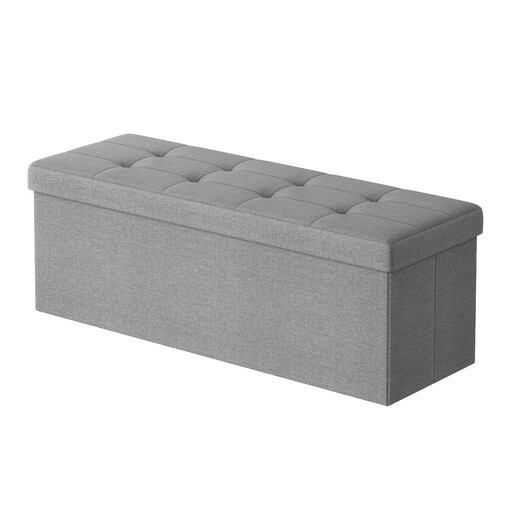
Why it stands out: With a length of 110 cm and a generous volume, this model offers an exceptional amount of space. Its high load capacity makes it a very stable seating option for multiple people.
Advantages:
Who it's for: Ideal for families or anyone looking for a long and sturdy bed bench or a spacious hallway bench with maximum storage.
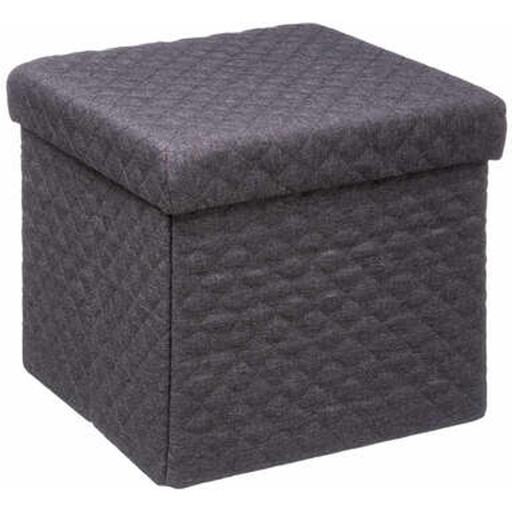
Why it stands out: This compact, square model is a space-saving solution that works well as a seat, footrest, or a small storage box seat.
Advantages:
Who it's for: Suitable for small apartments, children's rooms, or as a flexible extra seat for guests that can be quickly assembled and disassembled.
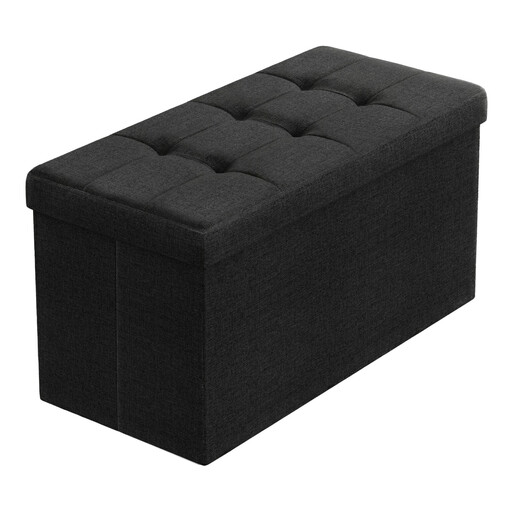
Why it stands out: This model combines a high load capacity with a medium size, making it a versatile choice for various rooms. The black design is modern and understated.
Advantages:
Who it's for: Users looking for a sturdy and stylish upholstered bench with a lid for the living room or bedroom that strikes a balance between size and stability.
The models featured here cover common use cases. However, if you haven't found the perfect product for your specific needs, other alternatives are available. If you're looking for different sizes, colours, or designs, you can find a wider selection of multifunctional storage solutions in our Foldable Storage Box category.
The load capacity varies greatly depending on the model and its construction. Smaller stools are often rated for around 100–150 kg, while larger, more sturdily built benches, like the featured Ochama models, can support up to 300 kg according to the manufacturer. It is crucial to always check the maximum load capacity in the product specifications to ensure safe use.
The supporting structure is typically made of MDF (Medium-Density Fibreboard). The lid's padding is usually made of foam to enhance seating comfort. Various textiles are used for the upholstery, including polyester, linen-look fabrics, or, less commonly, faux leather (polyurethane).
Assembly is typically very simple and requires no tools. It's done in three steps: