Music collection on a laptop
If you play local files on your computer and want a straightforward headphone connection at your desk, a USB input, headphone socket and power supply matter more than extra formats you won’t use.


If your existing headphone output drives your headphones well enough for you, without distracting hiss or distortion, you don’t need an extra amplifier just to listen to music stored locally. For music on your computer, a USB DAC with a headphone output could be a useful addition. A standalone analogue amplifier, on the other hand, needs a source with an analogue output. Check the connections, the power ratings for the output you’ll actually use and the power supply. Don’t turn the volume up just because the device has more power in reserve.
If you play local files on your computer and want a straightforward headphone connection at your desk, a USB input, headphone socket and power supply matter more than extra formats you won’t use.
If you want to know whether your existing output is powerful enough for your headphones, compare the power ratings for the relevant connection and impedance, rather than focusing on a high wattage figure alone.
If you already have a source with an analogue output, a compact amplifier could be an option. Check its input, the cables you’ll need and the power supply.
First, check whether your existing headphone output is good enough. Then look at the signal path and connections to see whether a USB DAC or an analogue amplifier will suit your setup.
A good fit if: your headphones play loudly enough, without distracting hiss or distortion.
Consider: You won’t need another device, but it won’t solve a lack of power or interference from your existing output.
A good fit if: your music collection is on your computer and you want a separate digital signal path with a headphone output.
Consider: The USB connection and power supply must suit the specific model. Extra digital inputs are only useful if you plan to connect compatible sources.
A good fit if: your music source already has a suitable analogue output.
Consider: An analogue model won’t process digital music files directly over USB. If you have a digital source, you’ll also need a digital-to-analogue conversion stage.
| Priority | What to check when buying | Who is it most relevant to? |
|---|---|---|
| Computer connection | USB audio input, headphone output and the power supply required by the specific model. | If I want to play local files easily at my desk, having the right connection for my computer is essential. Around 36% of consumers say computer connectivity is their top priority. |
| Driving your headphones | Connector, impedance and power ratings for the specific output you plan to use. | If I want to keep using my existing wired headphones, getting the right combination matters more than choosing the highest possible wattage. Around 29% of consumers say headphone performance is their top priority. |
| Overall cost | Existing connections, any cables you’ll need and whether a power supply is included. | If I want to avoid extra devices and accessories in my student room, I want to know exactly what connections I’ll need in advance. Around 21% of consumers say overall cost is their top priority. |
| Analogue source | Check that the source’s output works with the amplifier’s input and the cables you have. | If I already own an analogue music source, I want to connect it without unnecessary extra conversion. Around 14% of consumers say connecting an analogue source is their top priority. |
For the FiiO K11, the manufacturer’s figures for the 6.35 mm and 4.4 mm outputs are based on separate test conditions and specified loads. You can’t directly apply the figures for one output to the other.
Compare the output your headphones can actually use, ideally at a suitable impedance.
According to the manufacturer, the Douk Audio U3 has an RCA analogue input but no specified USB audio input. That signal path alone isn’t enough for a digital-only source.
Check your music source’s output first, then decide whether you need an analogue amplifier or a USB DAC with an amplifier.
Digital sources may need an additional conversion stage. The Douk Audio U3 also doesn’t include a power supply, according to the manufacturer.
Power supplies and USB connections vary by model. The FiiO E10K and E10K-TC also have different connection options.
Before you decide, check the full model name, what’s included, the power supply required and the connectors.
FiiO’s K11 is a desktop USB DAC with extra optical and coaxial inputs, while the E10K is a smaller USB option. The details below apply to the specific model variant named.
The iFi ZEN DAC 3 is designed for a USB-based desktop setup with headphones and, if needed, active speakers.
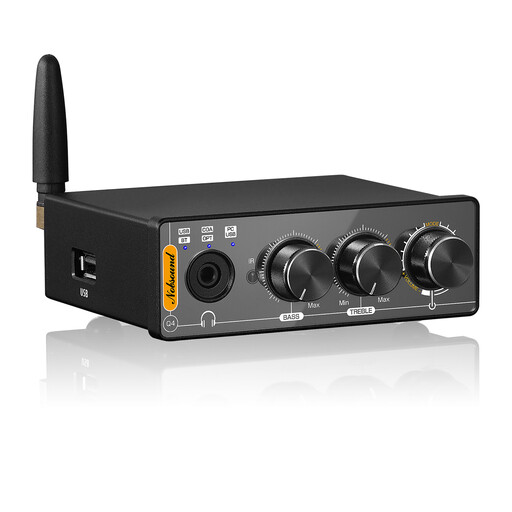
The Q4 connects several types of digital source to a DAC and headphone output.
The U3 is a small, purely analogue option for sources with an RCA output.
The Magni Unity is an analogue desktop amplifier; DAC functionality depends on an optional internal module.
These product options are for a desktop USB DAC with headphone amplifier or an analogue desktop amplifier.
 No image available
An option to consider if you’re looking for a DAC with a headphone output to play your local music collection at your desk.
The product name lists an optical input, 24 bit/192 kHz, treble and bass controls, and a remote control. The product details state that an external DC power supply is required; use a suitable power supply only.
 No image available
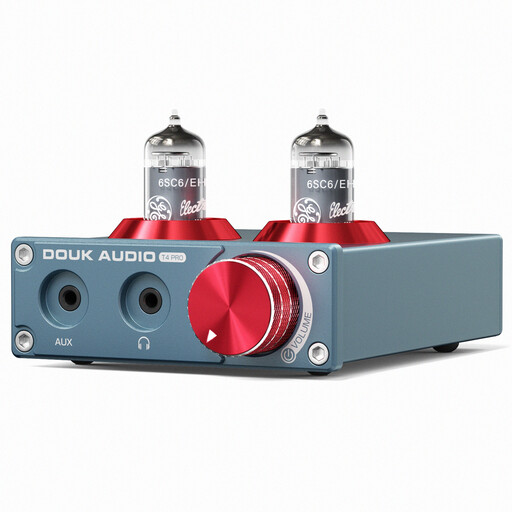
Better suited to a desktop setup if your source sends an analogue signal through the 3.5 mm AUX input. An analogue amplifier alone isn’t enough for a direct digital USB connection.
The product name lists GE5654 valves and an MM phono preamplifier. Before choosing, check that the analogue input is compatible with your source.
No, not necessarily. First, check whether your existing output drives your headphones well enough for you, without unwanted noise. An external USB DAC could be a good fit if you need a separate digital signal path and headphone output.
Only connect compatible inputs and outputs, and follow the power requirements for your specific device. Turn the volume down before connecting or changing the gain; iFi audio and Fosi Audio include similar guidance in their manuals. The German Environment Agency warns that excessive sound, depending on its level and duration, can affect your hearing or cause permanent damage.
For a consumer purchase, your statutory rights against the seller are separate from any additional manufacturer’s guarantee. The EU’s Your Europe information states that purchases of goods in the EU come with a minimum two-year legal guarantee from the date you receive the goods.
According to the German Federal Ministry for the Environment, old electrical equipment must not go in household waste. Take the device to an authorised collection point or use another legally provided take-back scheme.
No. The EU’s information on CE marking doesn’t describe it as an award for sound quality. It’s only required for products covered by harmonised EU rules; the requirements that apply to a specific device depend on the product.