
Lieferung heute & morgen

Qualitätsgarantie

Willkommens-Angebote freischalten: KOSTENLOSE Lieferung | Bis zu 80 % RABATT | Kostenlose 30-Tage-JoyPlus-Testphase
App herunterladen
The selection of headphones is vast, and manufacturers' marketing claims are often grandiose. But not every feature delivers on its promise, and not every model is right for every user. This guide will help you identify the crucial features and avoid common purchasing traps, so you can make an informed decision.
Before we dive into the technical details, let's highlight three common issues that often lead to post-purchase disappointment.
To avoid a bad buy, you should carefully examine three technical aspects. These are the primary determinants of a headphone's performance and suitability for your daily life.
The form factor is the most fundamental choice and depends directly on your use case.
The choice between wired and wireless headphones depends on your priorities.
Headphones with noise cancelling are a valuable tool for commuters and people in loud environments. They use microphones to analyze ambient sounds and neutralize them with inverse sound waves. The quality of the ANC is a key differentiator. Adaptive systems that adjust to the environment are generally more effective than simple on/off solutions.
Here are some recommendations tailored to specific user profiles and their needs.
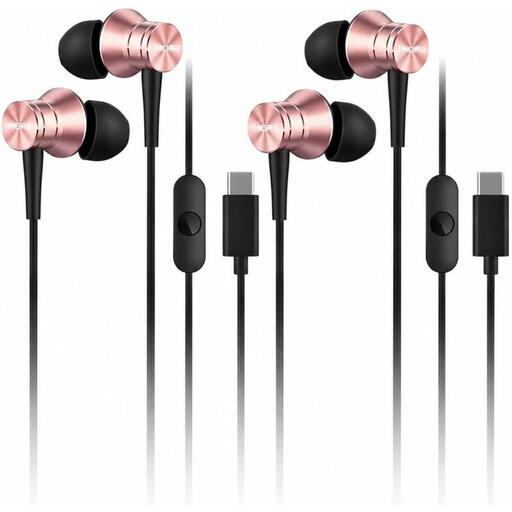
Why This Fits Their Persona: Ideal for users seeking a straightforward and reliable solution for modern smartphones without a headphone jack. The USB-C connection ensures broad compatibility, and the lightweight design is perfect for the daily commute or listening to podcasts.
As a wired model, it completely sidesteps the pitfall of unrealistic battery life. It also addresses the fit problem with included silicone tips and an angled design, which provides a more secure fit and better passive isolation.
Plug-and-play functionality with USB-C devices; durable, Kevlar-reinforced cable; built-in microphone for calls.

Why This Fits Their Persona: Designed for individuals who need to focus or relax in noisy environments like trains, planes, or open-plan offices by effectively blocking out external sounds.
It addresses the ANC trap with adaptive noise cancellation that, according to the manufacturer, reduces ambient noise by up to 98%. It also provides clear battery life specs: 40 hours with ANC on and 55 hours with it off.
Supports LDAC for high-resolution audio; long battery life; rotating earcups and a soft headband for superior comfort.
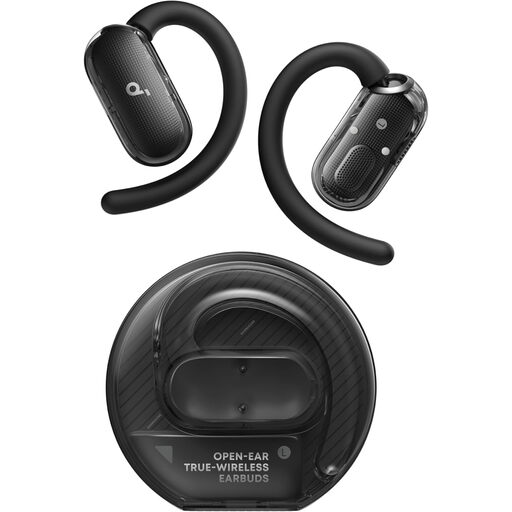
Why This Fits Their Persona: Designed for active people who don't want to give up music while running, at the gym, or during other sports. A secure fit and sweat resistance are the most important criteria here.
Solves the fit problem with adjustable ear hooks that adapt to the individual's ear shape, ensuring a secure fit during movement. The open-ear design allows ambient sound to pass through, increasing safety outdoors.
IPX5 water resistance protects against sweat and rain; adjustable ear hooks for a secure fit; open-ear design for environmental awareness.
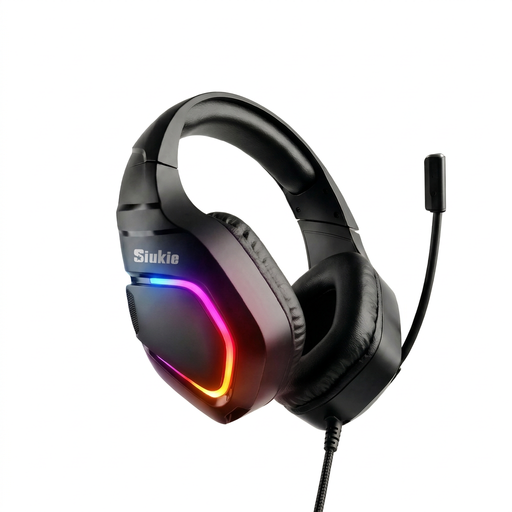
Why This Fits Their Persona: This headset is aimed at gamers who need a cross-platform solution for PS5, PS4, Xbox, Switch, and PC. The focus is on surround sound for pinpointing opponents and a clear microphone for team communication.
By using a wired connection (USB & 3.5mm jack), it completely avoids latency issues and dead batteries mid-game—two of the biggest pitfalls of using wireless headphones for competitive gaming.
Broad compatibility with consoles and PC; stereo surround sound for immersive gameplay; built-in microphone.
We've compiled a complete, up-to-date list of products that fully meet these strict selection criteria and safety standards.
1. What is the actual lifespan of wireless headphones? The lifespan of wireless headphones is largely determined by the built-in battery. With daily use, the battery's capacity will noticeably degrade after about two to three years. Since the battery is not replaceable in most models, especially True Wireless Earbuds, a dead battery often means the end of the device's usable life.
2. What does the IP rating on headphones mean? The IP (Ingress Protection) rating indicates how well a device is protected against the entry of foreign objects (first digit) and water (second digit). For headphones, only the second digit is often relevant (e.g., IPX4).
3. Are more expensive headphones necessarily better? Not necessarily. The price often correlates with the number of features (e.g., high-quality ANC, multi-device connectivity), material quality, and brand positioning. An expensive pair of audiophile headphones with an open-back design might offer outstanding sound at home but is unsuitable for use on the subway. The "better" model is always the one that best meets your specific needs.