Listeners in a noisy home
If you want to follow dialogue despite household noise, check the fit and closed-back design. Sony points out that ANC doesn’t block out all background noise, and changing voices may still be audible.


For listening to spoken-word audio in a noisy home, a well-fitting, closed-back pair of headphones is a sensible starting point. ANC can also help with steady background noise, but it won’t reliably block out voices or changing sounds. Your audio source’s output matters too: a conventional radio needs a compatible Bluetooth, wired or base-station connection. Try listening to speech at a comfortable volume rather than compensating for background noise by turning it up.
If you want to follow dialogue despite household noise, check the fit and closed-back design. Sony points out that ANC doesn’t block out all background noise, and changing voices may still be audible.
If you want to keep using your current audio source, first check that its output matches the headphones’ wired connection or the input on a headphone base station. Sennheiser and Philips list analogue and optical connections for their respective systems.
For longer listening sessions, comfort, ease of use and a comfortable volume all matter. The World Health Organization recommends well-fitting headphones to reduce the temptation to turn up the volume in noisy environments.
First, check that the headphones suit the noise in your room and the output on your audio source. Then consider how clearly you can hear speech and how comfortable they feel during a typical listening session.
| What matters | What to check before buying | Especially important if |
|---|---|---|
| Blocking out background noise | Check the closed-back design and fit; Sony says ANC doesn’t completely block out changing voices. | Household noise is drowning out the dialogue, so I want to assess the fit and noise isolation first. Around 29% of consumers prioritise noise isolation. |
| Connecting to your audio source | Check for Bluetooth audio output, a compatible headphone socket or an analogue or optical input on the base station. Sennheiser and Philips list specific connection options for their systems. | I want to keep using my existing radio, so I check its outputs before choosing a model. Around 29% of consumers prioritise a compatible connection. |
| Hearing dialogue at a comfortable volume | Try listening to a familiar spoken passage. The World Health Organization recommends well-fitting headphones and, where appropriate, noise-reducing headphones to reduce the temptation to turn up the volume. | I want to understand spoken passages without continually turning up the volume to overcome background noise, so I test them at a comfortable level. Around 28% of consumers prioritise speech clarity at a moderate volume. |
| Comfort throughout a whole episode | Try the headphones during a typical listening session, and consider the fit, controls, cable routing and, for wireless models, charging requirements. | I listen to longer episodes, so comfort and ease of use matter most to me. Around 14% of consumers prioritise long-term comfort. |
Sony’s technical guidance explains that noise cancelling doesn’t block out every sound, and voices around you may still be audible.
Check the fit and noise isolation against the sounds that actually bother you. If you still want to hear other people, try any available ambient mode too.
Bluetooth headphones won’t automatically receive audio from a conventional radio. A base station will only work if its input is compatible with your audio source.
Before buying, compare your radio’s outputs with the connections on the headphones or their base station. For optical audio, you’ll also need to check which audio format is required.
Philips specifically describes the SHD8850/12 as an open-back pair of headphones. Its design shouldn’t be assumed to offer the same noise isolation as a closed-back model.
Check the design of the exact model, and assess comfort and noise isolation separately.
Your statutory rights are against the seller; a guarantee is a voluntary promise with its own terms and conditions.
Before buying, check who the seller is, what the guarantee covers and whether replacement parts are available.
The WH-1000XM5 is a closed-back Bluetooth over-ear model with ANC, an ambient mode and a detachable audio cable.
The QuietComfort headphones are a Bluetooth over-ear option with Quiet and Aware modes, adjustable EQ and an audio cable included.
The RS 175-U uses a dedicated wireless base station, which Sennheiser says can connect to an audio device via an analogue or optical output.
The closed-back, wired DT 770 PRO is worth considering for a fixed listening spot with a compatible jack output.
The SHD6000BK/12 and SHD8850/12 illustrate the different designs and connection options available with wireless TV headphones.
The models below are wireless over-ear headphones with ANC. If you’re using a radio, check whether it can output Bluetooth audio or has a compatible wired connection.
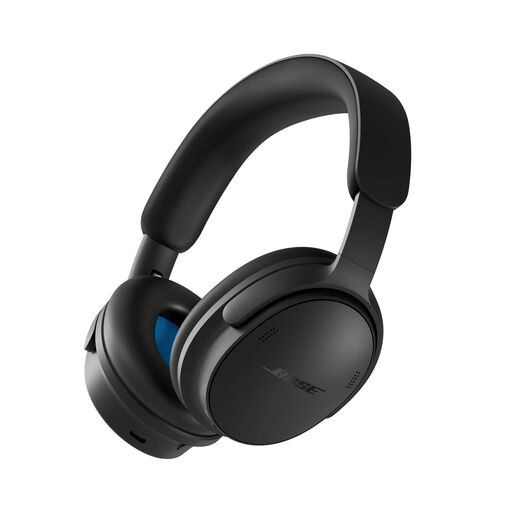 No image available
This over-ear model with ANC is worth considering if you have a Bluetooth-compatible audio source or a suitable wired output.
Quiet and Aware modes and a 3.5 mm audio cable are listed. The product specifications state up to 24 hours of battery life with noise cancelling on.
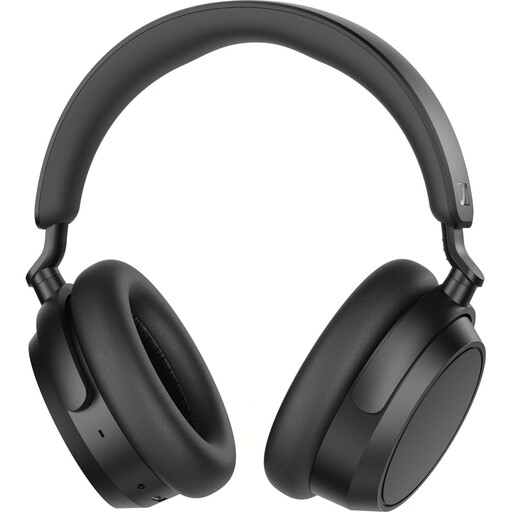 No image available
This closed-back over-ear model with ANC may suit listeners looking for noise reduction and wireless listening.
Specifications include Bluetooth 5.2 with aptX, multipoint connectivity, a detachable cable and up to 50 hours of battery life.
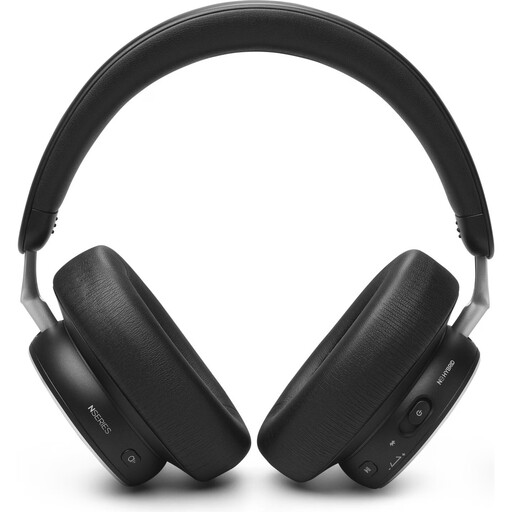 No image available
This over-ear model offers ANC for wireless listening, as well as a 3.5 mm connection for compatible wired devices.
Bluetooth 5.3 with multipoint connectivity and up to 55 hours of battery life are listed.
 No image available
These wireless over-ear headphones with ANC may suit you if your audio source supports Bluetooth.
Specifications include multipoint connectivity, a detachable audio cable and up to 76 hours of playback without ANC.
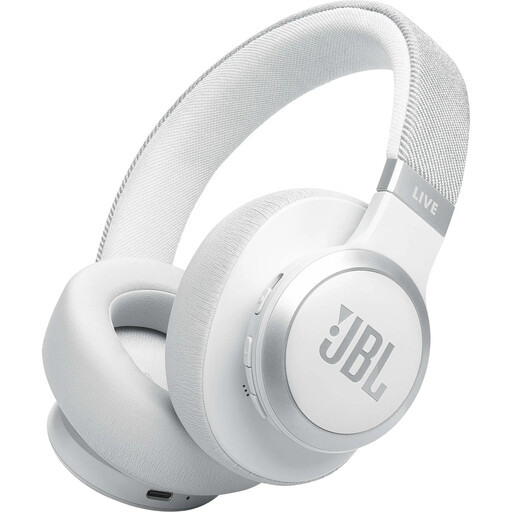 No image available
If you want ANC with a Bluetooth-compatible audio source, while still being able to hear your surroundings when needed, these listed features are worth comparing.
Specifications include adaptive noise cancelling, Smart Ambient, a detachable audio cable and up to 50 hours of playback with ANC on.
Only if your particular radio can send audio via a compatible Bluetooth output. Otherwise, check for a suitable wired output or a wireless headphone base station with an input that matches the connection you have. The Sennheiser RS 175-U is one example of a system with an analogue or optical connection.
For the Philips SHD8850/12, Philips recommends selecting PCM/Stereo in the TV menu and choosing “OPTICAL SELECT” on the station. If that TV option isn’t available, Philips lists an analogue connection as an alternative for this model. These steps won’t necessarily apply to every radio or base station.
The World Health Organization recommends well-fitting headphones and, where appropriate, noise-reducing headphones, keeping the volume low and taking listening breaks. Its example of an average of 80 dB for no more than 40 hours per week is a guide to sound exposure, not a guaranteed volume limit for any particular pair of headphones.
If there’s a fault, remember that your statutory rights against the seller are separate from any voluntary guarantee. According to the consumer advice centre, online purchases generally come with a 14-day right to cancel; check the conditions and any exceptions that apply to your purchase.
No. The Federal Network Agency lists CE marking, product identification and accurate manufacturer details among the checks carried out during market surveillance. This doesn’t mean that every model on sale has received individual approval from the authorities.