When low engine rumble drowns out the bassline, a well-fitting pair of ANC headphones is the more obvious option to compare first: RTINGS describes ANC models as particularly effective against low-frequency engine noise in its travel tests. If you also want to use your headphones for monitoring, closed-back wired studio models may be suitable – provided their passive isolation is enough for your journey and the fit, sound and connection work for you.
Who are the different types of headphones suitable for?
Picking out basslines on a noisy bus
When engine and road noise mask low notes, fit and isolation are important factors to consider. RTINGS looks at how well headphones reduce low-frequency bus noise in its travel tests; the WHO recommends well-fitting or noise-cancelling headphones so you don’t have to turn the volume up as much in noisy surroundings.
Musicians who use headphones in the studio and on the go
If you want to pick out notes while travelling and use the same headphones for monitoring later, compare the sound signature of the specific model and check the fit and connection. beyerdynamic and ADAM Audio describe studio models for this purpose; Bonedo’s review of the ADAM Audio H200 also notes its clamping force as a drawback.
Travellers who listen for long periods
If you replay sections during longer stretches of a journey, consider how the ear pads and clamping force feel to you. Models also differ in their wired and battery-powered operation, as well as how easy they are to carry; for example, Sennheiser lists replaceable ear pads and a foldable design for the HD 280 PRO.
What should you look for when choosing?
ANC travel headphones
A good fit if: Persistent engine rumble makes it difficult to pick out the bassline.
Bear in mind: ANC needs a charged battery; listening over a cable with the headphones switched off is not the same as using ANC while they’re on.
Closed-back wired studio headphones
A good fit if: You also want to use the headphones for monitoring and passive isolation is sufficient for your route.
Bear in mind: A closed-back design won’t block out every low-frequency travel noise, and cables can get in the way at your seat.
| Priority |
What to check before buying |
Who is this important for? |
| Isolation from engine rumble |
Compare ANC with passive isolation; for ANC models, check how they work with and without battery power. |
If I don’t want to drown out low-frequency travel noise by turning the volume up when listening repeatedly, isolation is my main priority. Around 36% of consumers put this first. |
| Assessing bass notes and attacks |
Compare a familiar recording at the same volume; don’t treat sound specifications as a substitute for listening. |
If I need to distinguish the pitches and timing of a bassline, what matters to me is how it sounds with that particular recording and operating mode. Around 29% of consumers prioritise being able to assess bass detail. |
| Fit during longer listening sessions |
Check the ear pads and clamping force; weigh up a foldable design and replaceable pads against how they fit you. |
If I often replay the same sections on a longer journey, I want to avoid pressure points and wear my headphones comfortably. Around 21% of consumers put comfort first. |
| Connection and storage |
Check the audio output, any adapter you need, cable length and packed size against your playback device. |
If I want to connect my headphones at my seat and pack them away easily, the cable and connection are key. Around 14% of consumers prioritise wireless connectivity and portability. |
Which assumptions should you avoid?
-
“Closed-back” doesn’t automatically mean effective protection from engine rumble
Passive isolation may do less to reduce low-frequency travel noise than ANC. Turning the music up as a result is not an equivalent solution.
Compare ANC with passive isolation at a volume you can comfortably keep low. The WHO recommends well-fitting or noise-cancelling headphones so you don’t have to turn the volume up as much in noisy surroundings.
-
A stated frequency range doesn’t prove you’ll be able to pick out the bassline on a bus
A technical frequency specification on its own doesn’t tell you how well you’ll be able to assess a particular passage over travel noise.
Compare familiar passages using the playback device you intend to use. Keep technical specifications, the manufacturer’s claims about the sound signature and your own listening impressions separate.
-
Check the wired mode, cable length and spares before you buy
The wrong connector or a cable that gets in the way at your seat can make it harder to replay sections. Not every model has a detachable cable or works in the same way when the battery runs flat.
Check the connection and cable length against your playback device and seat. Also make sure suitable replacement parts are available.
Depending on the combination, you may need a suitable adapter or a model-specific replacement part.
Which brands are worth considering?
Sony
Sony offers the WH-1000XM6 as an ANC option for travel and the MDR-7506 as a separate wired model for monitoring.
- Sony lists ANC, a detachable cable and passive playback with the WH-1000XM6 switched off. In its own travel test, RTINGS reports good isolation from bus noise.
- That travel-focused isolation doesn’t prove the headphones offer a neutral bass response for transcription. In 2018, Bonedo criticised the MDR-7506 for its non-detachable cable.
ADAM Audio
The H200 is a closed-back studio headphone with a cable and replaceable components.
- ADAM Audio lists a detachable cable and 32 Ohm impedance. Bonedo reviewed the model’s playback and isolation in 2024.
- In that review, Bonedo noted the strong clamping force. The included DAW plug-in isn’t an advantage if you’re just listening on the bus.
Austrian Audio
The Hi-X60 is a closed-back studio headphone with a foldable design for use on the go.
- Austrian Audio lists a detachable cable, replaceable components and a foldable design.
- The manufacturer’s claims about sound precision aren’t an independent measurement on a coach. Passive isolation is not the same as ANC.
beyerdynamic
The DT 700 PRO X is a closed-back, wired studio all-rounder.
- beyerdynamic lists 48 Ohm impedance, a weight of 350 g without cable, detachable cables and available replacement parts.
- The manufacturer’s description of a balanced sound signature doesn’t prove that it will sufficiently reduce engine rumble on a particular journey.
Audio-Technica
The ATH-M50x is a closed-back studio headphone with a detachable cable and passive isolation.
- Audio-Technica describes the model’s passive isolation and suitability for use on the go.
- The manufacturer’s sound quality claims don’t prove it will perform like ANC against low-frequency bus rumble.
Sennheiser
The HD 280 PRO is a foldable wired headphone for monitoring, with passive noise reduction.
- Sennheiser lists up to 32 dB of ambient noise reduction, replaceable ear pads, a 3.5-mm plug and a foldable design.
- “Up to 32 dB” doesn’t guarantee that low-frequency engine noise on a bus will be reduced by that much. Also check whether the coiled cable is practical at your seat.
ANC headphones at Joybuy
The Joybuy products below are a selection of ANC over-ear headphones for travel. They aren’t a substitute for comparing closed-back wired studio headphones if you also want to use the same pair for monitoring.
 No image available
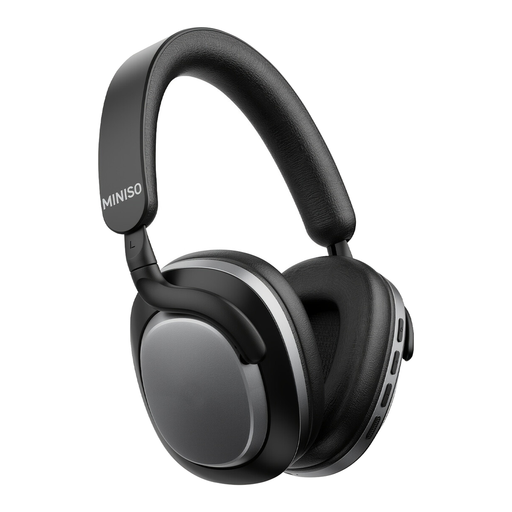
MINISO MG210 wireless over-ear headphones with noise cancelling, Black
An option if you’re looking for wireless ANC over-ear headphones for your journey.
The product name lists 24 hours of battery life.
View at Joybuy
 No image available
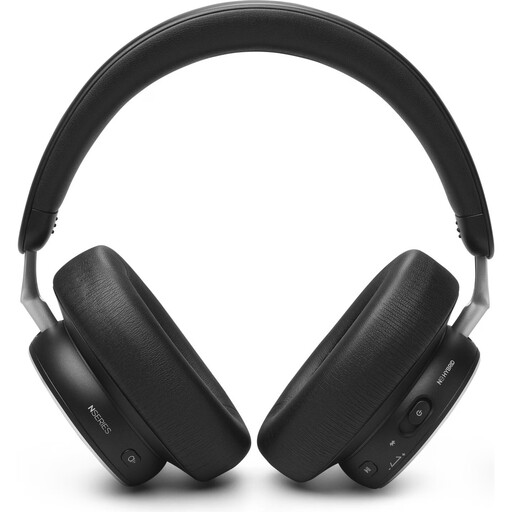
AKG N9 Hybrid over-ear headphones with Active Noise Cancellation, Black
For travelling, if you’d like the choice of a wireless or wired connection.
The product name lists Bluetooth 5.3, a 3.5-mm cable connection and 55 hours of battery life.
View at Joybuy
 No image available
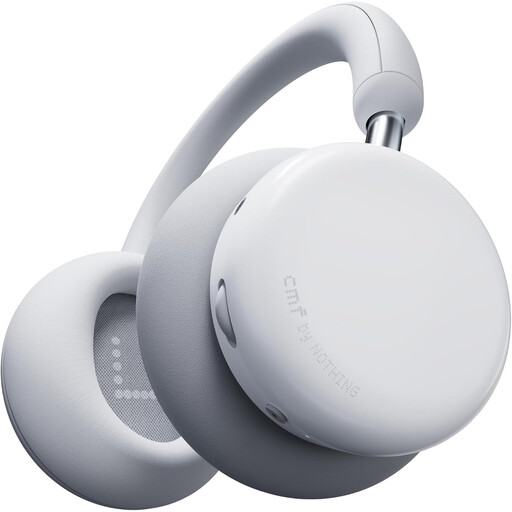
CMF Headphone Pro wireless over-ear headphones with hybrid ANC, Light Grey
An option for longer listening sessions if you’re looking for ANC and replaceable ear pads.
Specifications include Bluetooth 5.4, a weight of 283 g and up to 100 hours of battery life without ANC.
View at Joybuy
 No image available
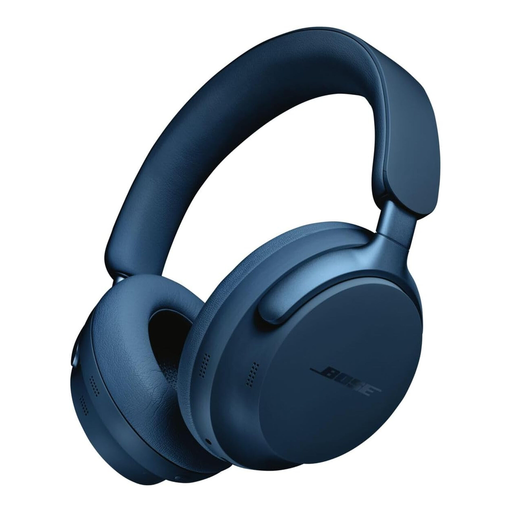
Bose QuietComfort Ultra, Moon Blue Limited Edition
Worth considering if you want to compare noise cancelling with the option of wired listening.
The product name lists up to 24 hours of battery life. The description includes an audio cable and a 2.5-mm connection.
View at Joybuy
 No image available
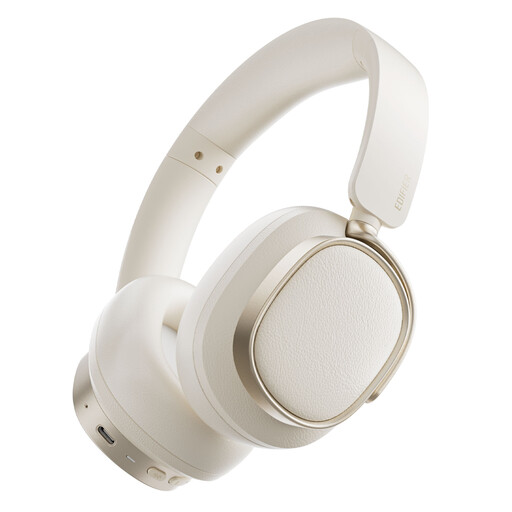
Edifier ES850NB, Active Noise Cancelling, Ivory
An option if you want to compare ANC and the choice of Bluetooth or wired listening for your journey.
The description lists a foldable design and a weight of 260 g.
View at Joybuy
Frequently asked questions
Do I need to turn the volume up on the bus because of the engine noise?
No. The WHO recommends well-fitting or noise-cancelling headphones so you don’t have to turn the volume up as much in noisy surroundings. As an example of safe listening, it cites 80 dB for no more than 40 hours a week; the actual volume and your total listening time are what matter.
Will ANC headphones work in the same way over a cable when the battery is flat?
Not necessarily. Sony states that the WH-1000XM6 supports passive wired playback when switched off; that’s not the same as using it over a cable with ANC switched on. Check the operating modes for the specific model.
What should I check on my own playback device?
Check that your device’s audio output matches the plug on the exact headphone model. Sennheiser lists a 3.5-mm plug and a 6.3-mm adapter for the HD 280 PRO; whether you need an adapter depends on your device.
What rights apply to online purchases in Germany?
For a distance contract where the rules apply, you generally have a right to cancel under § 312g BGB; § 355 BGB generally provides a 14-day period. Statutory exceptions and the start date of the period applicable to the specific purchase must be taken into account. Your statutory rights against the seller are separate from any voluntary guarantee.


