Who these headphones may suit

Careful repeat listeners

You listen to short dialect samples several times and want to compare the speech details in the recording on your playback device, rather than relying on claims about sound quality. Guidance on repeated listening and monitor headphones draws, among other sources, on research published in the Journal of the Acoustical Society of America and information from Audio-Technica.

Listeners in shared spaces

Other sounds can mask quiet passages, and you may want to avoid disturbing those around you. RTINGS considers noise isolation and sound leakage as aspects of isolation; Sennheiser describes the HD 569 as a closed-back pair of headphones.

Listeners in different locations

You switch between playback devices or listening positions, so you need to weigh up the connection, controls, isolation and personal comfort. Sony and JBL list wireless listening and noise-reduction features for specific models.

What to consider when buying

Closed-back and wired

A good fit if: you compare short words repeatedly in one place and don’t want to manage a battery. Audio-Technica and Sennheiser offer specific closed-back wired models.

The trade-off: fit and connection both matter, and the cable limits your freedom of movement. A manufacturer’s claims about sound don’t prove that a particular dialect recording will be easier to understand.

Closed-back, wireless and with ANC

A good fit if: you listen in different or noisier places and want to use Bluetooth and additional noise reduction. Sony and JBL list these features for specific models.

The trade-off: you’ll also need to manage battery life and model-specific controls. ANC works on noise outside the headphones, not interference that’s already part of the audio file.

Open-back and wired

A good fit if: your listening space is quiet and isolation or keeping sound from disturbing others isn’t a priority.

The trade-off: open-back headphones do less to block background noise or contain sound. RTINGS explains this limitation in its overview of headphone isolation.

Buying priority What to check Who it matters most to
Picking out speech details Compare the same difficult passage on your own playback device at a moderate volume. When I compare short words repeatedly, I want to hear the speech details in the recording as clearly as possible. Around 33% of consumers put picking out these details first.
Room noise and sound leakage Check the fit and ear cushions; consider ANC for external noise, but don’t expect complete silence. In a shared space, I want to follow quiet passages without others having to listen in. Around 27% of consumers prioritise reducing room noise and sound leakage.
Comfort during longer listening sessions Try the fit for as long as you’d normally listen, if possible; consider the clamping force and cable routing. For repeated or longer listening sessions, I need a fit that feels comfortable to me. Around 20% of consumers prioritise comfort.
Connection and controls Check that the connection or Bluetooth feature is compatible with your device; check the cable and adapter if needed. If I want to listen on my current device and perhaps switch between devices, the connection needs to work for me. Around 20% of consumers put connection and controls first.

Common buying mistakes

  • Confusing ANC with repairing the recording

    Blocking external noise and understanding an already noisy file are two different things. ANC in headphones can’t remove interference that’s already in the recording.

    Try listening to the same difficult passage and consider whether the main issue is room noise or the recording itself.

  • Choosing open-back headphones in a shared space without considering sound leakage

    Open-back models don’t isolate you from your listening space in the same way as closed-back headphones, and they do less to contain the sound you’re listening to.

    Consider an open-back design mainly if the room is quiet and others won’t be disturbed by sound they can hear.

  • Leaving plugs, cables and wear parts until after you buy

    Connections and included cables vary between models. Ear cushions can also affect your personal fit and how you use the headphones over time.

    Check that the plug matches your device, and make sure any cables and model-specific replacement parts you need are available.

  • Comparing advertised battery life without checking the operating mode

    Sony gives different maximum battery life figures for the WH-CH720N with noise reduction switched on and off. JBL publishes conflicting battery life figures for the Tune 770NC.

    Compare only clearly specified operating modes, and don’t base your decision on a battery life claim when the conditions are unclear.

Relevant brands at a glance

Audio-Technica

The ATH-M40x is a closed-back, wired monitor model for a fixed listening position.

  • Audio-Technica describes the ATH-M40x as offering isolation and a linear frequency response.
  • These manufacturer claims don’t prove that a particular dialect recording will be easier to understand; fit and device connection need checking too.

Sennheiser

The HD 569 is a closed-back over-ear pair of headphones for wired listening.

  • Sennheiser lists a detachable 3 m cable with a 6.3 mm plug, a 1.2 m cable with a 3.5 mm plug and replaceable ear pads.
  • The manufacturer’s claim about isolation isn’t a measurement of your listening space; check the fit and that the connection is suitable.

Sony

The WH-CH720N is designed for wireless listening and, with a compatible output, can also be used passively with a cable.

  • Sony lists noise cancelling, Ambient Sound mode and Multipoint for two devices.
  • The maximum playback times listed vary depending on the noise-cancelling mode; comfort and isolation also depend on how you use the headphones.

JBL

The Tune 770NC is a wireless over-ear pair of headphones with ANC and Ambient Aware mode.

  • JBL lists app-based sound customisation and Multipoint.
  • The product page gives conflicting battery life figures. The advertised bass tuning doesn’t prove that speech will be easier to understand.

beyerdynamic

The DT 770 PRO X is a closed-back, wired studio headphone for stationary recording and monitoring.

  • beyerdynamic lists a detachable Mini XLR cable, 48 Ohm nominal impedance, a weight of 305 g without cable and a nominal clamping force of 5.5 N.
  • The described snug fit may feel different from person to person; try the model on before longer listening sessions, if possible.

Joybuy products

This selection includes over-ear headphones for personal listening without room speakers, with ANC and, depending on the model, Bluetooth and a cable connection. ANC can reduce external noise, but it doesn’t replace comparing your recording on your own playback device.
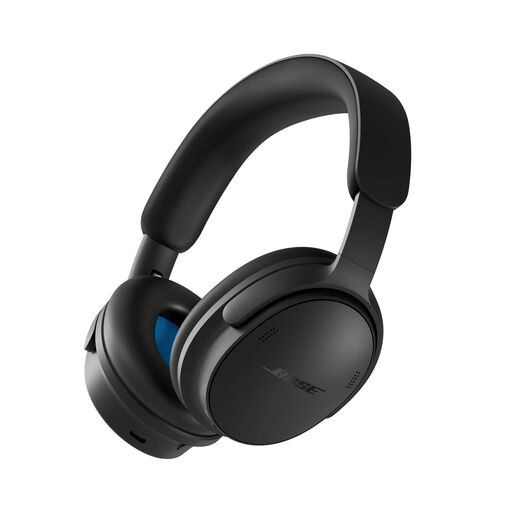
Bose QuietComfort Headphones (2nd Gen), Black

Bose QuietComfort Headphones (2nd Gen), Black

May suit you if you want to switch between Bluetooth and wired listening while reducing external noise.

Bluetooth, a 3.5 mm connection, a detachable audio cable, active noise cancellation and Aware mode are listed.

View at Joybuy
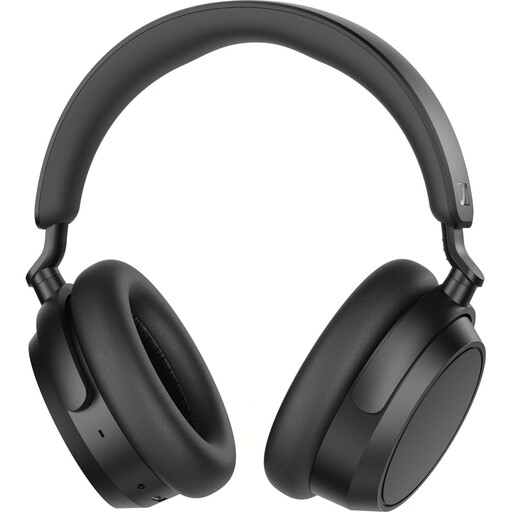
Sennheiser ACCENTUM Plus Wireless over-ear headphones

Sennheiser ACCENTUM Plus Wireless

May suit you if you want to listen wirelessly and switch between two Bluetooth devices; a detachable cable is also listed.

Bluetooth 5.2, aptX, Multipoint, ANC and a detachable cable are listed in the product name or specifications.

View at Joybuy
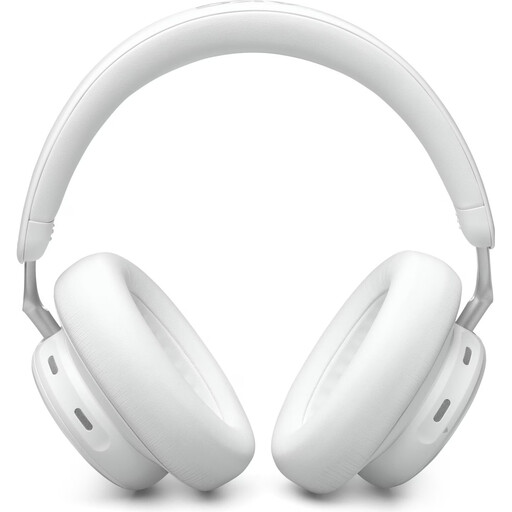
AKG N9 Hybrid over-ear headphones

AKG N9 Hybrid Over-Ear

May suit you if you want to use ANC and Multipoint, as well as needing a 3.5 mm connection.

Bluetooth 5.3, Multipoint, ANC and a 3.5 mm connection are listed.

View at Joybuy
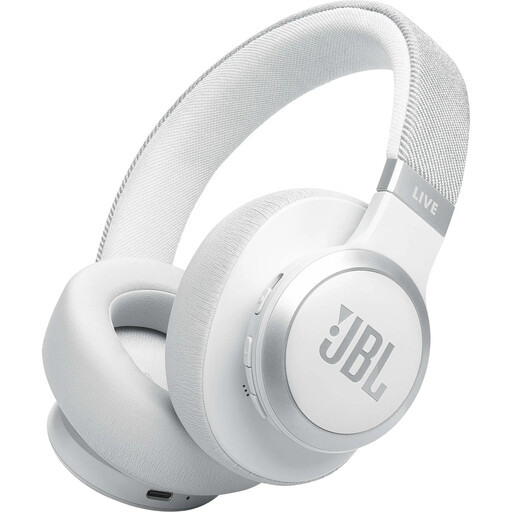
JBL LIVE 770NC, White

JBL LIVE 770NC, White

May suit you for wireless listening with ANC; the product information also lists a wired connection.

Adaptive noise cancelling, Multipoint, app-based customisation and a detachable audio cable are listed. The battery life figures on JBL’s product page conflict, so they’re not a reliable basis for comparison.

View at Joybuy
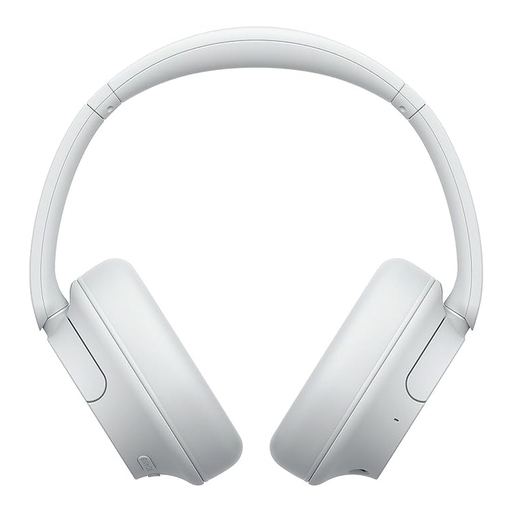
Sony WH-CH720N, White

Sony WH-CH720N, White

May suit you if you want to use ANC in different listening locations and switch between two paired devices.

Sony lists Bluetooth Multipoint for two devices, a 3.5 mm connection and noise cancelling. According to Sony, the model can also be used passively with a compatible cable; maximum playback time depends on the ANC mode.

View at Joybuy

Frequently asked questions

Can ANC remove noise or unclear words from a dialect recording?

No. ANC is designed to deal with noise outside the headphones. If interference is already in the file, ANC can’t remove it. Compare the part in question with your recording and check whether room noise or the file itself is making it difficult to hear.

How do I connect the headphones to my playback device?

First, check your device’s output or Bluetooth capability, then make sure it’s compatible with the specific model. Sony lists a stereo mini jack for the WH-CH720N and passive wired use with a compatible cable; Sony says Multipoint is set up through the app. Sennheiser lists cables with 3.5 mm and 6.3 mm plugs for the HD 569.

How can I listen to quiet passages without turning the volume up unnecessarily?

If possible, reduce distracting background noise and make sure the headphones fit well, rather than simply turning up the volume. The World Health Organization recommends considering volume and listening time together; its example of 80 dB for up to 40 hours a week isn’t a measurement for any particular pair of headphones. If you have ongoing hearing difficulties, seek professional advice.

What are my rights if my headphones are faulty or I bought them online?

When you buy from a trader in the EU, faulty goods are covered by a minimum two-year legal guarantee; a voluntary manufacturer’s warranty doesn’t replace it. For ordinary online distance purchases, you generally have a 14-day right to cancel. Your Europe, the European Union’s information website, explains these rights and when they apply.

How should I dispose of old headphones?

Electrical and electronic waste shouldn’t go in household rubbish. The German Environment Agency recommends taking it to a recycling centre or using an appropriate retailer take-back scheme; removable batteries should be disposed of separately where possible.