For listening closely to grooves
If you listen to a recording repeatedly, you’ll want to pick out rhythmic details despite household noise, without turning up the volume.


Well-fitting, closed-back headphones are a good choice for listening closely to a recording. If everyday noise is a problem, ANC may also be worth considering. The World Health Organization recommends well-fitting or noise-cancelling headphones to reduce the need to turn up the volume in noisy environments. If you play an acoustic drum kit, assess passive isolation and the hearing protection you need for your situation separately: an ANC rating alone does not demonstrate hearing protection.
If you listen to a recording repeatedly, you’ll want to pick out rhythmic details despite household noise, without turning up the volume.
If you listen to a recording or click while playing, passive isolation, a good fit and the noise exposure involved are separate things to consider.
If you practise or listen for extended periods, check that the connection is compatible with your playback device and that the headphones remain comfortable for your usual session length.
A good fit if: you want to listen back to recordings repeatedly or play along via a compatible headphone output.
Bear in mind: Passive isolation depends on the fit. Also check that the impedance and plug are compatible with your playback source.
A good fit if: you play alongside an acoustic drum kit or want to block out ambient noise passively. Vic Firth states that the SIH3 reduces external noise by 25 dB; beyerdynamic gives a figure of 35 dBA for the DT 770 M.
Bear in mind: The manufacturers’ figures are not based on directly comparable measurements. The DT 770 M is described as having a particularly tight fit, which may be less comfortable during longer sessions.
A good fit if: you mainly listen to recordings and are bothered by changing levels of everyday noise. Sony lists ANC, Bluetooth, an ambient sound mode and a stereo mini jack for the WH-1000XM6.
Bear in mind: ANC does not demonstrate hearing protection when playing along with an acoustic kit. If you’re playing in sync, check the recommended connection and remember that battery life is another factor to consider.
| What matters to you | What to check before buying | Who should pay particular attention |
|---|---|---|
| Blocking out household and playing noise | Distinguish between listening to recordings and playing along on an acoustic kit. Check the fit and make sure isolation figures apply to the exact model. | If you want to listen amid household noise or alongside your own kit, your priority is to avoid compensating for unwanted noise by continually turning up the playback volume. Around 33% of consumers prioritise isolation. |
| Picking out rhythmic details | Listen to a familiar passage at a moderate volume and check whether you can distinguish the entries and quieter hits. | If you want to pick out a groove step by step, the kick, snare and quieter hits in the recording matter. Around 27% of consumers prioritise these rhythmic details. |
| A suitable connection for playing along | Check the socket, plug and supplied adapter against your playback device. If you’re playing in sync, test the complete signal path. | If you want to play along to a groove or click, you need a connection that suits your device and works throughout the actual signal path. Around 20% of consumers make a suitable connection for playing along their top priority. |
| Comfort during longer sessions | Check the fit and seal over a practice session of a realistic length for you, and make sure replacement earpads or cables are compatible with the exact model. | If you regularly practise for longer periods, your headphones should feel comfortable and be easy to maintain when parts wear out. Around 20% of consumers prioritise comfort during extended use. |
Using ANC to listen back and assessing noise exposure while playing are two different things. ANC on its own does not demonstrate that you personally have adequate hearing protection.
Choose headphones for the activity you have in mind, and assess noise exposure, fit and playback volume separately.
The DT 770 M and DT 770 PRO are different models. Information about the older Vic Firth SIH2 also does not confirm the features of the SIH3.
Before choosing, check the full model name and variant. Don’t assume that isolation figures or older test results apply to another model.
An incompatible connection can prevent you from using your headphones as planned. A tight clamping force or worn earpads can also affect the fit and seal.
Check the plug and what’s included for the exact model, and make sure the fit suits the length of your usual practice sessions.
According to the manufacturer, the SIH3 is a wired stereo isolation headphone for playing or practising along to recordings.
According to the manufacturer, the DT 770 M is designed for drummers and FOH applications. The 80-ohm DT 770 PRO is a different closed-back studio option.
The ATH-M50x is a closed-back studio option for people who mainly want to listen back to recordings.
The WH-1000XM6 is an ANC option for learning from recordings when everyday noise is distracting.
The following ANC headphones and earbuds are options for listening to groove recordings when household noise is distracting. ANC alone does not demonstrate hearing protection when playing an acoustic drum kit.
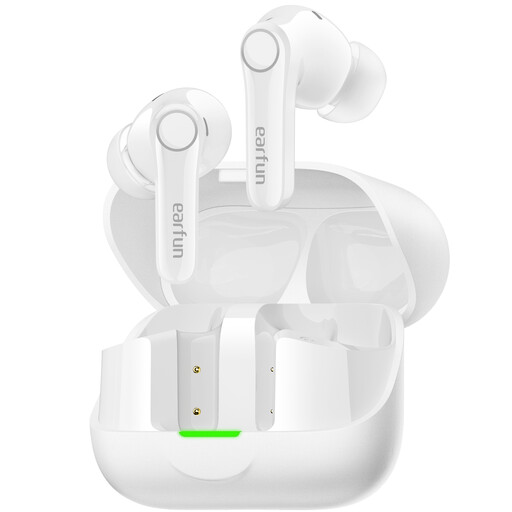 No image available
The ANC feature may be useful if you want to listen back to recordings when household noise is distracting.
The product title lists ANC up to 50 dB, Bluetooth 6.0, aptX Lossless and LDAC.
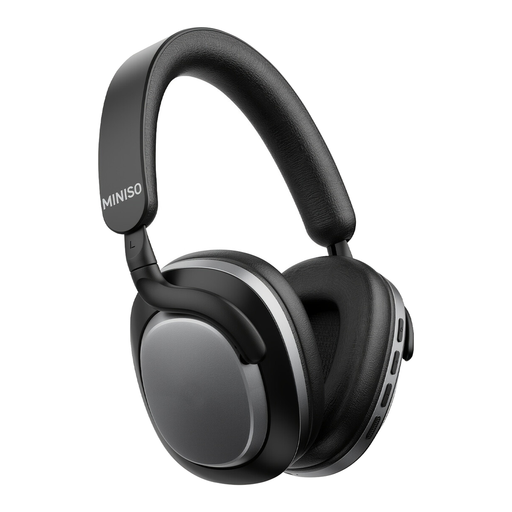 No image available
As an over-ear model with noise cancelling, these headphones are an option for listening back to recordings repeatedly amid everyday noise.
The product title lists 24 hours of battery life.
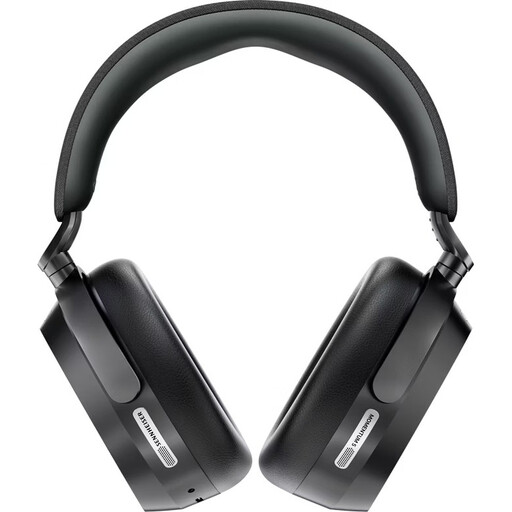 No image available
The closed-back design and ANC are useful for listening to recordings when household noise is distracting.
The product title lists Bluetooth 5.4 and ANC; the product description mentions a supplied 3.5 mm audio cable.
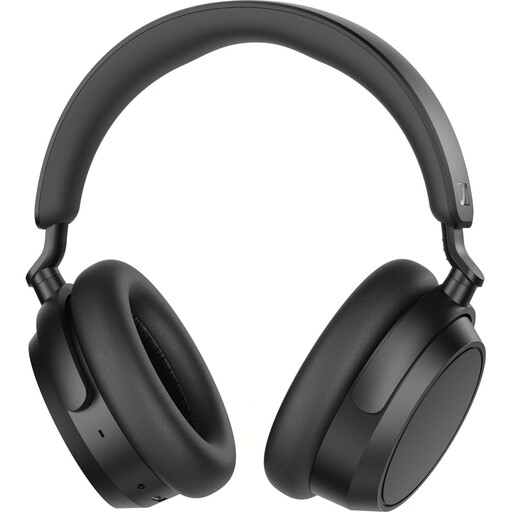 No image available
The closed-back design and ANC described are useful for listening to recordings when household noise is distracting.
The product title lists Bluetooth 5.2, aptX and Multipoint; the product description mentions a detachable cable.
 No image available
The over-ear design and ANC are an option if you want to listen to groove recordings when household noise is distracting.
The product title lists ANC and Multipoint; the product description mentions a detachable audio cable connection.
ANC can help reduce the need to turn up the playback volume when listening in a noisy environment. However, this does not demonstrate that you personally have adequate hearing protection when playing an acoustic drum kit. Assess your noise exposure and the protection suitable for your playing situation separately.
Check the socket on your playback device or drum module against the plug and what’s included with the exact headphone variant. A 3.5 mm connection and 6.35 mm adapter are listed for the SIH3 and DT 770 M. If you’re playing in sync, test the complete signal path before choosing a wireless connection.
In its article dated 13 August 2026, Verbraucherzentrale explains that for goods ordered online, you generally have a 14-day cancellation period from the date you receive them. Check the terms of your specific purchase. Your statutory rights against the seller are separate from any voluntary guarantee. If an item is faulty, the first step may be to request a repair or replacement.
Wearing headphones does not give you general permission to play the drums as loudly as you like. The German Environment Agency notes that rules on noise from neighbours can be set out in state laws, local regulations and house rules, among other places. The rules that apply where you live depend on local requirements. Headphones also won’t stop drum noise from travelling outside your home.