Who is this article for?

Learning solos by ear

You listen to short guitar passages repeatedly and want control over the sound and playback speed. Audacity’s guide explains that changing the tempo without changing the pitch is a playback software feature, not a headphone feature.

Practising on noisy train journeys

Train noise distracts you, and you don’t want to turn the volume up unnecessarily. The World Health Organization recommends well-fitting, noise-reducing headphones to reduce the need to turn up the volume in noisy situations.

Travelling light

You want to carry as little as possible and are weighing up compact in-ears against the fit and space needed for over-ear headphones. With in-ears, it’s essential that the eartips feel comfortable.

What should you look for when buying?

Priority What to check when buying Who will find this most important?
Picking out a guitar passage Try a familiar recording at a moderate volume; check the EQ controls and playback software’s tempo features separately. If you want to listen to fast runs repeatedly and follow individual notes, the sound with your own recording matters most. Around 33% of consumers put this first.
Blocking out train noise Check the fit and noise cancellation with your own playback; consider using transparency mode or taking your headphones off for announcements. On noisy journeys, you want to focus on the passage without simply drowning out train noise by turning up the volume. Around 27% of consumers prioritise noise isolation.
Fit and portability For in-ears, try different eartip sizes; for over-ears, check the ear cushions and clamping force. Consider storage space and the case, too. If you want to travel light and wear your headphones for longer, the design needs to suit you and fit comfortably. Around 20% of consumers prioritise compactness and comfort.
Cost and battery life Compare battery life only in similar operating modes; with in-ears, distinguish battery life per charge from total battery life with the charging case. For regular or longer journeys, you’ll want to weigh up the purchase cost and battery life together, rather than assuming a long quoted battery life means the headphones are good for picking out a solo. Around 20% of consumers put this first.

Common buying mistakes

  • Assuming ANC or high volume guarantees a safe fit

    Noise cancellation is no substitute for the right fit or listening at a sensible volume. Listening loudly for long periods can put your hearing at risk.

    Check the fit and listen to your passage at a moderate volume. Take listening breaks; the World Health Organization recommends well-fitting, noise-reducing headphones to reduce the need to listen loudly in noisy environments.

  • Confusing spatial audio, EQ and tempo adjustment

    A sound mode or EQ won’t slow down a passage without changing its pitch.

    Start by comparing your recording without extra spatial audio effects. If you need to change the tempo, check the playback software.

  • Comparing battery life without checking the conditions

    Manufacturers’ figures may refer to different operating modes. For in-ears, total battery life may include the charging case.

    Check whether ANC is on or off, and distinguish the battery life of a single earbud charge from the total battery life with the charging case.

Key brands to consider

Sony

The WH-1000XM6 is an over-ear option that lets you compare ANC, ambient sound mode and wired listening.

  • Sony lists a headphone jack, passive listening and up to 30 hours of music playback with noise cancellation switched on.
  • These model specifications can’t predict how the headphones will fit you or how clearly you’ll hear your guitar recording.

JBL

According to JBL, the Tour One M3 is an over-ear model with adaptive ANC and app features.

  • JBL lists up to 70 hours of music playback in total and spatial sound.
  • Spatial sound doesn’t prove that you’ll find it easier to pick out a solo. Check the operating mode when comparing battery life.

Bose

The QuietComfort Ultra Headphones (2nd Gen) are an over-ear option with adjustable EQ and ANC.

  • Bose lists up to 30 hours of battery life, or 23 hours with 360-degree sound, and includes an audio cable in the box.
  • The battery life figures refer to different usage conditions. Fit and trying them with your own recording are still important checks.

Sennheiser

The MOMENTUM 4 Wireless and MOMENTUM True Wireless 4 let you compare over-ear and in-ear designs.

  • Sennheiser lists an EQ and up to 60 hours per full charge for the MOMENTUM 4. The True Wireless 4 comes with different eartip sizes and is listed with up to 30 hours including the charging case.
  • The battery life figures refer to different usage units and can’t be compared directly.

Medion

The LIFE HX-1 Pro is an over-ear option listed with an app EQ and hybrid ANC.

  • Medion lists up to 190 hours of battery life, as well as EQ presets and an app preset.
  • The battery life figure doesn’t prove that you’ll find it easier to pick out a guitar solo.

Joybuy product selection

The Joybuy models below include over-ear and on-ear designs. For practising on the train, focus on fit, noise isolation and how your own passage sounds.
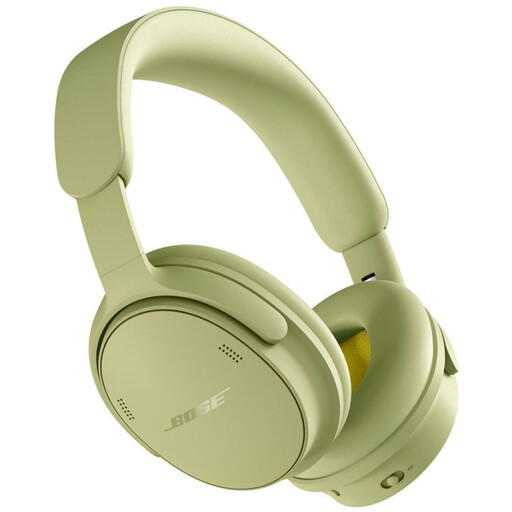
Bose QuietComfort Headphones (2nd Gen) in Eucalyptus Green

Bose QuietComfort Headphones (2nd Gen), Eucalyptus Green

The over-ear design and ANC may suit you if you want to reduce train noise while listening to a passage repeatedly.

The product name lists Bluetooth 5.4 and USB-C Lossless Audio.

View at Joybuy
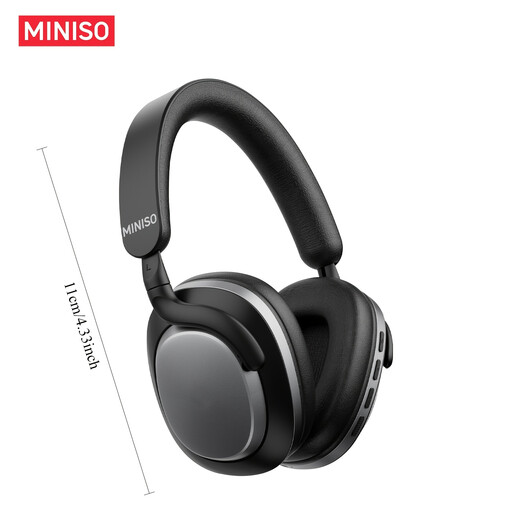
MINISO MG210 wireless over-ear headphones in black

MINISO MG210, wireless over-ear headphones, black

The product name mentions noise cancellation; check the fit and how well they block out noise with your own recording to see if they suit your train journey.

The product name lists 24 hours of battery life, as well as a lightweight design and comfortable fit.

View at Joybuy
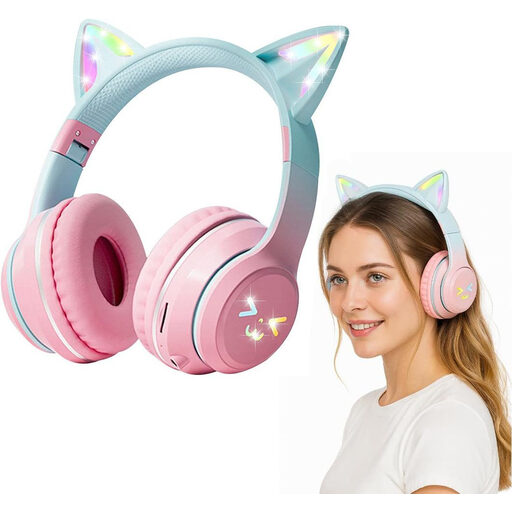
Fosmet foldable over-ear headphones with ANC in pink

Fosmet over-ear headphones with Bluetooth 5.1 and ANC, pink

The over-ear design with ANC may be worth considering for train journeys; check the fit and playback with your own passage.

The product name lists Bluetooth 5.1; a foldable design and adjustable headband are also specified.

View at Joybuy
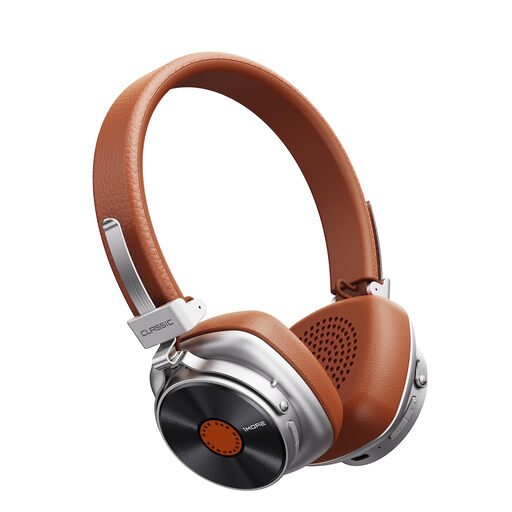
1MORE Classic HQ36 wireless on-ear headphones

1MORE Classic HQ36, wireless on-ear headphones

The on-ear design is another option to compare; pay particular attention to the fit if you’ll be listening for longer.

The product name specifies wireless operation.

View at Joybuy
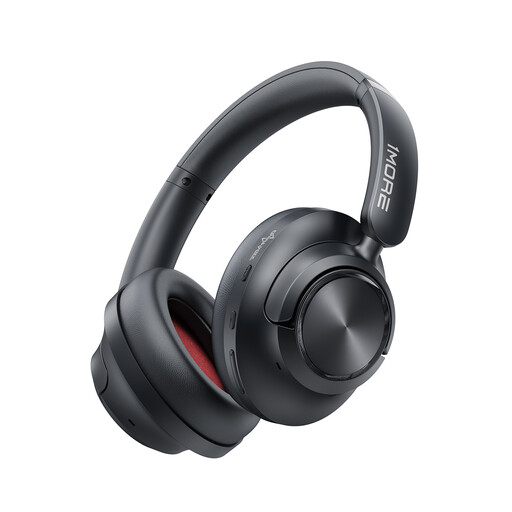
1MORE SonoFlow MAX over-ear headphones, upgraded HQ51, HQ60

1MORE SonoFlow MAX (Upgraded HQ51), HQ60 over-ear headphones

The over-ear design with ANC may be useful for listening on the train; check the fit and whether your guitar passage still sounds clear.

The product name lists ANC and up to 105 hours of battery life. Compare battery life figures only under similar operating conditions.

View at Joybuy

Frequently asked questions

Can headphones automatically slow down a guitar solo without changing its pitch?

No. The playback software needs to have a tempo feature for that. Audacity’s guide describes changing the tempo without changing the pitch as a separate feature.

How should you set up your headphones for practising on the train?

Start with a good fit and a moderate volume. Use ANC if it helps with your model and in your surroundings, rather than turning up the volume to drown out train noise. First, compare your passage without extra spatial audio effects, and adjust the EQ only to compare how it sounds.

What should you bear in mind when using headphones for longer periods?

The World Health Organization recommends taking listening breaks and using well-fitting headphones, so you’re less likely to need to turn up the volume in noisy situations. With in-ears, choose the right eartip size and follow the care instructions for your particular model.

Can you listen to music on headphones in the quiet zone on an ICE train?

Deutsche Bahn explains that listening to music loudly, including through headphones, is not welcome in its ICE quiet zones. This applies to the zones mentioned and is not a general legal ban on using headphones on German trains.

Are over-ears or in-ears better for practising on the train?

Over-ears may suit you if they fit comfortably and you can make room for them in your luggage. In-ears are more compact, provided their eartips fit comfortably and create a good seal. Choose based on your fit, available storage space and how your own recording sounds.