If you mainly mix in a quiet environment, open-back wired studio headphones are a sensible place to start. If you record with a microphone at the same desk or need to block out background noise, a closed-back model may be more suitable. Check the fit, tonal balance and connection with your audio output, and cross-check important panning decisions on another playback system. RTINGS.com recommends open-back models for mixing, while also noting that they offer little isolation.
Who this choice of headphones is relevant to
Mixing strings in a quiet room
If you mainly use a small desk to judge the balance and positioning of instruments, and sound leakage is not an issue, an open-back model could work for you. RTINGS.com recommends open-back headphones for mixing, but notes that they offer little isolation.
Recording at a shared desk
If you use the same space for microphone recording or background noise interferes with your monitoring, isolation becomes more important. beyerdynamic and Audio-Technica also describe their closed-back models as suitable for recording.
Producers working through long sessions
If you spend long sessions working on articulation and dynamics, comfort and pressure on your head matter just as much as a practical cable and connection setup. Manufacturer details on weight and cables can help you compare models, but they are no substitute for trying them at your own desk.
What to look for when buying
Open-back studio headphones
A good fit if: you mainly judge string balance and spatial placement in a quiet environment.
The trade-off: sound leaks out and there is very little isolation from background noise. A sense of space in headphones is no substitute for checking on speakers or another playback system.
Closed-back studio headphones
A good fit if: you record with a microphone at the same desk or disruptive noise makes monitoring difficult.
The trade-off: isolation does not automatically make spatial judgements more reliable. Check how the specific model is tuned for the decisions you need to make when mixing.
When arranging strings at a small desk, the key considerations are how well you can judge the sound, whether you may need to record with a microphone, and how practical the headphones are at your workstation.
| Criterion |
What to check when buying |
Who it matters most to |
| Tonal balance and space |
Listen to familiar string recordings and your own mixes. Check the mids, highs and instrument positioning, then compare the result on another playback system. |
When I mix strings at a small desk, I want to judge the balance and positioning rather than rely on a single frequency-range figure. Around 36% of consumers prioritise tonal balance and spatial placement. |
| Isolation when recording |
Consider whether you record with a microphone at your desk and whether sound leakage could be a problem. Check how the ear pads fit, too. |
When I record at the same desk or background noise makes monitoring difficult, isolation matters more to me than an open-back design. Around 29% of consumers prioritise isolation or recording monitoring. |
| Comfort during long sessions |
Try the specific model for an extended period and pay attention to pressure on your ears and head, as well as the availability of replacement pads. |
When I spend long sessions working on articulation and dynamics, I want headphones that still feel comfortable after extended wear. Around 21% of consumers prioritise long-term comfort. |
| Connection and cable setup |
Check the plug and any included adapters against your audio interface or computer. Consider the cable route and whether you can achieve a suitable level at moderate volume. |
When cables can quickly get in the way on my small desk, I want to choose a connection and cable length that suit my audio output. Around 14% of consumers prioritise easy connections and cable management. |
Common buying mistakes
-
Assuming open-back and closed-back models are interchangeable
Sound leakage can be an issue when recording with a microphone, while RTINGS.com recommends open-back designs for mixing in a quiet environment. The two designs do not serve the same purpose.
First decide whether you will be recording at the same desk or mainly mixing, and whether isolation matters in your room.
-
Assuming a wide frequency range means neutral sound
A stated frequency range does not tell you how evenly different frequencies are reproduced. Sennheiser distinguishes between frequency response and frequency range.
Listen to familiar material and your own mixes. Pay attention to whether certain parts of the strings stand out or details seem masked.
-
Taking headphone panning at face value
Headphones.com notes that spatial cues through headphones do not reliably correspond to the stereo image you would hear through speakers.
Where possible, check important string positions and the overall balance on another playback system.
-
Checking the cable and audio output only after choosing a model
At a small desk, an unsuitable plug or awkward cable route can make headphones harder to use. Rated impedance alone does not tell you whether your existing output can deliver the level you want.
Check the plug, adapters and cable length against your audio output, and test the level you can achieve on the device itself.
Key brands to consider
beyerdynamic
The DT 900 PRO X and DT 700 PRO X offer open-back and closed-back options for different mixing and recording needs.
- beyerdynamic lists detachable cables and a rated impedance of 48 Ω for both models.
- An independent HIFI.DE overview describes a possible bass emphasis on the DT 700 PRO X that could mask studio detail. The DT 900 PRO X does not fold.
AKG
The open-back K702 is an option if you want to judge the spatial placement of strings in a quiet environment.
- AKG lists a replaceable mini-XLR cable, a weight of 235 g and a rated impedance of 62 Ω.
- AKG’s descriptions of its precision and spaciousness are manufacturer claims. The open-back design does not provide the same isolation when recording with a microphone.
Sennheiser
The open-back HD 560S is also described by the manufacturer as suitable for analytical listening and comparing mixes.
- Sennheiser lists 120 Ω, a weight of 240 g and a detachable 1.8 m cable.
- Manufacturer claims about sound and spatial presentation do not prove that this model is better than others.
Audio-Technica
The closed-back ATH-M40x is an option if recording and passive isolation matter at your mixing desk, too.
- Audio-Technica describes the ATH-M40x as closed-back and foldable, and lists mixing and recording among its uses.
- The manufacturer’s claims about a linear sound and isolation are not the same as an independent comparative measurement.
Joybuy product selection
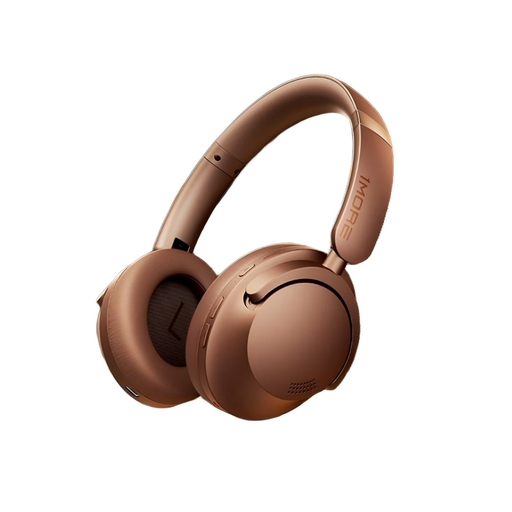
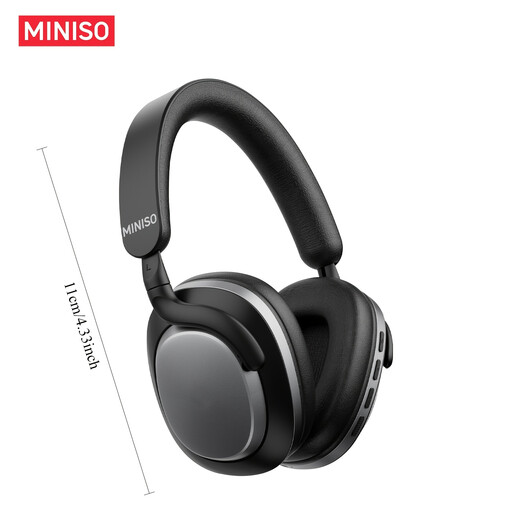
This selection includes over-ear headphones for a fixed listening position. Product names alone do not prove that a model is suitable for mixing string arrangements. Check the tonal balance, stereo image and connection for your specific needs.
 No image available
1MOREHQ51 SonoFlowPro Global, Mocha Brown
The over-ear design may suit a fixed listening position. For mixing, check the tonal balance and instrument positioning on another playback system.
Joybuy
 No image available
MINISO MG210 Wireless Noise-Cancelling Over-Ear Headphones (Black)
The product name mentions wireless noise cancellation and office use. Check that the connection and sound are suitable for your mixing setup.
The product name describes the model as wireless and over-ear.
Joybuy
Frequently asked questions
Are open-back headphones alone enough to position the strings?
No. Where possible, you should also check important positions on another playback system. Headphones.com notes that spatial cues through headphones do not reliably correspond to a stereo image through speakers.
What should I check before connecting to a computer or audio interface?
Check the headphone output you have against the plug and any adapter supplied with the specific model. Test the level you can achieve from your own output at a moderate volume; an impedance figure alone is not a functional test.
How can I use headphones more safely during long mixing sessions?
Keep the volume low and take regular breaks. The World Health Organization gives up to 40 hours per week at an average of 80 dB, and four hours per week at 90 dB, as examples for adults. These figures do not correspond to a setting you can read from a volume control.
Who should I contact if a product bought from a business seller develops a fault?
Your statutory rights under the legal guarantee are against the seller and are separate from any voluntary manufacturer’s warranty. The EU consumer portal gives a statutory minimum period of two years for new goods.
Can I always return headphones bought online in Germany after trying them?
For a distance contract with a trader, you generally have a 14-day right of withdrawal. Section 312g of the German Civil Code (BGB) sets out exceptions, including certain sealed goods if the seal, required for health or hygiene reasons, has been removed. Whether an exception applies to a particular pair of headphones cannot be determined solely from the product category.


