For viewers in a noisy home
You want to enjoy your documentary without turning up the volume to compete with conversations or other noise. Pay particular attention to the fit and whether the design provides the level of isolation you want.


If the main issue is noise in the room, and your TV can send Bluetooth audio to the headphones you want to use, a well-fitting pair of closed-back ANC headphones could be a good option. If clear commentary, individual volume control or a connection via a TV transmitter matters more, a suitable TV listening system may be a better fit. Check your TV’s audio output before buying: Samsung warns that Bluetooth connections can have a delay, and synchronisation depends on the TV model.
You want to enjoy your documentary without turning up the volume to compete with conversations or other noise. Pay particular attention to the fit and whether the design provides the level of isolation you want.
You want to follow the narration, even during quieter scenes, and adjust the volume independently. Check whether the specific model has speech features and how it connects to your TV.
You need a wireless solution, but aren’t sure whether your TV supports Bluetooth audio or has a suitable port for a transmitter. Check before choosing your type of headphones.
| What matters when buying | What to look for | Who is it important to? |
|---|---|---|
| Blocking out household noise | Check the closed-back design, fit and ANC. Don’t assume how well it works from the feature name alone. | If I can hear noise in the room, I don’t want to simply turn the volume up. Around 26% of consumers therefore prioritise noise isolation. |
| Following the commentary | Look for speech features specific to the model and independent volume control. | If I miss explanations during quieter scenes, clear speech matters more to me than an extra sound mode. Around 21% of consumers prioritise commentary. |
| Ensuring a TV connection | Check for Bluetooth audio or the right optical or analogue output, and make sure you use the required audio format. | If I first need to work out how my TV outputs sound, a working connection comes before extra features. Around 26% of consumers put TV connectivity first. |
| Comfort for longer listening | Choose ear pads or ear tips, controls and charging method to suit how you plan to use them. | If I want to watch a whole programme with headphones on, a comfortable fit and easy handling are what matter to me. Around 16% of consumers prioritise long-term comfort. |
| Balancing voices and nature sounds | Check the available sound modes or EQ. Bass and surround modes are options, not proof of greater detail. | If I want to follow the atmosphere and quieter nature sounds as well as the commentary, the sound settings need to do justice to both. Around 11% of consumers prioritise this balanced documentary sound. |
Noise cancellation and making quiet commentary easier to understand are two different things. ANC alone doesn’t prove that speech will sound clearer in a particular film.
Think about whether room noise is the main problem or whether you’re struggling to follow the commentary. Compare ANC and fit with speech features specific to the model.
TV transmitters need a compatible audio output and may require a particular audio format. For an optical connection, Philips specifies PCM/Stereo for the Philips SHD8850/12.
Before choosing a transmitter set, check your exact TV model, the output it actually has and, if necessary, the required audio setting.
Whether other people can listen through the TV speakers at the same time depends on the TV model, its settings and the type of connection.
Check your TV manual for simultaneous audio output and find out whether it works with the headphone connection you plan to use.
The Philips SHD8850/12 is described as an open-back model. An open-back design isn’t automatically the right choice if you want to block out distracting noise in the room.
If your home is particularly noisy, pay close attention to the design and fit. A wireless TV model could still be an option if individual volume control or comfort matters more to you.
TV listening systems with transmitters and Bluetooth over-ear headphones cater for different connection types and ways of listening.
The WH-1000XM5 is a closed-back Bluetooth over-ear headphone with ANC and an ambient sound mode.
The 2nd Generation QuietComfort Headphones offer ANC and switchable listening modes.
The SHD8850/12 is a wireless TV over-ear system with a charging station and open-back design.
The Ensemble is a TV listening system with a transmitter and individual volume control.
This selection includes wireless over-ear headphones with ANC, a TV headphone model with a transmitter, and wireless in-ear headphones. Check that each model’s connection is compatible with your TV.
 No image available
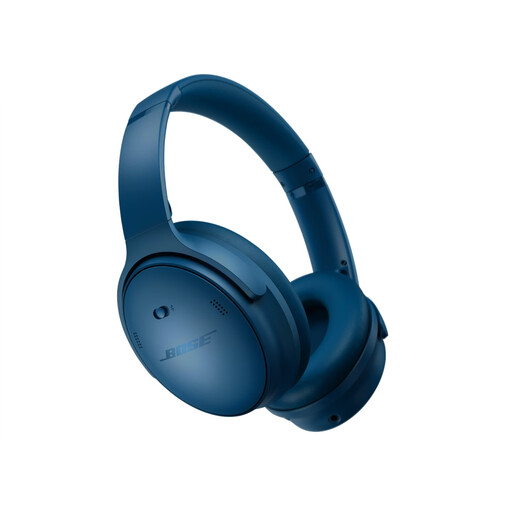
An option to consider if you’re looking for wireless over-ear headphones with ANC and a switchable ambient sound mode.
The product information lists Quiet, Aware and Wind Block modes, as well as up to 24 hours of battery life. SimpleSync is listed for private TV listening with compatible Bose Smart Soundbars; check whether it connects to your TV.
 No image available
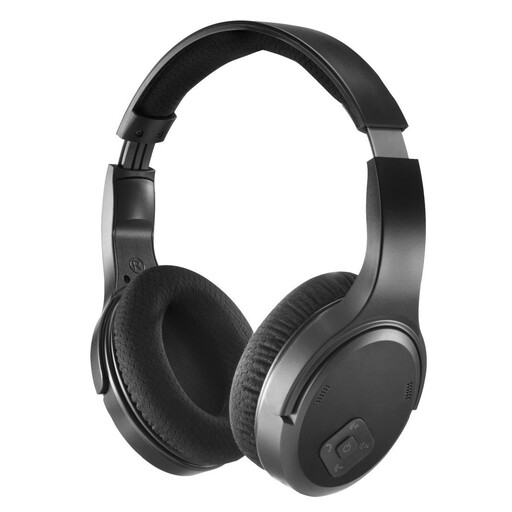
This model could be worth considering if you’re looking for TV headphones with a voice mode and dongle connection.
The product information lists a USB-A port on the TV for the 2.4 GHz dongle, a Voice mode and up to 16 hours of battery life. Make sure your TV has the required port.
 No image available
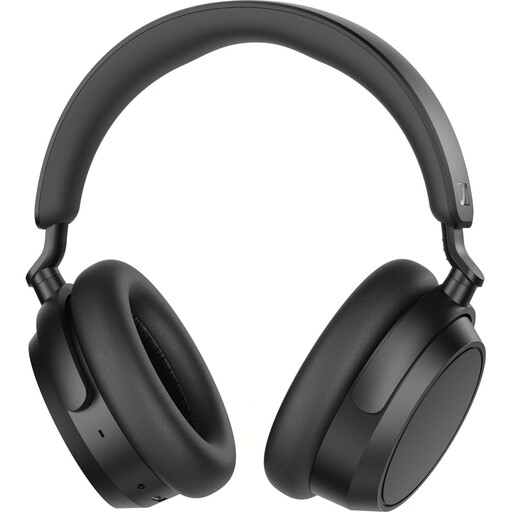
An option to consider if you’re looking for wireless over-ear headphones with ANC and a closed-back design.
The product information lists Bluetooth 5.2, a detachable cable and up to 50 hours of battery life. Check that your TV can send Bluetooth audio to these headphones.
 No image available
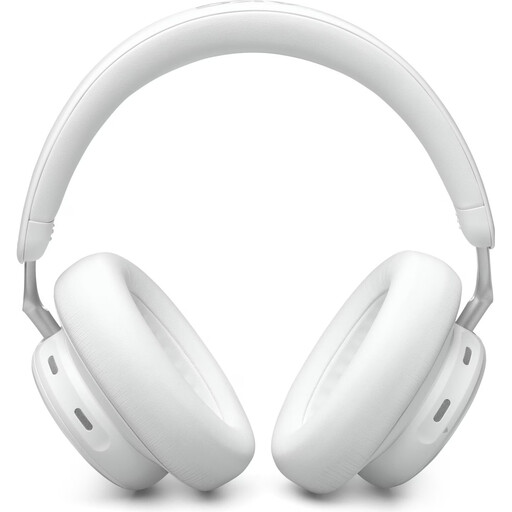
These over-ear headphones could be a good option if you want to consider ANC and several connection types.
The product information lists a closed-back design, Bluetooth 5.3, a 3.5 mm connection and up to 55 hours of battery life. The USB-C dongle mentioned is not automatically compatible with every TV.
 No image available
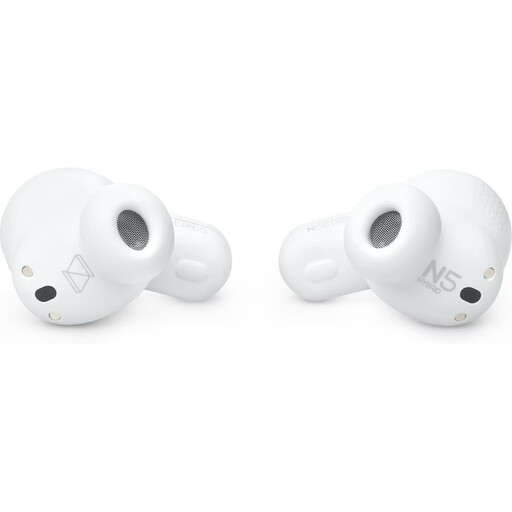
These in-ear headphones are different from the over-ear models. Before buying, pay particular attention to the TV connection and whether this design suits you.
The product information lists True Adaptive Noise Cancelling, Bluetooth 5.3 and a 2.4 GHz USB-C adapter. Battery life is quoted at up to 6 hours per charge.
No, it depends on the specific TV and headphones. Check whether your TV can send audio to Bluetooth headphones and whether the model is compatible. A TV listening system with a transmitter needs a suitable audio output instead.
Check the audio output in the TV menu and the setting on the base station. For an optical connection to the Philips SHD8850/12, Philips specifically lists PCM/Stereo and OPTICAL SELECT; these instructions apply to this model.
No. Samsung explains that the synchronisation setting described there does not fix Bluetooth delays. Check your TV manual and test the specific connection before choosing a model.
When buying remotely from a commercial retailer, you generally have 14 days from receiving the goods to cancel the purchase. Exceptions and possible return costs may apply. According to information from the European Union, the statutory guarantee for faulty goods provided by the seller is separate from any additional manufacturer’s guarantee; the minimum period for goods is generally two years.
Don’t simply turn up the volume to drown out household noise. The World Health Organization recommends well-fitting or noise-cancelling headphones to reduce the need for higher volumes in noisy situations. For a specific wireless product, you can also check the product labelling and required manufacturer information; Germany’s Federal Network Agency refers to these details as part of its market surveillance.