Considerate evening listeners
You listen to radio comedy while someone else in the room needs peace and quiet. RTINGS.com notes that closed-back headphones tend to let out less sound than open-back ones, but they can still be audible.


If someone else in the room needs peace and quiet, a well-fitting pair of closed-back headphones is a sensible place to start. However, even closed-back models can let sound out. Check this at your usual comfortable volume, then choose based on comfort and the connection your radio source uses. ANC can reduce outside noise, but it doesn’t prove that someone else won’t hear anything.
You listen to radio comedy while someone else in the room needs peace and quiet. RTINGS.com notes that closed-back headphones tend to let out less sound than open-back ones, but they can still be audible.
You want to follow the voices and punchlines at a comfortable volume, rather than turning the sound up to overcome distracting background noise. The WHO explains that the recommended listening time depends on the sound level.
You need a comfortable fit and a connection that works with your radio source. RTINGS.com explains the differences between over-ear and on-ear designs; Sony Germany lists a stereo mini-jack plug and a 1.2 m cable for the MDR-ZX110.
Think about what matters most in your listening situation, and try the headphones in the place where you’ll actually use them if possible.
| Consideration | What to check before buying | Who is this important to? |
|---|---|---|
| Being considerate of others | Check the design and fit. RTINGS.com notes that even closed-back headphones can let out sound. Try a familiar spoken passage at a normal volume from the other person’s side of the bed. | If someone next to me needs peace and quiet, I want to keep sound leakage to a minimum. For around 33% of consumers, being considerate of the other person comes first. |
| Understanding dialogue | Listen to a familiar spoken recording at a comfortable volume. If background noise is distracting, check the fit and how well the headphones block it out first. ANC affects the noise you hear; it doesn’t automatically reduce sound leakage. | If I want to catch the punchlines without constantly turning up the volume, clear speech is my main priority. Around 27% of consumers prioritise following spoken dialogue. |
| Comfort during longer listening sessions | Try the ear cushions, headband and clamping force with your usual glasses on, and in your usual sitting or lying position. | If I’m listening to several programmes in a row, my headphones should feel comfortable and not press too hard. Around 20% of consumers are particularly concerned about comfort during longer listening sessions. |
| Connecting to your radio source | Check in advance whether your radio or playback device has a compatible headphone socket or Bluetooth audio output. For wired models, check the plug and cable length. | If I want to keep using my existing radio or streaming setup, the connection needs to be compatible. Around 20% of consumers prioritise the connection to their radio source. |
ANC is designed to reduce distracting noise while you listen. It doesn’t tell you how much sound someone else in the room will hear.
Check the design and fit, and test for sound leakage at your usual volume. Choose ANC as well if outside noise bothers you.
Open earcups let sound out and can be disruptive in a quiet, shared bedroom.
Only consider open-back models if sound leakage won’t be a problem for the other person where you’ll be listening.
A headphone socket and Bluetooth audio output aren’t automatically compatible with every radio or streaming source.
First check which device you use to listen to the radio and what audio outputs it has. A radio stream in an app is an audio source, but it isn’t a built-in radio receiver in the headphones.
These notes refer to the models mentioned, not every product from each brand.
The MDR-ZX110 and WH-CH720N offer wired and wireless options for listening in your room.
The Tune 730BT is a wireless over-ear option in the Tune range.
The Space One Pro is a wireless ANC option for listeners who want to reduce distracting outside noise.
The HD 560S is an open-back over-ear headphone, offering a different design.
The following Joybuy models are closed-back Bluetooth over-ear headphones; some also offer ANC or a wired connection. ANC alone doesn’t tell you how much sound leaks out.
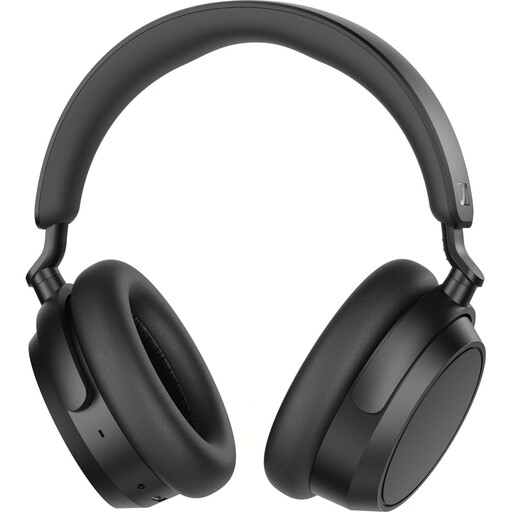 No image available
As a closed-back Bluetooth over-ear headphone, this model is worth considering if you want to listen to radio streams wirelessly from a compatible device.
Bluetooth 5.2 with aptX and Multipoint; ANC; up to 50 hours of battery life; detachable cable.
ANC doesn’t prove that the other person in the room won’t hear anything.
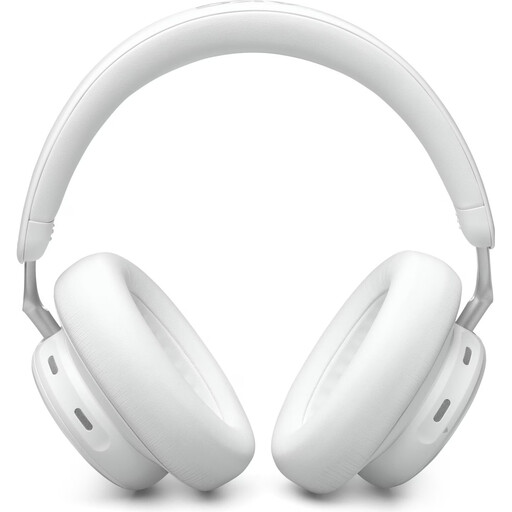 No image available
This closed-back over-ear headphone connects to a compatible radio source via Bluetooth or the stated 3.5 mm connection.
Bluetooth 5.3 with Multipoint; ANC; 2.4 GHz USB-C dongle; 40 mm drivers; up to 55 hours of battery life.
ANC doesn’t tell you how much sound leaks out. Also check that your audio source supports the connection you want to use.
 No image available
This closed-back wireless over-ear model could suit a compatible Bluetooth device if you want to listen to radio comedy without an audio cable.
Bluetooth 5.4 with two-device connection; Hybrid ANC; LDAC; up to 100 hours of battery life; fast charging with a 5-minute charge.
ANC doesn’t prove that little sound leaks out to other people. The stated battery life is a product specification, not a guarantee of how long it will last in every situation.
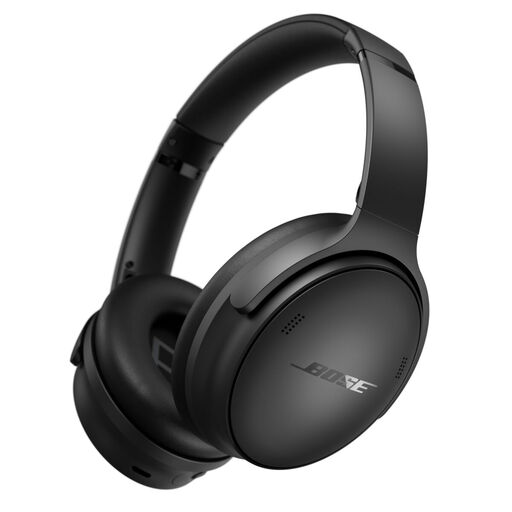 No image available
This closed-back wireless over-ear headphone is an option if you want to use Bluetooth or a compatible wired connection.
ANC; Bluetooth; stated 2.5 mm audio connection; soft ear cushions and padded headband.
Check that the audio connection is compatible with your source. ANC doesn’t prove that the other person won’t hear anything.
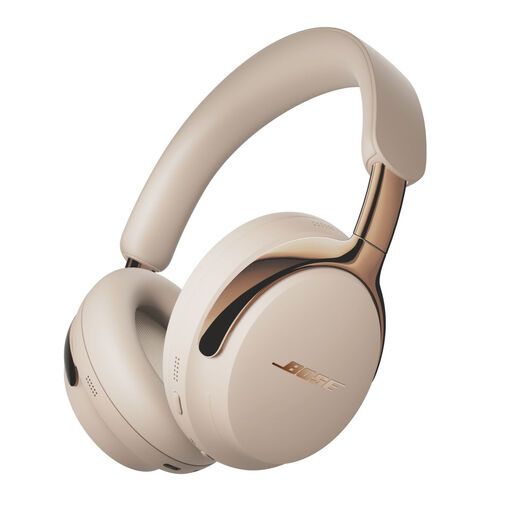 No image available
This over-ear model offers Bluetooth and wired playback for compatible audio sources.
Bluetooth 5.4; ANC; Multipoint; soft ear cushions and padded headband.
ANC doesn’t prove that no sound will leak out in a shared bedroom.
No, as long as you start the live stream on a suitable playback device and send its audio to compatible headphones. For example, the Deutschlandfunk app offers a live stream. Check separately that your device supports the headphones’ jack connection or Bluetooth connection.
You shouldn’t rely on that. ANC is designed to reduce distracting noise while you listen. To find out whether someone else can hear anything, test the specific model at your usual volume.
Keep the volume comfortable, and avoid trying to drown out distracting background noise by turning it up higher and higher. For adults, the WHO gives four hours per week at 90 dB as an example of listening time; this sound level at the ear doesn’t correspond to a particular volume-control setting.
For relevant online purchases from a business seller, the withdrawal period is generally 14 days from the date you receive the goods; exceptions and possible return costs should be taken into account. The EU’s Your Europe information page also explains the statutory two-year legal guarantee against the seller, which is separate from a voluntary manufacturer’s warranty.