Commuters who struggle to hear voices clearly
If you listen to longer spoken recordings on the train, you may not want to compensate for train noise simply by turning up the volume.


When train noise drowns out voices, well-fitting headphones with ANC may be worth considering. The WHO recommends them in noisy environments to reduce the need to turn the volume up, but they cannot guarantee clear voices on every train. Over-ear headphones may suit you better if you find around-ear cushions comfortable; in-ear headphones are a compact alternative, provided they fit you well. Also check how quickly you can pause playback and switch to ambient mode, and try a typical recording at a comfortable volume.
If you listen to longer spoken recordings on the train, you may not want to compensate for train noise simply by turning up the volume.
If you regularly pause playback, you should be able to hear your surroundings again quickly when needed.
If you want to save space, compare compact in-ear headphones with over-ear models, weighing up fit and features.
Suitable if: You listen to longer discussions and find around-ear cushions comfortable.
Trade-off: They take up more space than in-ear headphones. Manufacturers’ claims about comfort or ANC do not prove that every voice will sound clearer on the train.
Suitable if: Travelling light matters more and the ear tips fit comfortably and securely in your ears.
Trade-off: Fit depends on the individual. A manufacturer’s description cannot guarantee clear speech on the train or the right fit for every ear.
Suitable if: ANC, an around-ear fit and battery life matter more than extra sound features.
Trade-off: Maximum battery-life claims may not reflect your journey. Check whether voices remain clear at the comfortable volume you usually use.
Suitable if: You need to stay aware of your surroundings and can still follow the discussion at a comfortable volume.
Trade-off: Train noise can tempt you to turn up the volume; ambient mode lets in other sounds as well as announcements.
Whatever the design, fit and how clearly you can hear your own recording are what count. The WHO recommends well-fitting ANC headphones in noisy environments to reduce the need to turn the volume up; this is no guarantee of clear voices in every situation.
| Priority | What to check when buying | Who it matters most to |
|---|---|---|
| Speech clarity | Listen to a typical recording at a comfortable volume; compare the fit and ANC with each switched on and off. | If I don’t want to compensate for train noise by turning up voices, I test my recording at a comfortable volume. Around 33% of consumers put speech clarity first. |
| Hearing announcements | Check whether pause and ambient mode are quick to access. | If I need to react quickly when changing trains or when someone speaks to me, I want to be able to pause playback easily. Around 27% of consumers prioritise hearing announcements. |
| Comfortable fit | Try the ear cushions or ear tips for a similar length of time to your usual listening session; if needed, test them with glasses. | If I listen to longer discussions, a comfortable fit matters more to me than features I can’t wear comfortably. Around 20% of consumers put comfort first. |
| Pack size | Compare in-ear headphones with foldable or otherwise easy-to-pack over-ear models. | If I have limited luggage space, a compact design may be a good option, provided the fit and level of noise isolation suit me. Around 13% of consumers prioritise pack size. |
| Features and costs | Check the features you need, the seller and the warranty terms; distinguish between a voluntary warranty and your statutory rights if goods are faulty. | If I don’t need extra sound features, I don’t want them to be the deciding factor. Around 7% of consumers put spending and potential follow-on costs first. |
The WHO cites ANC as one way to reduce the need to turn the volume up in noisy environments. That doesn’t tell you whether every voice will be clear on a particular train.
Try a typical theatre recording with a good fit, at the comfortable volume you usually use.
Battery life can vary depending on which features are switched on. Bose quotes up to 30 hours for the QuietComfort Ultra Headphones (2nd Gen), or up to 23 hours with 360-degree sound.
Compare the figures for the features you actually plan to use on your journey.
Noise cancelling and ambient mode are designed for different situations; ambient mode lets in other outside sounds too.
Practise pausing playback and switching to ambient mode before your journey. If the information is important, take your headphones off if needed.
A warranty is a voluntary benefit and does not replace your statutory rights if goods are faulty. The Verbraucherzentrale says that, as a general rule, the seller is the point of contact for faulty goods.
Check the seller, warranty terms and returns policy separately.
The model ranges mentioned include ANC over-ear and ANC in-ear headphones.
The QuietComfort Ultra Headphones (2nd Gen) are an around-ear ANC option with customisable settings.
The MOMENTUM 4 Wireless is an ANC over-ear option with a transparency mode.
According to JBL, the Tour ONE M3 is an over-ear option with True Adaptive Noise Cancelling 2.0.
Space One Pro is another ANC over-ear option.
This selection includes ANC in-ear and over-ear headphones for train noise, travelling light or switching to ambient mode.
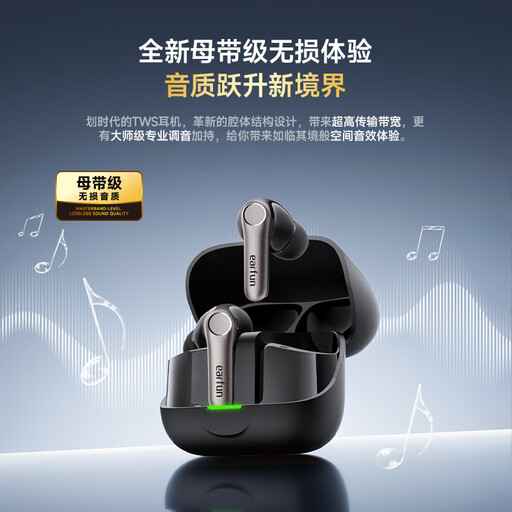 No image available
These compact ANC in-ear headphones may suit you if you’re travelling light and the ear tips fit securely.
The product details list several ear tip sizes and up to 54 hours of playback with the charging case; up to 12 hours per charge applies with ANC switched off.
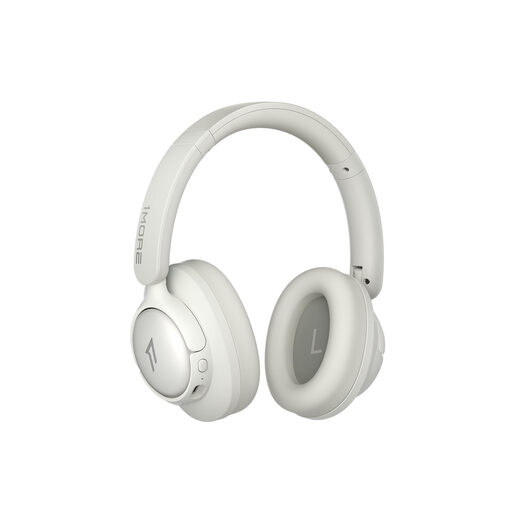 No image available
These ANC over-ear headphones may suit you if you prefer an around-ear fit and want to be able to hear your surroundings when needed.
The product details list a transparency mode and up to 90 hours of playback.
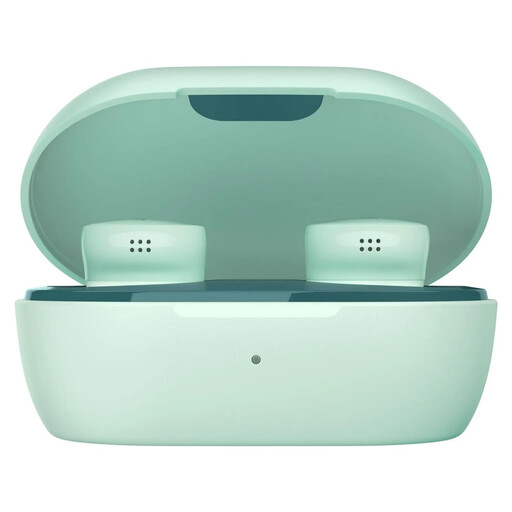 No image available
These ANC in-ear headphones may suit you if you’re travelling light and want to try ear tips in different sizes.
The Fit Kit includes ear tips and stability bands in sizes S, M and L. The stated battery life is up to 8.5 hours per charge; additional playback time requires the charging case.
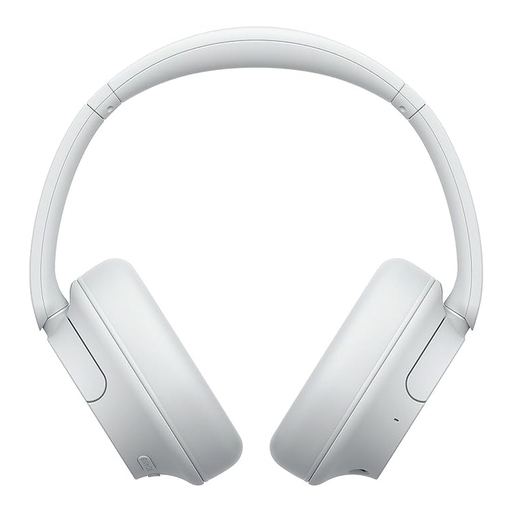 No image available
These ANC over-ear headphones may suit you if you want an around-ear fit and an ambient mode for announcements.
The product details list up to 35 hours of battery life with ANC switched on and a weight of 192 g.
 No image available
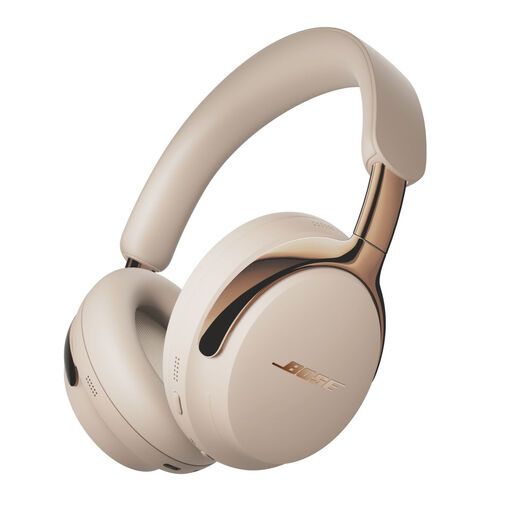
These ANC over-ear headphones may suit you if you prefer an around-ear design with ear cushions.
The product details list up to 30 hours of battery life, or up to 23 hours with Immersive Audio.
No. What matters is whether you can understand the voices at a comfortable volume. The WHO recommends well-fitting ANC headphones in noisy environments to reduce the need to turn the volume up; try your recording to see how clear it sounds to you.
Pause the recording and, if your model has an ambient mode, switch to it or take your headphones off. Sony describes the mode as a way to hear outside sounds; that does not guarantee that every announcement will be clear.
The WHO recommends keeping the volume low, taking listening breaks and using well-fitting noise-cancelling headphones in noisy environments rather than simply turning the volume up. This is health advice, not a general legal volume limit for train journeys.
Deutsche Bahn says that loud music, including through headphones, is not welcome in ICE quiet zones. Make sure no sound leaks out; this is not a blanket ban on listening quietly through headphones.
For a standard distance sale to a consumer, there is generally a 14-day right to cancel from the date of delivery. Exceptions and return costs should be checked for each case, as explained by the European Union’s Your Europe service. If goods are faulty, the seller is generally responsible for your statutory rights, not automatically the manufacturer; the Verbraucherzentrale explains that the statutory warranty period in Germany is generally two years. A voluntary warranty is separate.