For recording a long club anniversary message on a computer, a wired USB headset is a straightforward place to start, as long as it’s compatible with your connection and recording device. An analogue broadcast or production headset may be suitable if your setup supports separate microphone and headphone connections. The key is to try it on for the full planned recording time and make a test recording without any processing. ANC for your ears doesn’t mean that room noise will disappear from your recorded voice.
Who will be recording the message?
Speakers recording long takes
If you want to record the anniversary message in one go, try the headset for the planned duration to assess how it feels and where the microphone sits. Manufacturer specifications alone can’t tell you how comfortable a particular headset will be for you.
People recording at the club computer
Make sure the connection is compatible, and check that your recording software is actually using the headset microphone. Having the right socket doesn’t guarantee that the microphone you want has been selected as the input.
People recording in a noisy room
If you can’t avoid background noise, assess the microphone position, recording location and an unprocessed test recording together. You can’t tell how well it will perform in your club room from the manufacturer’s specifications alone.
What should you look for when buying?
Wired USB headset
Suitable if: you’re recording one person directly on a computer and want to get started without a separate audio interface.
Things to consider: the USB version must be compatible with your computer’s port. A test recording will show whether the headset delivers the sound you’re looking for.
Analogue production or broadcast headset
Suitable if: you can connect the microphone and headphones to an existing recording setup with compatible inputs.
Things to consider: an XLR microphone connection may require an additional audio interface for use with a computer. Check the separate headphone connection too.
Wireless microphone setup
Suitable if: you really need to move around during the recording and the transmitter, receiver and recording device are compatible.
Things to consider: check the connection and power supply. Wireless microphones are also subject to the requirements that apply to their frequency band.
| Criterion |
What to check before buying |
Who it matters most to |
| Speech clarity |
Adjust the microphone position and listen to an unprocessed test recording using both your normal speaking voice and a more emphatic delivery. Check the input level too. |
If I want the voice in a long message to sound clear and avoid clipping, a speech recording I can check easily comes first for me. Around 28% of consumers put this at the top of their list. |
| Comfort |
Try the design, padding and fit during a test recording that lasts as long as your planned take. |
For a long or repeated take, I want to be able to wear a headset without being distracted by the fit. Around 28% of consumers say comfort is their top priority. |
| Connection and signal path |
Check the USB port or microphone input and headphone output against your recording device. If the connections are separate, allow for any additional equipment you’ll need. |
If I want to record using a computer, recorder or interface I already own, the whole signal path needs to be compatible. Around 22% of consumers put connection compatibility first. |
| Room noise |
Test it with the usual sounds at your recording location. Don’t confuse ANC for listening with processing of the microphone signal. |
In a noisy club room, I want to know how the recording sounds with the actual background noise. Around 22% of consumers prioritise how well it handles room noise. |
Buying mistakes to avoid
-
ANC for your ears doesn’t guarantee a noise-free recording
Jabra distinguishes between ANC for listening and noise cancellation for the microphone. This doesn’t tell you how much noise from your particular club room will be audible in the recorded voice.
Record with the usual room noise and listen back to the file without processing.
-
The BPHS1 and BPHS1-XF4 don’t have the same connection
Audio-Technica lists separate XLR and 6.3 mm connections for the BPHS1. The BPHS1-XF4 version has a different connection for intercom systems. An incompatible plug could prevent you from using your planned recording setup.
Check the full model name and make sure the microphone and headphone connections match your recording device.
-
An earset microphone isn’t a complete headset
Shure describes the MX153 as an earset microphone, not a combination of microphone and headphones. For wired use, the manufacturer lists an optional preamplifier; you’ll also need to plan how you’ll monitor the audio.
Choose this style only if you need a discreet microphone and have a compatible recording and monitoring setup.
A guide to relevant brands
Logitech
The H390 is a wired computer headset with a USB connection and in-line controls.
- Logitech lists an adjustable microphone boom and headband. The manufacturer gives the USB-A version a 1.9 m cable.
- Its design for calls or stated noise-cancelling features don’t guarantee a particular sound when recording a club anniversary message.
Jabra
The Evolve2 50 is a wired on-ear business headset. Choose carefully between the mono or stereo version and check the connection type.
- Jabra describes its Air Comfort padding, ANC and microphone noise cancellation.
- ANC for listening and processing of the microphone signal need to be assessed separately. The stereo model has different headband padding from the mono model.
RØDE
The manufacturer says the NTH-100M is designed for uses including media production and podcasting. It combines headphones with a detachable headset microphone.
- RØDE describes the ear cushions and adjustable headband as suitable for extended wear, and says the microphone position helps reduce plosive sounds.
- These manufacturer claims aren’t an independent measure of comfort or recording quality for a club message.
Audio-Technica
The BPHS1 is an analogue broadcast headset for people with a suitable recording device or audio interface.
- According to Audio-Technica, the BPHS1 version has a directional dynamic microphone, closed-back earcups and separate XLR and 6.3 mm connections.
- The BPHS1-XF4 version instead has a different connection for intercom systems; the versions aren’t directly interchangeable.
Shure
The MX153 is an alternative for filmed messages when you need a discreet earset microphone without headphones.
- Shure describes it as having an omnidirectional polar pattern and a bendable boom.
- The MX153 isn’t a complete headphone headset. Its TA4F connection is designed for compatible Shure wireless systems; for wired use, Shure lists an optional preamplifier.
Joybuy products for voice recording
The options below include wired USB headsets and wireless over-ear models with microphones. Before making a long voice recording, check that you can select the microphone you want as the input on your recording device. A test take will show you how it sounds in your room.
 No image available
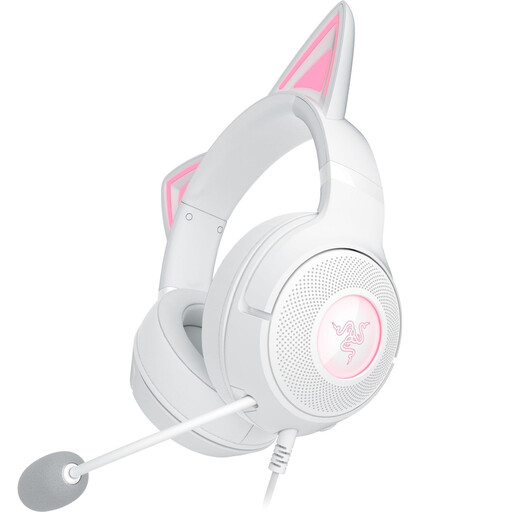
Razer Kraken Kitty V2, Wired USB, White
May suit you if you’re looking for a wired USB headset with a retractable microphone. Check the voice recording with a test take.
USB connection; cardioid HyperClear microphone; memory foam ear cushions; 350 g.
Joybuy
 No image available
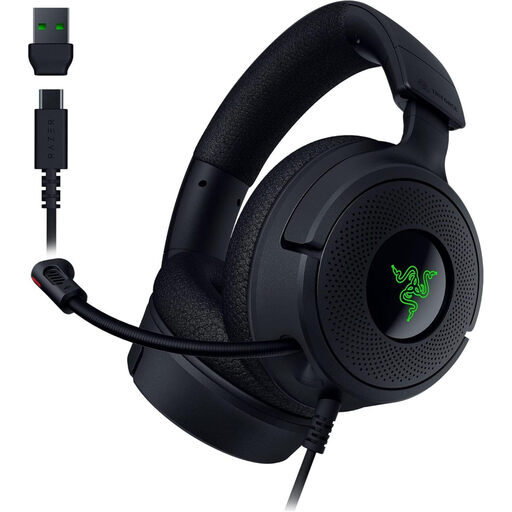
Razer Kraken V4 X, Wired, Black
An option if you’d like a wired headset with a retractable microphone. Assess the sound of your voice using a test recording.
USB-C to USB-A cable; cardioid microphone; memory foam cushions; 250 g.
Joybuy
 No image available
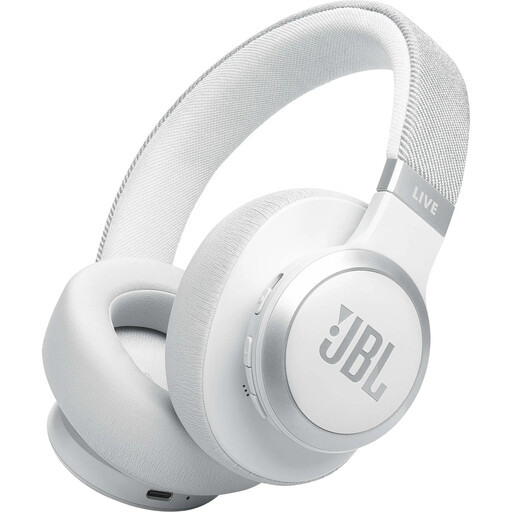
JBL LIVE 770NC, Wireless Over-Ear, White
Could be suitable if you’re considering a wireless over-ear model with a boom microphone. Check the connection to your recording device and test the microphone signal before a long take.
Bluetooth 5; detachable 3.5 mm cable; directional microphone with echo cancellation; up to 22 hours of battery life according to the product information.
Joybuy
 No image available
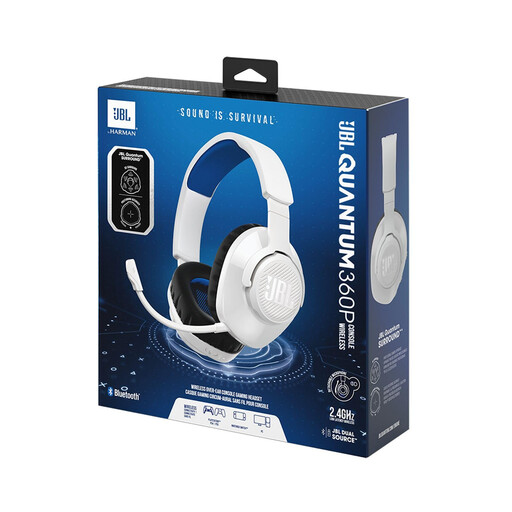
JBL Quantum 360P, Wireless, White
A possible choice if you’re considering a wireless over-ear headset with a microphone. Check the recording connection and listen back to a test recording.
Bluetooth 5.3; detachable audio cable; two beamforming microphones with echo cancellation for voice transmission.
Joybuy
 No image available
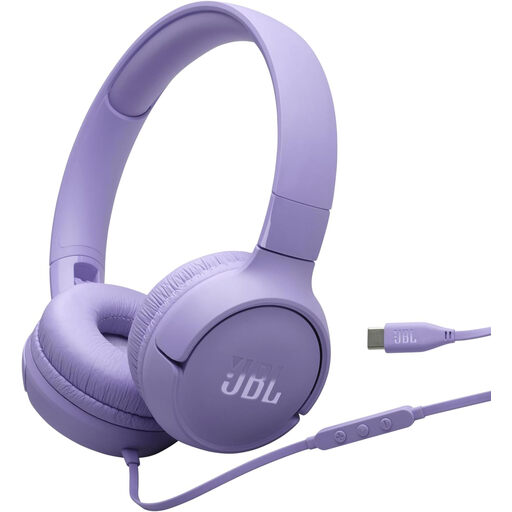
JBL Tune 520C USB-C, Wired On-Ear, Purple
May suit you if you’re looking for wired on-ear headphones with a built-in microphone and a compatible USB-C connection. Check that your device can use this microphone as the recording input.
USB-C cable; built-in microphone; one-button remote.
Joybuy
Frequently asked questions
How do I check a headset before a long anniversary recording?
Select the headset microphone explicitly in your recording software, speak in both your normal voice and a more emphatic one, then listen back to the unprocessed test. Audacity notes that a level that’s too high can cause clipping; its level guidance is for using the software, not a minimum headset requirement.
Can I connect a headset with an XLR microphone plug directly to a USB port?
No, not through the USB port alone. Audacity describes connecting an XLR microphone via an XLR-to-USB audio interface. With the Audio-Technica BPHS1, you’ll also need the separate headphone plug to be compatible with your monitoring setup.
Can I monitor my voice without a delay while recording?
Not automatically. Audacity notes that software monitoring can cause audible latency and suggests an audio interface with real-time monitoring as a way to avoid this delay. Check whether your chosen device supports this feature.
Can the club record other people and publish the message?
You can’t assume this is permitted simply because the recording is for a club event. If identifiable people are recorded or their data is processed, the club needs an appropriate legal basis. Discuss the recording and intended publication with everyone involved in advance. The Federal Commissioner for Data Protection and Freedom of Information explains the requirements for consent as one possible legal basis.
Can I use older frequency information for a wireless microphone without checking it?
No. In April 2026, the Federal Network Agency published General Assignment Vfg. 37/2026, revoking, among others, Vfg. 109/2025 for the wireless microphone frequency bands covered by the new ruling. Check the frequency band and current requirements for your specific wireless system.


