A headset microphone can work well for a softly spoken science explainer if you want to keep its position consistent as you speak; recording a test in the room you’ll actually use can help you decide. A standalone headset microphone leaves you free to choose your headphones, a broadcast headset lets you monitor your voice through built-in headphones, and a USB headset combines headphones and a microphone for your computer. Before buying, check the signal path for the exact model variant: RØDE specifies a compatible 3.5 mm microphone input with plug-in power for the HS2, while Shure says the SM35-TQG needs an additional preamp for wired use.
Who is a headset microphone suited to?
Softly spoken narrators recording at home
If you speak quietly, a test recording lets you assess your voice, self-noise and room noise in the environment you’ll actually be using. RØDE gives the HS2 a self-noise figure of 36 dBA; this manufacturer’s figure alone can’t predict how a particular voice or room will sound.
On-camera explainers
If you move around while presenting, look for an adjustable microphone boom that you can position to suit the way you hold your head. RØDE and Audio-Technica list adjustable microphone booms for their respective models.
Creators who need live monitoring
If you want to monitor your voice while recording, check whether your device has separate microphone and headphone connections or a compatible USB connection. Audio-Technica lists separate XLR and 6.3 mm connections for the BPHS2Ca; Logitech describes the Zone Wired as a USB headset.
What should you look for when buying?
For a softly spoken narration, consider a test recording, your room, the connections and whether you want to monitor your voice, all together.
| What you’re looking for |
What to check before buying |
Who is this especially important for? |
| Recording quiet speech clearly |
Adjust the microphone boom and listen to an unprocessed test recording featuring a quiet voice, pauses in speech and typical room noise. |
If I speak quietly, I want to hear in a test recording whether my voice remains clear in the room I’ll actually use. Around 33% of consumers put clear recordings of quiet speech first. |
| Room and background noise |
Check whether the exact model variant has an omnidirectional or cardioid pickup pattern, then test the microphone in the intended environment. |
In a room that isn’t completely quiet, I want to hear which background sounds stand out in the recording. Around 27% of consumers prioritise controlling room and background noise. |
| Connection and power |
For the RØDE HS2, RØDE specifies a compatible 3.5 mm microphone input with plug-in power. Shure says the SM35-TQG needs an additional preamp for wired use. |
Before choosing a model, I want to be sure my device provides the input and power it needs. For around 20% of consumers, having the right connection and power supply is a key consideration. |
| Comfort and monitoring |
Check whether headphones are included and whether their connections are compatible with your recording device. Test the fit and microphone position during a full speaking passage. |
If I move my head while explaining something or want to monitor my voice live, I need a solution that suits my workflow and fits comfortably. Around 20% of consumers prioritise comfort, freedom of movement and monitoring. |
Common buying pitfalls
-
Assuming the right plug also means the right power supply
A connector that fits doesn’t automatically provide the power the microphone needs. RØDE specifies plug-in power for the HS2; Shure says the SM35-TQG needs an additional preamp for wired use.
Check that the exact model variant, input and required power supply are all compatible.
-
Mistaking a headset microphone for a complete headset
A standalone headset microphone such as the RØDE HS2 doesn’t include headphones. The Audio-Technica BPHS2Ca, by contrast, is a broadcast headset with headphones and separate microphone and headphone connections.
Before you buy, decide whether you want to monitor your voice through the same device while recording, then check which connections you’ll need.
-
Assuming advertised noise cancellation guarantees good narration sound
Logitech describes the Zone Wired as being for calls and office environments. That doesn’t tell you how a softly spoken narration will sound in your recording software.
Listen to an unprocessed voice recording that includes pauses and the typical sounds in your room.
Relevant brands and models
RØDE
The HS2 is a headset microphone without built-in headphones and requires a compatible 3.5 mm input with plug-in power.
- RØDE lists an adjustable boom, an omnidirectional capsule, and wind and pop protection.
- The manufacturer’s self-noise figure of 36 dBA doesn’t tell you how a particular quiet voice or recording environment will sound.
Shure
The SM35 is a directional headset microphone. When buying, make sure you distinguish between the TQG and XLR versions.
- Shure lists a cardioid pickup pattern and a windscreen among the model’s features.
- Shure says the SM35-TQG needs an additional preamp for wired use; this doesn’t apply in the same way to the SM35-XLR.
Audio-Technica
The BPHS2Ca and BPHS2a combine a broadcast headset microphone with closed-back headphones. The condenser and dynamic versions are different models.
- Audio-Technica lists an adjustable microphone boom, replaceable earpads, and separate XLR and 6.3 mm connections for the BPHS2Ca.
- An independent Podcastage review of the dynamic BPHS2a describes a thinner sound when the microphone is further away under its test setup. This isn’t a test result for the BPHS2Ca.
Sennheiser
The HSP Essential Omni is a headset microphone without built-in headphones.
- Sennheiser lists an omnidirectional capsule, a microphone boom that can be positioned on the left or right, and replaceable components.
Logitech
Logitech describes the Zone Wired as a USB headset with headphones and a microphone.
- Logitech promotes the microphone’s noise cancellation for calls in office environments.
- This description doesn’t independently show how natural a softly spoken narration will sound in a production.
Joybuy product selection
The following Joybuy products are headsets with headphones and a microphone, making them suitable if you want to monitor your voice while speaking. If you’re recording a softly spoken narration, test the microphone in your setup before you start recording.
 No image available
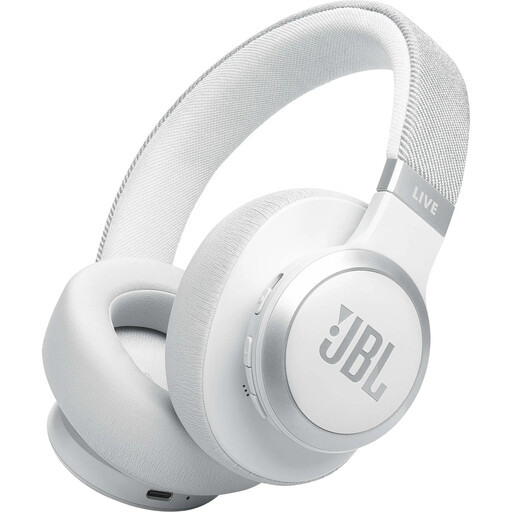
JBL LIVE 770NC wireless over-ear headphones with microphone, white
Could be worth considering if you want to monitor your voice through over-ear headphones as you speak.
The product name describes a wireless over-ear model with a microphone and noise cancellation.
View at Joybuy
 No image available
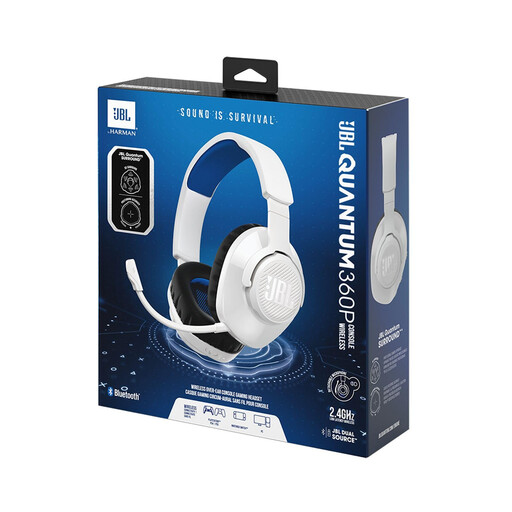
JBL Quantum 360P wireless gaming headset, white
Could be an option if you want to use headphones and a boom microphone in one headset.
The product name lists a boom microphone, ANC, Bluetooth 5 and 22-hour battery life, as well as compatibility with PS5, PS4, Xbox, Switch, PC and Mac.
View at Joybuy
 No image available
ONIKUMA GT889 wireless gaming headset
Could be suitable if you want to try a wireless headset with headphones and a microphone as part of your recording setup.
The product name lists LED lighting, 50mm drivers, a noise-cancelling microphone, 2.4GHz wireless and wired modes, and an adjustable headband.
View at Joybuy
 No image available
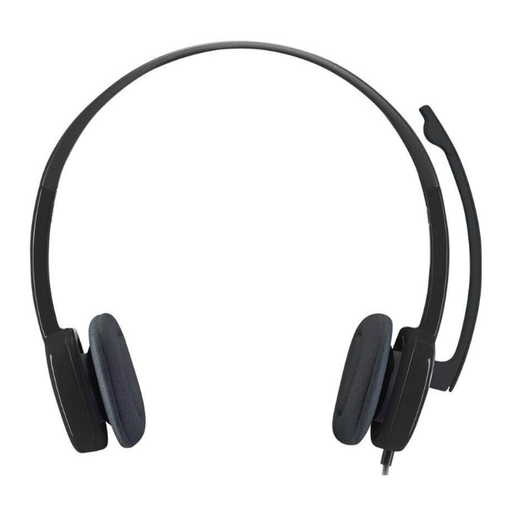
Logitech H151 stereo headset with 3.5 mm connection
Could be an option if you’re looking for a wired stereo headset with an adjustable microphone.
The product name lists a noise-cancelling microphone, in-line volume control and mute, plus a 3.5 mm connection for PC, Mac, laptop, tablet and smartphone.
View at Joybuy
 No image available
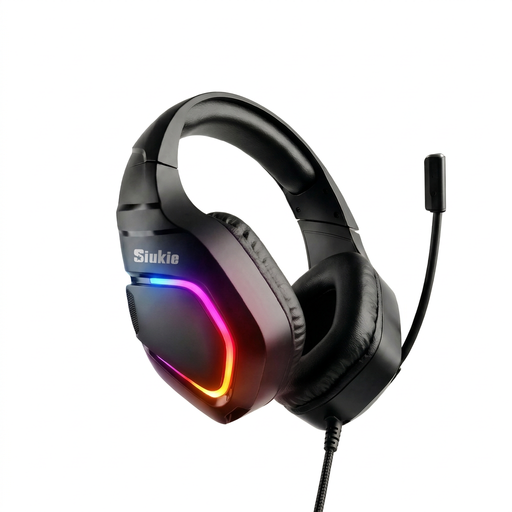
Siukie H100 gaming headset with USB and 3.5 mm connections
Could be suitable if you want to try a wired headset with a boom microphone and several connection options.
The product name lists USB and 3.5 mm connections, plus compatibility with PS5, PS4, Xbox, Switch and PC.
View at Joybuy
Frequently asked questions
Do I just need an XLR adapter for a 3.5 mm headset microphone?
Not necessarily. RØDE says the HS2 needs a compatible 3.5 mm microphone input with plug-in power. RØDE distinguishes this power supply from 48 V phantom power, so a suitable power adapter may be needed for a device with XLR inputs only.
How should I position a boom microphone for a quiet voice?
Adjust the boom in line with the instructions for your specific model, then record a test using your usual speaking volume and including breath sounds and head movements. DPA recommends positioning its model 4088 at the corner of the mouth rather than directly in front of it to reduce plosives; this isn’t a general distance recommendation for other models.
Which parts can be replaced with regular use?
Audio-Technica lists replaceable earpads and a replaceable cable for the BPHS2Ca. Sennheiser lists individually replaceable components for the HSP Essential Omni. Before buying, check which replacement parts are available and compatible with the exact model variant.
Can I record another person speaking privately?
Don’t record another person speaking privately without permission: § 201 StGB covers the unauthorised recording on an audio carrier of another person’s non-publicly spoken words. Make sure you have permission before recording. If personal data is processed in the process, an appropriate legal basis under Art. 6(1) GDPR is also required, as explained by the Federal Commissioner for Data Protection and Freedom of Information.


