Commentary in windy conditions
If you speak while walking outdoors, pay particular attention to the windscreen and microphone position. Check both in a test recording along your route.


Start by choosing a recording setup that will work for the whole walk: a headset microphone with a suitable portable recorder, a directional wired option for a compatible XLR input, or a microphone with a compatible wireless system. A windscreen and pickup pattern are no substitute for a test recording. With wireless, the transmitter, receiver and frequency variant must all be suitable for your intended use.
If you speak while walking outdoors, pay particular attention to the windscreen and microphone position. Check both in a test recording along your route.
Plan for power, storage and comfort as part of your complete recording setup, so your commentary isn’t let down by unsuitable equipment or a poor setup.
First check that the exact microphone connector and power requirements match your recorder or wireless system. Similar-looking plugs don’t automatically mean they’re compatible.
Best if: you want to record without a wireless system and save a separate audio track. According to RØDE, the RØDE HS2 has a 3.5 mm TRS output and needs a compatible microphone input with plug-in power.
Bear in mind: the recorder and headphones are extra items. Make sure the cable and complete signal path are secure and tested before walking.
Best if: you already have a suitable portable XLR recording setup. The Audio-Technica PRO8HEx is a dynamic microphone with a hypercardioid pickup pattern, according to the manufacturer; the Shure WH20XLR is a wired dynamic option with a cardioid pattern.
Bear in mind: you’ll need to check the positioning and sound while moving. An XLR connector isn’t a standard smartphone headset connection.
Best if: a cable to your recording device would restrict your movement, and you’re using a compatible transmitter and receiver system. Sennheiser lists the ME 3 for EW-D and XSW; Shure offers the SM35-TQG for compatible Shure bodypack transmitters.
Bear in mind: the microphone alone doesn’t replace the transmitter, receiver or recording equipment. With wireless, check the exact variant and the applicable frequency regulations.
| What matters when buying | What to check | Who is this especially important to? |
|---|---|---|
| Clear speech in windy conditions | Check the windscreen for the exact variant, as well as the fit and position of the microphone boom. Listen back to a test recording made outdoors. | When I speak outdoors while walking, I want my voice to remain clear despite wind and changing background noise. Around 29% of consumers prioritise wind protection and speech clarity. |
| Long recording sessions | Test the complete signal path and plan for power, storage and protection against accidentally stopping the recording. | For a long commentary, I want to avoid interruptions and plan for power and storage in advance. Around 29% of consumers put uninterrupted recording first. |
| Connection and power | Check the exact model variant, connector, input and power requirements. | If I already own a recorder or wireless system, I want a microphone that’s an exact match. Around 21% of consumers prioritise compatibility with their recording equipment. |
| Fit and cable management | Try the headband for the length of time you plan to wear it, and position the microphone boom and cable or bodypack transmitter securely. | When I’m walking, I want the headset to feel comfortable and the microphone to stay in place. Around 21% of consumers pay particular attention to a secure fit and a portable setup. |
A microphone such as the RØDE HS2 is a separate device and doesn’t record audio by itself. To save and listen back to a recording, your microphone, recording device and any other necessary components must work together.
Before buying, map out the signal path from the microphone to the saved file, then check it with a test recording.
Depending on your setup, you may also need a recorder, headphones, storage and a suitable connection.
Models such as the RØDE HS2, Shure SM35-TQG and AKG C555 L have different connection and power requirements. A matching plug diameter alone won’t guarantee a working signal path.
Check the full model name, connector wiring, power requirements and, where necessary, pre-amplification.
A windscreen won’t automatically deal with every sound you’ll encounter on a walk. The direction of a directional microphone capsule also affects what it picks up.
Make an unprocessed test recording outdoors using your own voice and movements, then listen back before recording a long take.
The HS2 is a separate, lightweight head-worn microphone for a compatible 3.5 mm microphone input with plug-in power, or a wireless system specifically designed to work with it.
Depending on the variant, the SM35 is designed for compatible Shure bodypack transmitters or a suitable wired setup; the WH20XLR is a wired dynamic alternative.
The PRO8HEx is a wired, dynamic head-worn microphone with a hypercardioid pickup pattern, designed for a suitable XLR recording setup.
The C555 L is designed for a compatible AKG bodypack transmitter or a specifically suitable power and adapter solution.
Sennheiser lists the ME 3 as a headset microphone for its EW-D and XSW wireless systems.
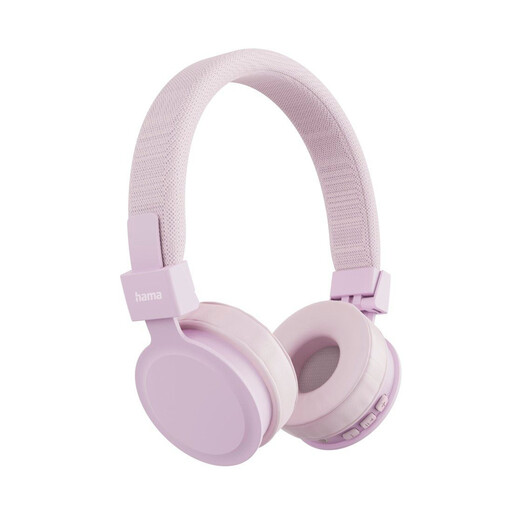
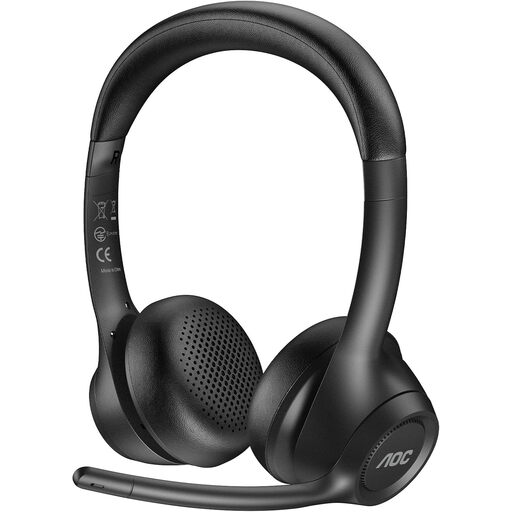
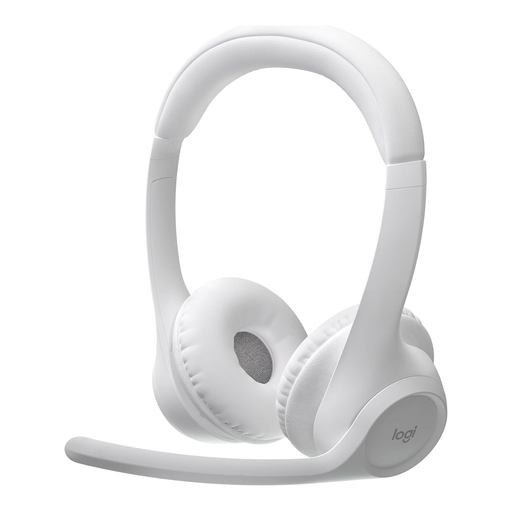
The wireless headsets below are described as products for music and calls. They aren’t specified as standalone recording microphones, so before recording long route commentary, check microphone compatibility and your complete recording setup.
 No image available
For hands-free calls and music playback. For a long recording, check that your device recognises the built-in microphone via the recording setup you intend to use.
Bluetooth 5.4, built-in microphone, up to 15 hours of playback, USB-C charging port and an included 3.5 mm audio cable.
 No image available
Described as a wireless headset with a microphone for work and calls. Before using it for route recordings, check that your recording device and app recognise it.
The product name specifies an ENC microphone.
 No image available
For hands-free calls. Before recording a long take, check that the headset works with your recording device and app.
The product name specifies two beamforming microphones, 20 hours of battery life and a weight of 122 g. The battery life figure doesn’t indicate continuous recording time.
Not simply because it has a 3.5 mm plug. According to RØDE, the HS2 has a TRS microphone output and needs a compatible input with plug-in power. Check whether the microphone is recognised and recorded by your specific phone, using an adapter if necessary.
Before setting off, test the recording, windscreen and available storage. Zoom lists a HOLD switch on the F2 to prevent accidental stops, and recording to microSD. The recorder’s stated battery life doesn’t replace testing your complete setup.
Depending on your setup, you may need a recorder, suitable cables or adapters, storage, or a transmitter and receiver. For wired use of the Shure SM35-TQG, Shure also specifies a pre-amplifier; check what’s included with the exact variant.
You can’t assume that every wireless system is permitted. In its ruling 37/2026, dated 15 April 2026, the Bundesnetzagentur lists frequency bands with technical and operational conditions. Check the frequency band and variant of the specific system against the allocation currently in force.
Section 201 of the German Criminal Code (StGB) prohibits unauthorised recording of another person’s non-public spoken words. Whether a particular conversation is considered non-public, and what rules apply to later publication, can’t be determined in the same way for every case. Don’t assume other people’s conversations are free to record without checking first.