Narrators recording in a noisy space
This is for you if you want to record a clear narration while a fan is running. Shure explains why microphone position and distance matter when recording.


For a single narrator, a boom microphone positioned close to your mouth is a sensible starting point for capturing your voice more clearly while a fan is running. In a conversation with several people, the headset microphone won’t automatically pick up someone sitting further away. Check the microphone processing, connection and fit with a test recording on the device you plan to use; ANC in the headphones is no guarantee of a clean microphone recording.
This is for you if you want to record a clear narration while a fan is running. Shure explains why microphone position and distance matter when recording.
This is for you if you want to capture both your questions and a family member’s answers. A headset microphone sits close to the person wearing it, so you’ll also need to consider where the other speaker is sitting.
This is for you if you’re planning longer recordings for a family archive and want to consider not only speech clarity but also sound quality, connectivity and headset fit. RØDE describes the NTH-100M as a headset for applications such as podcasting and media production.
| What matters | What to check when buying | Who it matters most to |
|---|---|---|
| Clear speech despite fan noise | Boom microphone and microphone noise cancellation; test with the fan running and a quiet voice. | If I’m recording a quiet narration beside a running fan, I want it to remain clear. Around 29% of consumers put speech clarity despite fan noise first. |
| Multiple voices | Decide who will wear the headset; listen to a test recording of the questions and answers. | If I want to capture questions and answers, the microphone needs to pick up whoever is speaking. Around 23% of consumers prioritise recording multiple voices. |
| A natural-sounding voice for your archive | Record quiet passages and pauses with the fan running, then check for clarity and any audible processing. | For a family archive I plan to keep for years, I want the narrator’s voice to remain pleasant to listen to, even after repeated plays. Around 18% of consumers focus mainly on an archive recording that sounds as natural as possible. |
| Connection to your recording device | Test it with the specific device you’ll use; check the cable and adapters against the exact model variant. | If I want to use a smartphone, computer or recorder I already own, the connection needs to work with my device. Around 18% of consumers consider device connectivity their most important concern. |
| Comfort during longer conversations | Compare the wearing style and adjustability; check the fit before making longer recordings. | For longer interviews, I want to be able to wear the headset without it becoming uncomfortable. Around 12% of consumers prioritise long-term comfort. |
Noise cancellation for listening and capturing your voice serve different purposes. RØDE points out that noise-isolation measures don’t necessarily eliminate all background noise.
Test the microphone signal with the fan running and a quiet voice, rather than just checking how quiet the fan sounds through the headphones.
The headset microphone sits close to the person wearing it. As a result, it may capture a narrator sitting further away quite differently.
Before recording, decide whose voice the microphone should capture, then listen to a test recording of the questions and answers.
Capturing two clear voices may require extra microphones or a different setup, adding to the effort involved.
Connections and included accessories can vary between models. RØDE states that the supplied TRRS cable is required for the microphone on the RØDE NTH-100M to work.
Check the model number, what’s included and recording compatibility with your device before deciding.
Depending on your device, you may need a suitable adapter; check before recording.
The wired Zone Wired is designed for people who speak at a computer and may have to contend with ventilation or air-conditioning noise.
The NTH-100M combines headphones with a detachable headset microphone, and RØDE describes it as suitable for applications including podcasting and media production.
The Blackwire 3325, in the 8X221AA variant described by HP, is a wired office option with several stated connection options.
The wired MMX 150 may appeal to people looking for closed-back headphones and a detachable boom microphone.
The foldable, wireless Evolve2 65 Flex is better suited to speaking on the move than to a fixed recording setup.
The products below are for people who want to capture their voice with a portable microphone or directly using recording earbuds. For conversations with multiple people, check the microphone position for each speaker.
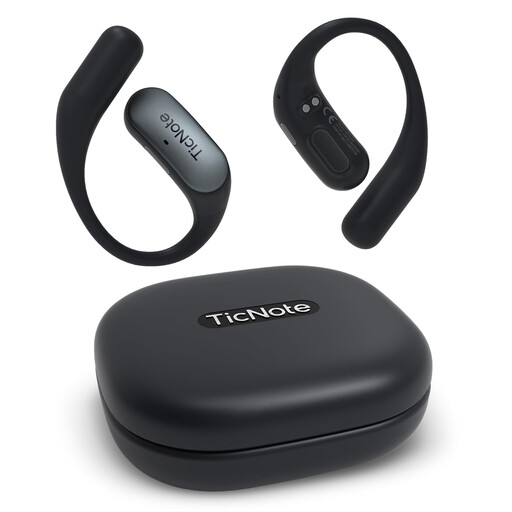 No image available
For recording conversations directly; the product description lists ENC noise cancellation and recording through the earbuds and charging case.
32 GB storage, over 25 hours of recording time, MP3 and WAV export, and Bluetooth 6.0.
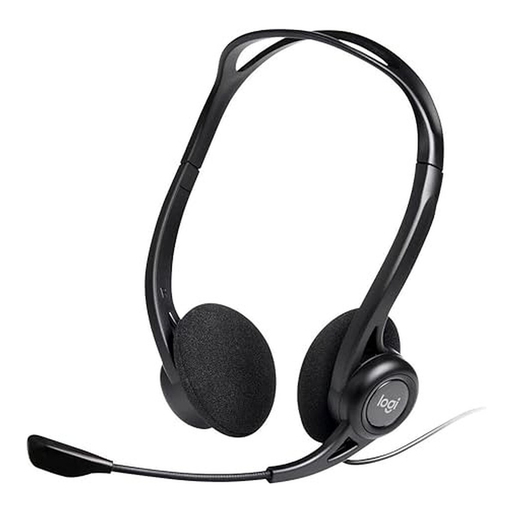 No image available
For one person narrating at a computer; the description lists an adjustable boom microphone and noise reduction.
USB connection, 2.4 m cable, and volume and mute controls.
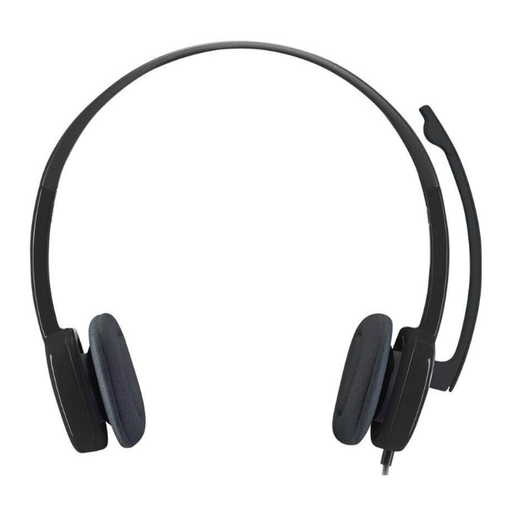 No image available
For one speaker; according to the product description, the microphone can be positioned close to the mouth.
3.5 mm connection, with volume and mute controls on the cable.
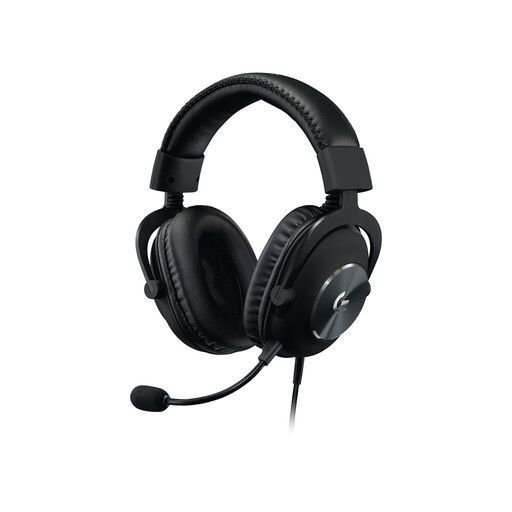 No image available
For recording a single voice with a detachable microphone positioned close to the mouth.
USB sound card and separate cables for PC and mobile devices; the description lists Blue VO!CE microphone filters for real-time voice processing.
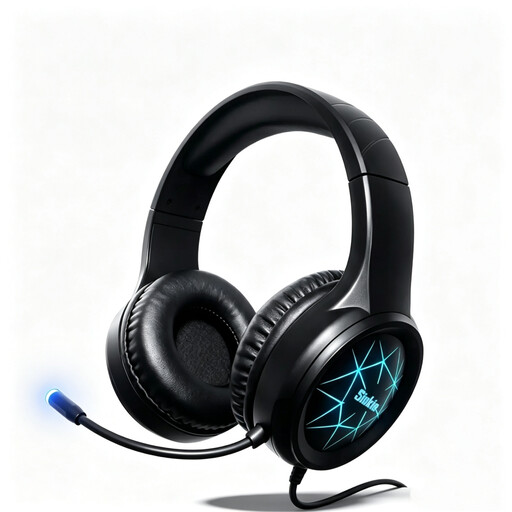 No image available
For one speaker; the product name and description list a flexible microphone with noise cancellation.
Wired, with USB and 3.5 mm connections, over-ear cushions and an adjustable headband.
No. Assess the microphone recording separately from how quiet the fan sounds to you through the headphones. Position the microphone close to the speaker and make a test recording with the fan running; noise isolation doesn’t necessarily eliminate all background noise.
According to RØDE, you need to use the supplied TRRS cable for the microphone to work. Check whether the recording device’s connection supports both microphone and headphones; if it has separate sockets, you’ll need to check which adapter or splitter is suitable.
A single headset microphone sits close to the person wearing it, so it won’t automatically pick up someone sitting further away just as clearly. Make a test recording of the questions and answers, then check whether you need an additional microphone or a different setup.
Making an unauthorised recording of another person’s private spoken words is a criminal offence under Section 201 of the German Criminal Code (StGB). Check that you’re legally allowed to record before you begin. Whether data protection obligations apply depends, among other things, on whether the processing is solely for personal or family purposes; any later publication should be considered separately.