
Lieferung heute & morgen

Qualitätsgarantie

Willkommens-Angebote freischalten: KOSTENLOSE Lieferung | Bis zu 80 % RABATT | Kostenlose 30-Tage-JoyPlus-Testphase
App herunterladen
The purchase of a new tumble dryer is a decision that will impact your daily household routine for years to come. With rising energy costs and a growing desire for gentle laundry care, the heat pump dryer is increasingly taking centre stage. However, the variety of models, capacities, and features can be overwhelming. This guide serves to provide clarity, presenting objective criteria to help you find the perfect appliance for your requirements. As a Joybuy Product Recommendation Officer, I have compiled information on current models to provide you with a solid foundation for your decision.
Before you decide on a model, the following three criteria will help you narrow down your search and find an appliance that precisely matches your needs.
The load size, specified in kilograms (kg), is a crucial factor. A heat pump dryer with an 8 kg capacity is often a suitable solution for couples or small families of three to four people. For larger households, or if you regularly dry large items like duvets, a heat pump dryer with a 10 kg capacity may be the more efficient choice as it requires fewer drying cycles.
Equally important is energy consumption. An energy-saving dryer is not only good for the environment but also for your budget. Pay attention to the EU energy label. It indicates the energy efficiency class (from A to G) and the weighted energy consumption per 100 cycles in kilowatt-hours (kWh). Appliances with heat pump technology inherently have an advantage here, as they dry laundry at lower temperatures and reuse a large portion of the process heat.
Modern dryers offer much more than just drying clothes. A heat pump dryer with a steam function, for example, can be a significant time-saver. This feature refreshes clothes, removes odours, and smooths out wrinkles, noticeably reducing the need for ironing.
For tech-savvy users, a smart dryer with Wi-Fi is an interesting option. A dryer with app control allows you to start the appliance remotely, monitor the drying status, or receive notifications when the laundry is done. Furthermore, such apps often provide additional special programmes and care tips.
The operating noise of a dryer is measured in decibels (dB) and should not be underestimated, especially if the appliance is located in an open-plan kitchen or near living areas or bedrooms. A quiet dryer with a rating of around 62–66 dB is roughly equivalent to the volume of a normal conversation and ensures a more peaceful home environment. Models with inverter motors often have an edge here, as they are lower in vibration and more durable.
Based on the criteria mentioned, we have put together a selection of models that stand out for their technical specifications and features.
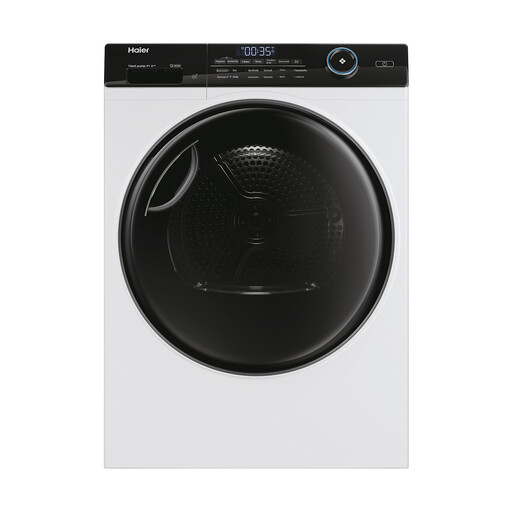
Why this model stands out The Haier dryer from the I-Pro 5 Series combines a solid capacity with modern convenience features. The i-Refresh steam function and smart control via the hOn app make it a versatile household assistant.
Advantages
Who is this appliance for? This model is a great choice for tech-savvy households of up to four people who value smart features, flexible programmes, and gentle laundry care with steam.
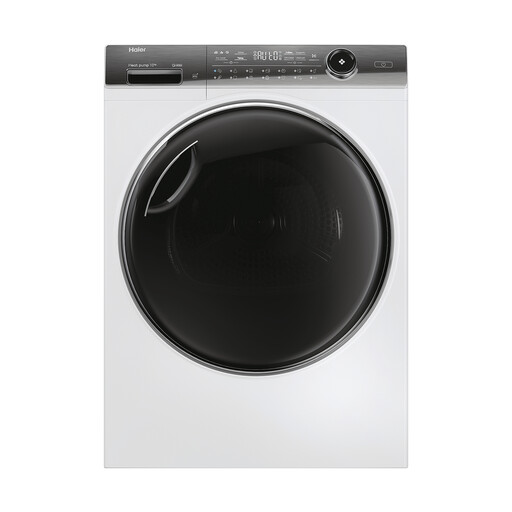
Why this model stands out The I-Pro 7 Series from Haier is aimed at users with high laundry volumes. Its large 10 kg capacity and the beltless inverter motor, which ensures quiet operation, are its key features.
Advantages
Who is this appliance for? Ideal for large families or multi-person households that require a high capacity and are looking for a quiet, durable dryer for frequent use.
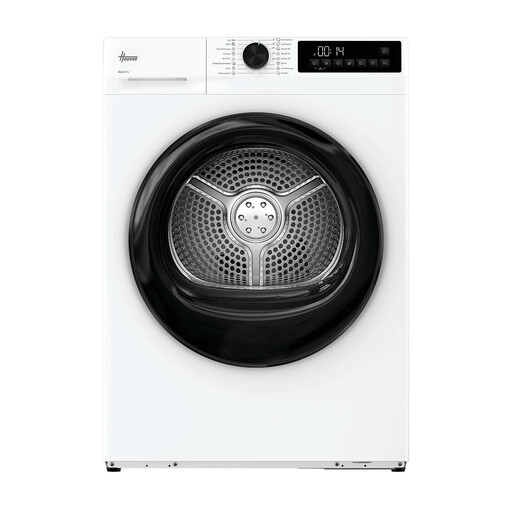
Why this model stands out The Hoover ProDry 300 is distinguished by its exceptionally quiet operation and intelligent drum movements. At just 62 dB, it is one of the quietest appliances on the market.
Advantages
Who is this appliance for? An excellent choice for users who place the highest value on a quiet dryer, for instance, in apartments without a separate laundry room. The intelligent drying programmes are also ideal for households with many different types of textiles.
If these recommendations don't include the perfect model for your specific needs, you can find a wider selection in our product category.
A heat pump dryer uses a closed air circuit and a heat pump to warm the air. This allows it to dry at significantly lower temperatures (approx. 50–60 °C) than conventional condenser dryers. This protects the fibres of delicate textiles and leads to considerably lower energy consumption, which has a positive impact on your electricity bill.
Regular maintenance is straightforward. The lint filter in the door should be cleaned after every drying cycle. Additionally, the condenser filter, usually located behind a flap at the bottom of the appliance, needs to be cleaned every few cycles, depending on the model and frequency of use. Some appliances feature self-cleaning condensers, which further reduces maintenance effort.
Yes, a steam function can make daily life easier. It is excellent for refreshing lightly worn clothes and removing odours without a full wash cycle. The biggest advantage is the reduction of wrinkles, which makes ironing many textiles unnecessary or at least much quicker.