Which buying criteria matter?
For laundry loads that vary from week to week, first check care labels against programme options, then consider your usual load size, and finally compare energy use, installation requirements and maintenance.
| Priority |
What to check before buying |
Who is this particularly important for? |
| Cotton and mixed laundry |
Check care labels, whether there is a dedicated mixed-load programme and its permitted load size. |
If I want to dry suitable cotton and synthetics together where possible, I still check every care label. Around 28% of consumers say drying mixed laundry is their top buying priority. |
| Winter energy use |
Compare kWh per 100 Eco cycles and Eco programme duration on the same label basis with how often you expect to use the dryer. |
If I use the dryer frequently in winter, I want to estimate energy use from comparable figures without assuming the Eco figure applies to every everyday programme. Around 22% of consumers base their choice mainly on running costs. |
| Drum capacity |
Compare your usual tumble-dryer-suitable laundry loads and the maximum load for each programme with the rated capacity. |
If I have both smaller weekly loads and the occasional larger cotton item, I want a capacity that works for both. Around 22% of consumers consider load size their top buying priority. |
| Winter installation location |
Measure the appliance dimensions and door clearance, and check the condensation efficiency and installation guidance for the specific model. |
If the installation space is tight or cold, I want to check in advance that the appliance will fit and what conditions the instructions specify. Around 17% of consumers put the installation location at the heart of their choice. |
| Cleaning and maintenance |
Compare access to the fluff filter, the cleaning instructions and any stated condenser-cleaning function. |
If I want cleaning to be as straightforward as possible after each cycle, I look at how accessible the filter is and check the specific maintenance instructions. For around 11% of consumers, maintenance requirements are their top buying priority. |
Joybuy product suggestions
This selection includes heat pump tumble dryers for cotton and weekly loads of different sizes, including models with a dedicated mixed-load programme.
 No image available
Haier I-Pro 1 HD80-E929E-DE heat pump tumble dryer, 8 kg
The stated 8 kg capacity could suit a variety of loads if it matches the amount of laundry you usually dry.
Features include sensor drying and several programmes.
Joybuy
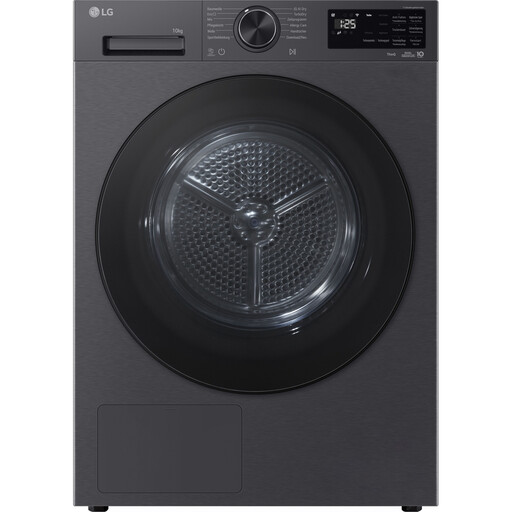 No image available
LG RT10X7B heat pump tumble dryer, 10 kg
The 10 kg capacity is worth considering if you regularly have large loads that are suitable for tumble drying and can fill the drum accordingly.
Features include energy class C, 91% condensation efficiency, a self-cleaning condenser and programmes for cotton and mixed laundry. AI Dry and a moisture sensor are also listed.
Joybuy
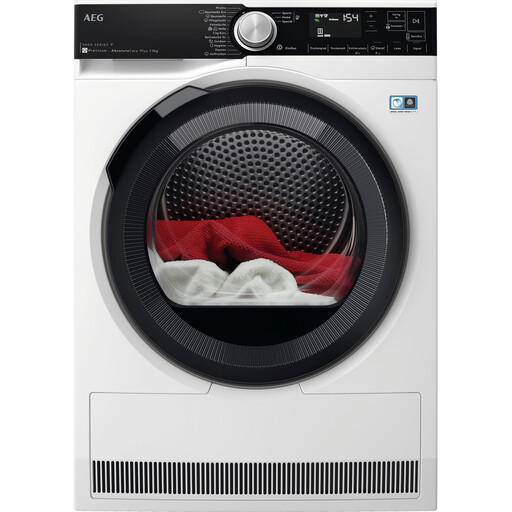 No image available
AEG TR9DW80690 Series 9000 heat pump tumble dryer, 9 kg
MixDry may be useful for suitable mixed laundry; check care labels and the programme’s permitted load size.
Features include energy class C, 106 kWh per 100 cycles, 91% condensation efficiency, and cotton and Eco programmes. The product description states that the appliance should not be installed where temperatures can fall below freezing; check the installation requirements for this model.
Joybuy
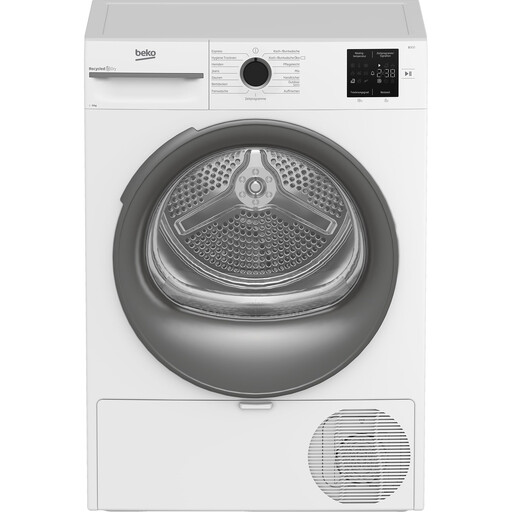 No image available
Beko BM3T39210W1 heat pump tumble dryer, 9 kg
The stated 9 kg capacity could suit larger loads if you have them regularly and stick to the load limits for each programme.
The model is listed with energy class E and 15 programmes; it also features an AquaWave drum and a combined filter system.
Joybuy
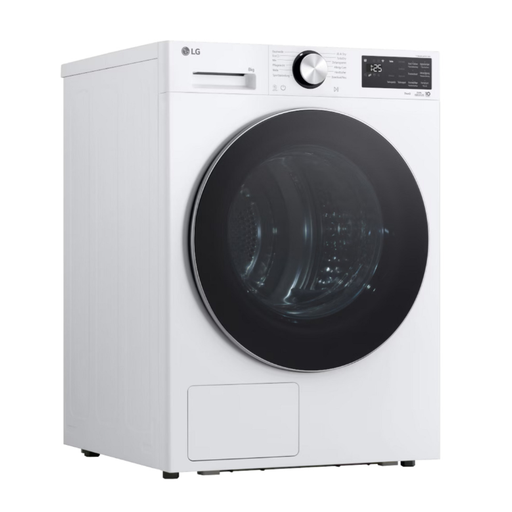 No image available
LG RT80X72W heat pump tumble dryer, 8 kg
The 8 kg capacity could suit regular, varied loads if it matches the amount of laundry you usually dry.
Features include energy class B, 85 kWh per 100 cycles, a self-cleaning condenser and programmes for cotton and mixed laundry. AI Dry and Sensor Dry are also listed.
Joybuy
Frequently asked questions
Can I dry cotton and synthetics together?
Only if the care labels confirm that every item is suitable for tumble drying and the selected programme allows that fabric mix and load size. AEG lists MixDry for the TR8T70789; that does not mean it is suitable for any fabric.
What does the energy figure on the EU label tell me about my winter laundry?
The figure shows kWh per 100 drying cycles using the prescribed Eco programme. This test programme dries cotton under defined conditions; other programmes and your actual loads may use different amounts of energy.
What should I check before installing a tumble dryer in winter?
Measure the space available and the clearance needed for the door, then read the installation instructions for the specific model and intended room. You cannot assume that one minimum room temperature applies to all models.
How should I look after my tumble dryer after use?
Follow the instructions for your specific appliance. For tumble dryers with its Quick-Clean filter, AEG recommends cleaning the filter thoroughly by hand after every programme; according to AEG, a clogged filter can extend the cycle time.
Which energy label applies when buying in Germany?
Since 1 July 2025, household tumble dryers have used the new EU energy label, with ratings from A to G. The Bavarian State Ministry of Food, Agriculture, Forestry and Tourism points out that old A+++ ratings are not directly comparable with the new classes and energy-use figures.


