Who is a tumble dryer for small loads suitable for?

Households that regularly dry small loads

If you often dry small amounts of laundry, compare the capacity, moisture sensing and energy use with the loads you usually dry, rather than choosing based only on a large rated capacity. The German Environment Agency and consumer advice centre offer guidance on drum size and comparing energy use.

People who need their laundry again soon

If you need certain suitable items again soon, programme duration and the permitted load size matter. Quick programmes may be limited to particular fabrics and load sizes, so check the manufacturer’s information for the specific model carefully.

Households with changing load sizes

If you usually dry small loads but occasionally have larger or mixed loads, you can weigh up extra capacity against the programmes available. What matters is the features of the individual model, not just the brand name.

What should you look for when buying?

Buying priority What to look for when buying Who is it particularly relevant to?
Energy use with a part load Compare your usual load size, drum capacity and moisture sensing. Compare Eco energy figures only on the same label basis. If I often dry small loads, I want a capacity that suits my day-to-day needs, without overlooking extra cycles or regularly underfilling the drum. Around 36% of consumers are likely to prioritise energy use with small loads.
Small-load drying time Check which fabrics are permitted, the programme’s load capacity and its duration for the specific model. If I need a few suitable items again soon, the duration of the right programme matters to me. Around 29% of consumers are likely to consider short cycle times for small loads first.
Programmes for different fabrics Check care labels, available moisture sensing, and any programmes specifically listed for mixed loads or particular fabrics. When drying different fabrics, I want to be able to choose a programme that suits the care instructions for each load. Around 21% of consumers prioritise suitable programmes and fabric care.
Space and maintenance Check the appliance dimensions, including space for the door to open, as well as the condensation water setup and the model’s cleaning requirements. If space is limited or the dryer runs often, I want to allow enough room for the door and maintenance. Around 14% of consumers are likely to consider space and maintenance requirements decisive factors.

Common buying misconceptions

  • Choosing the biggest drum just for its maximum capacity

    If the drum is often only partly full in everyday use, some of its capacity goes unused. On the other hand, a smaller drum is not automatically more economical if it means you need to run extra drying cycles.

    Start by noting your usual load sizes, then compare them with the capacity and small-load features of the specific model.

  • Assuming the label figure shows the energy use of every drying cycle

    The energy figure on the label relates to Eco cycles. It does not measure the energy use of your own small load or a quick programme.

    Compare label figures only on the same basis. For your own cost calculation, take account of the actual number of cycles you run and your electricity tariff.

  • Assuming a quick programme is suitable for any laundry

    Quick programmes may be limited to particular fabrics and load sizes. For example, Bosch describes Super 40 on model WQA233C41 as suitable for small loads of lightweight synthetics.

    Check the care label, permitted programme load and programme suitability before putting clothes in the dryer.

  • Measuring only the appliance with the door shut

    The space required may change when the door is open and you need access for maintenance. For Bosch model WQA233C41, the manufacturer gives a greater depth with the door open at 90° than with the appliance closed.

    Measure the space available, including room for the door to open, and check that you can reach the filter and container for regular maintenance.

Brands and useful model features

Bosch

For its WQA233C41 heat pump tumble dryer, Bosch lists an 8 kg capacity, Auto Dry, Half Load and Super 40. These details relate to this model.

  • According to Bosch, the Half Load option adjusts the settings and duration for smaller loads. Super 40 is described as suitable for small loads of lightweight synthetics.
  • The manufacturer’s information does not confirm a specific energy saving for a small load. Check that the programme restrictions suit your laundry.

Siemens

Model WQ33G2D176 combines a 9 kg capacity with autoDry and a Half Load option.

  • Siemens describes the option as adjusting the cycle time for smaller laundry loads.
  • A shorter cycle time does not tell you how much energy your own small load will use. Weigh up the extra capacity of 9 kg against your usual load size.

AEG

For model TR7T861EX, AEG lists an 8 kg capacity, ProSense, MixDry and SpeedDry.

  • According to AEG, SpeedDry dries up to 4 kg in 75 minutes, while MixDry is designed for mixed loads.
  • The stated time applies to the specified programme and load size. It does not apply automatically to other programmes or models.

Beko

The DHC742GXS is a heat pump tumble dryer with a 7 kg capacity, OptiSense sensor drying and a manufacturer-stated depth of 50,8 cm.

  • The model dimensions can be a useful point of comparison if space is limited.
  • Its capacity and depth do not prove an energy saving with small loads compared with other models. Also check the space needed for the door and installation.

Samsung

For model DV90F09F4SU2, Samsung lists a 9 kg capacity, energy efficiency class A and AI Dry+.

  • These listed features offer a starting point for comparing this particular model.
  • The 9 kg capacity provides extra room that you may not need if you often dry small loads. The feature names alone do not show that the model will use less energy for small loads.

Joybuy products for small laundry loads

This selection includes heat pump tumble dryers with different capacities, as well as listed sensor, quick or mixed-load features. The key is to find the features that suit the loads and fabrics you typically dry.

LG RT80X7B heat pump tumble dryer, 8 kg

LG RT80X7B heat pump tumble dryer, 8 kg

Could suit you if you want moisture sensing and a mixed-load programme for loads that vary in size.

8 kg capacity; AI Dry, TurboDry, SensorDry and Mix are listed.

View at Joybuy
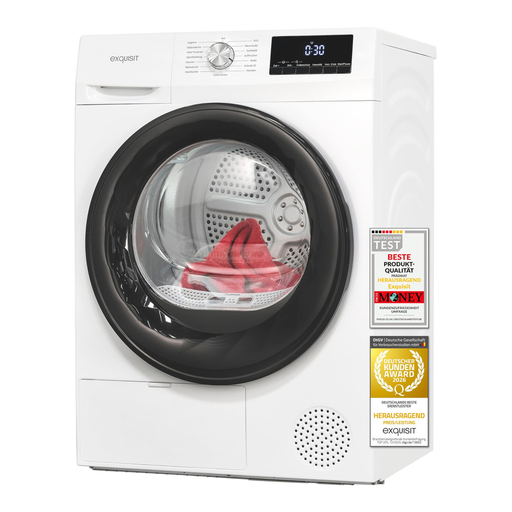
Exquisit heat pump tumble dryer, 7 kg

Exquisit heat pump tumble dryer, 7 kg

A possible option if you occasionally want to use a quick programme for a suitable load.

7 kg capacity; 15 programmes and a Quick 30' programme are listed.

View at Joybuy
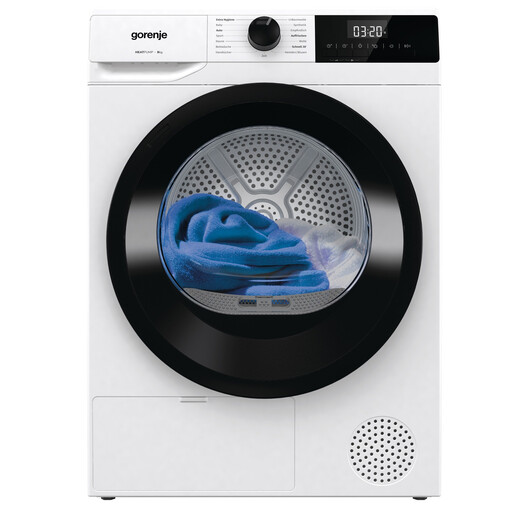
Gorenje DHNE82 heat pump tumble dryer, 8 kg

Gorenje DHNE82 heat pump tumble dryer, 8 kg

Could be worth considering if you want moisture sensing and a shorter programme for suitable loads.

8 kg capacity; AutoDry, Quick Pro and Speed 30’ are listed.

View at Joybuy
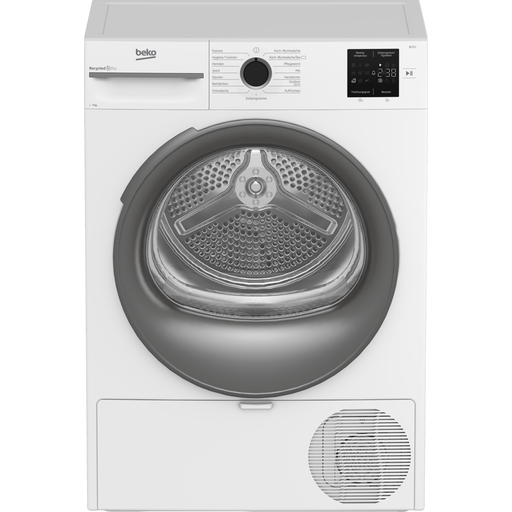
Beko BM3T37210W1 heat pump tumble dryer, 7 kg

Beko BM3T37210W1 heat pump tumble dryer, 7 kg

Could suit frequent smaller loads if you’re looking for a 7 kg capacity and sensor drying.

7 kg capacity; sensor drying, express programmes and timed programmes are listed.

View at Joybuy
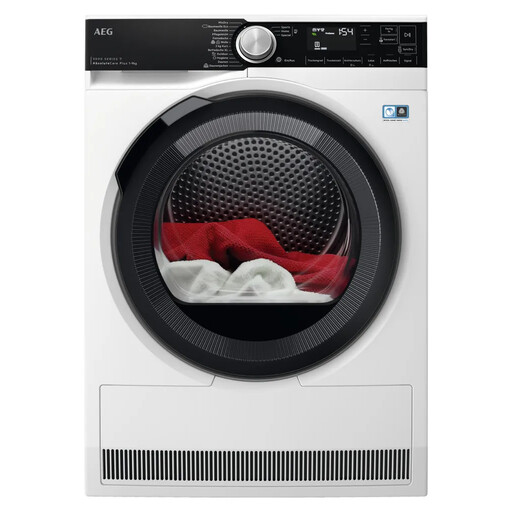
AEG 9000 AbsoluteCare Plus TR9W80690 heat pump tumble dryer, 9 kg

AEG 9000 AbsoluteCare Plus TR9W80690, 9 kg

Could suit changing load sizes if you occasionally need the extra capacity and the specified quick programme is suitable for your laundry.

9 kg capacity; ProSense and a quick programme for up to 3 kg are listed. MixDry is also included.

View at Joybuy

Frequently asked questions

What does the energy label tell me about frequent small loads?

The EU energy label includes information such as energy use per 100 drying cycles in the Eco programme, load capacity and Eco programme duration. The EU calculation takes full and partial loads in the Eco programme into account. It does not give a measured energy figure for every individual small load or quick programme.

Can I use a quick programme for every small load?

No. Suitability depends on the specific programme, the fabrics and the permitted load size. Bosch describes Super 40 on model WQA233C41 as suitable for small loads of lightweight synthetics. Also check the care label and the information for the appliance in question.

Does a heat pump tumble dryer need an exhaust hose leading outside?

A heat pump condenser dryer does not need an exhaust outlet to the outside like a vented tumble dryer. Depending on the appliance, condensation water is collected in a container or drained away. Check the connections and installation requirements for the specific model.

What should I clean regularly if I use my dryer frequently?

Follow the instruction manual for your appliance. Bosch recommends cleaning the fluff filter after every use and emptying the condensation container after each cycle. Whether the condenser needs cleaning depends on the appliance design.

How can I estimate the running costs of small loads more accurately?

Compare Eco energy use on the same label basis, and calculate costs using the actual number of drying cycles you run and your electricity tariff. The label figure does not give a fixed annual cost for frequent small loads, nor does it automatically describe the energy use of other programmes.