
Lieferung heute & morgen

Qualitätsgarantie

Willkommens-Angebote freischalten: KOSTENLOSE Lieferung | Bis zu 80 % RABATT | Kostenlose 30-Tage-JoyPlus-Testphase
App herunterladen
Purchasing a new home appliance is a major decision. Especially with a heat pump dryer, many consumers face a flood of technical specs, marketing promises, and new energy labels. This often leads to uncertainty and the fear of making an expensive mistake. This guide serves as an objective resource to help you identify the crucial features and avoid common purchasing pitfalls.
As your Joybuy Product Recommendation Officer, I'll filter the relevant information for you and show you what truly matters when making your choice.
Manufacturers advertise numerous features, but not all of them offer real value. Some neglected aspects can even significantly impact an appliance's efficiency and lifespan.
Since March 2021, a new EU energy label with a scale from A to G has been in effect for tumble dryers. An appliance previously advertised as A+++ might now fall into class C or D under the new, stricter rating system. Therefore, focus exclusively on the current label and its stated weighted energy consumption in kWh per 100 cycles. This figure is the only reliable indicator for identifying a truly energy-efficient dryer and estimating long-term running costs.
The condenser, also known as the heat exchanger, is the heart of every condenser dryer with a heat pump. If it gets clogged with lint, drying performance drops rapidly and electricity consumption increases. Models without a self-cleaning condenser require regular, often cumbersome, manual cleaning. If neglected, the appliance loses efficiency and can wear out prematurely. A self-cleaning condenser, on the other hand, ensures consistently high performance and energy efficiency.
A heat pump dryer with app control sounds modern, but the utility of many applications is limited. A simple start/stop function via an app often doesn't justify the extra cost. Meaningful smart features offer tangible benefits, such as remote error diagnosis, intelligent program suggestions based on laundry type, or notifications for when to empty the filter and condensed water container.
To find the right appliance for your needs, you should focus on the following objectively measurable parameters.
The dryer's capacity should be matched to the size of your washing machine and your laundry volume.
The crucial value on the new EU label is the energy consumption per 100 cycles. A model with a consumption of 170 kWh/100 cycles is significantly more economical than one with 250 kWh/100 cycles. Assuming an electricity price of 35 cents/kWh, this results in annual savings that can offset the purchase price over the appliance's lifespan.
Two additional features offer a noticeable improvement in everyday convenience:
Based on the objective criteria mentioned, we have compiled a selection of models for various user profiles.
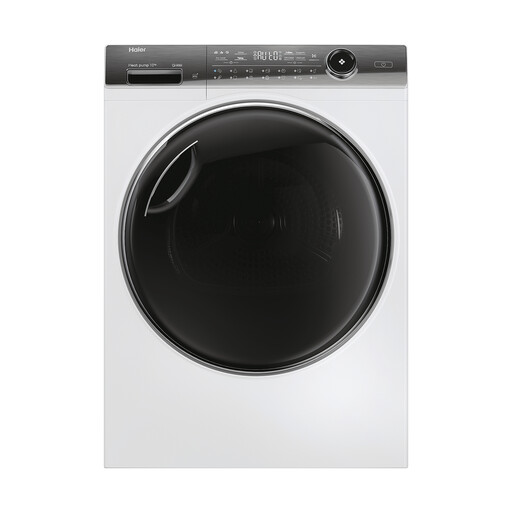
Why this model is a good fit: With a 10 kg capacity, this appliance effortlessly handles large loads of laundry. The i-Refresh steam function is perfect for quickly freshening up shirts or blouses and minimising ironing – a real time-saver in a busy family life.
The hOn app offers useful additional features like a program selection assistant and error diagnosis, which go beyond simple remote control.
Large 10 kg capacity; i-Refresh steam program for odour removal and wrinkle reduction; quiet operation at 66 dB thanks to the direct drive motor.
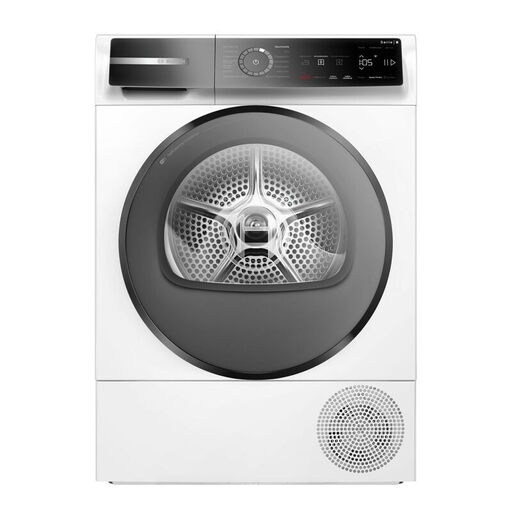
Why this model is a good fit: This model from Bosch is designed for users who value convenience and low maintenance. Its extremely quiet operation and Home Connect integration make it ideal for modern, connected homes.
The self-cleaning condenser prevents the typical loss of efficiency caused by lint build-up, ensuring consistently high drying performance without the need for manual cleaning.
Very quiet operation at just 59 dB; SelfCleaning Condenser for consistent efficiency; Home Connect for smart control and program selection.
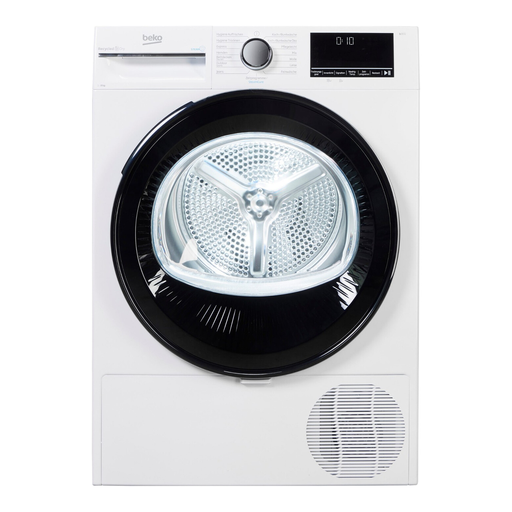
Why this model is a good fit: This appliance focuses on the essentials while still offering useful features. With an 8 kg capacity, it's designed for the daily needs of most households and offers real value in its price range with the SteamCure function.
Instead of focusing on complex app features, this model offers a practical SteamCure function that directly simplifies daily routines without unnecessarily inflating the price.
Solid 8 kg capacity; SteamCure steam function for wrinkle reduction; quiet operation at 64 dB; option for direct connection to the water drain.
We have compiled a complete, up-to-date list of products that fully meet these strict selection criteria.
No, a direct water drain is not usually mandatory. Every heat pump dryer is a condenser dryer and collects the extracted water in an integrated condensed water container, which must be emptied manually after each drying cycle. However, most models also offer the option to connect the appliance directly to a wastewater drain using a supplied hose. This increases convenience, as it eliminates the need for manual emptying.
The annual costs depend on the frequency of use, the energy efficiency class, and the current price of electricity. Here's an example calculation: An appliance with a consumption of 190 kWh per 100 cycles is used on average 160 times a year (approx. 3 drying cycles per week). The annual consumption is therefore around 304 kWh (190 kWh / 100 * 160). With an electricity price of 35 cents/kWh, this results in annual running costs of around €106.40.
With proper care, the average lifespan of a heat pump dryer is 10 to 15 years. Regular maintenance is crucial for a long service life. This includes cleaning the lint filters after every cycle and—for models without a self-cleaning function—cleaning the condenser according to the manufacturer's instructions. Neglected maintenance is the most common cause of premature performance decline and defects.