For frequent small towel loads, choose a heat-pump tumble dryer with a capacity suited to your usual load size and suitable moisture control or a half-load function. The German Environment Agency points out that an oversized dryer, often only half full, can use more energy per kilogram than a suitably loaded appliance. This does not guarantee a particular saving for individual small loads. Also check for towel or cotton programmes, the current energy label, and the care and installation guidance.
Who is this selection for?
Households with frequent small towel loads
If you regularly dry just a few tumble-dryer-safe towels, compare the drum capacity, moisture control and any clearly stated half-load function with the size of your usual loads. The German Environment Agency recommends making sure the drum is appropriately loaded.
Households drying towels alongside other laundry
If you put other textiles in the dryer as well as towels, suitable programmes and the care labels on each item are important. Bosch Home Appliances Germany advises checking whether items are suitable for tumble drying.
Households that use their tumble dryer frequently
If you run many cycles, compare the stated energy consumption and noise level, and consider the maintenance required in relation to how you use the appliance. The Verbraucherzentrale explains the consumption figure per 100 Eco cycles; Bosch Home Appliances Germany recommends cleaning the fluff filter after every drying cycle.
What should you look for when buying?
First compare your usual and largest towel loads with the drum capacity and available programmes. Then check the energy information, dimensions and maintenance requirements. The German Environment Agency points out that an oversized dryer, often only half full, can use more energy per kilogram than a suitably loaded appliance.
| What matters |
What to check when buying |
Who is it most relevant to? |
| Suitable drum capacity |
Compare your usual and largest loads with the rated capacity; look for moisture control and a clearly stated half-load function. |
If I usually dry only a few towels, I want a suitable capacity without running into problems with my largest usual load. This is a priority for around 33% of consumers whose main concern is accommodating small loads. |
| Suitable towel programmes |
Check the care labels on your towels, as well as the towel or suitable cotton programmes and the adjustable dryness level. |
If my towels regularly go in the tumble dryer, I want to be able to choose a suitable programme that follows their care instructions. Around 27% of consumers put finding a suitable way to dry towels first. |
| Energy use with frequent drying |
Compare the current energy efficiency class and kWh per 100 Eco cycles using the same label basis; the label figure is not a measured value for a small towel load. |
If I dry laundry often, I want to factor the stated energy consumption into my running costs without treating it as the consumption for a single small load. Around 27% of consumers put energy consumption first. |
| Space and maintenance |
Check the appliance dimensions, including the door opening and required clearances, against the manual; also consider the noise level and filter maintenance. |
If the tumble dryer needs to fit in a particular space, I need suitable dimensions and practical access for regular cleaning. Around 13% of consumers put installation or maintenance first. |
Common buying misconceptions
-
A large drum or half-load function automatically means more efficient drying
The German Environment Agency notes that an oversized tumble dryer used frequently with only partial loads can consume more energy per kilogram. However, a half-load function does not guarantee a particular level of energy use for small towel loads.
Compare your typical and largest loads with the rated capacity. Treat a half-load function as a feature to consider, not as a proven energy-saving benefit.
-
A quick programme will dry towels in the same amount of time
Bosch describes the 40-minute programme on the WQG233D40 as being for small loads of synthetic fibres and thin materials. You cannot use this to establish a fixed drying time for absorbent towels.
Check the programme guidance for the specific model and choose a towel or suitable cotton programme in line with the care labels.
-
Old and current energy efficiency classes can be compared directly
Since 1 July 2025, the EU energy label for tumble dryers sold online in Germany has used a scale from A to G. Older ratings on the A+++ to D scale do not correspond to the current classification, as the European Commission explains.
Compare current labels and the figure in kWh per 100 Eco cycles on the same basis.
-
The appliance depth is the total space you need
The stated cabinet depth does not automatically allow for connections, clearances or an open door. Regular filter maintenance is also part of using the appliance.
Check the installation guidance for the exact model and allow enough room to open the door and clean the appliance. Bosch Home Appliances Germany recommends cleaning the fluff filter after every drying cycle.
Key brands at a glance
Bosch
For the WQG233D40, Bosch lists a rated capacity of 8 kg, Auto Dry, a half-load option and a towel programme. These features make this particular model worth considering if you often dry small towel loads.
- Bosch lists both a half-load option and a towel programme for this model.
- The condenser on the WQG233D40 is not listed as self-cleaning. These features do not prove a particular level of energy use for small loads.
AEG
For the TR8T70789, AEG lists ProSense, which adjusts settings to the load, and MixDry for suitable mixed laundry.
- Load sensing and MixDry may be useful if you dry suitable textiles alongside towels.
- The adjustment of time and energy use is a manufacturer claim. The stated figure of 85 kWh per 100 Eco cycles is not the consumption for a small towel load.
Beko
The BM3T37210W1 is listed as a 7 kg heat-pump tumble dryer with sensor drying and a stated appliance depth of 54.5 cm.
- The rated capacity and appliance depth give you specific figures to compare with your laundry loads and available space.
- This model is listed with energy efficiency class E. A smaller depth or rated capacity does not, by itself, prove lower energy use for small loads.
Miele
Miele lists the TS510I WP as a heat-pump tumble dryer with a rated capacity of 9 kg and the features DryProtect, HygieneDry and SilenceDrum.
- This model is an option if you need a larger rated capacity as well as the ability to dry small loads.
- These feature names come from the manufacturer. A 9 kg capacity alone does not mean the appliance is better suited to small towel loads or uses less energy.
Suitable heat-pump tumble dryers at Joybuy
This selection includes heat-pump tumble dryers with towel programmes, load sensing or half-load functions that may be useful for frequent small loads.
 No image available
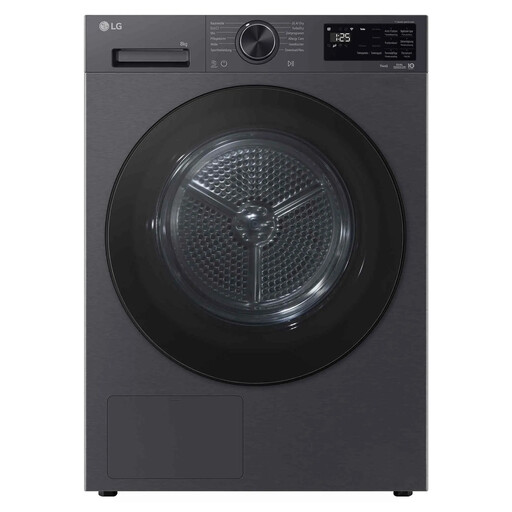
LG RT80X7B heat-pump tumble dryer, 8 kg
The listed Towels programme and described automatic adjustment may be useful for varying small towel loads.
The rated capacity is 8 kg. Features include AI Dry and a moisture sensor.
View at Joybuy
 No image available
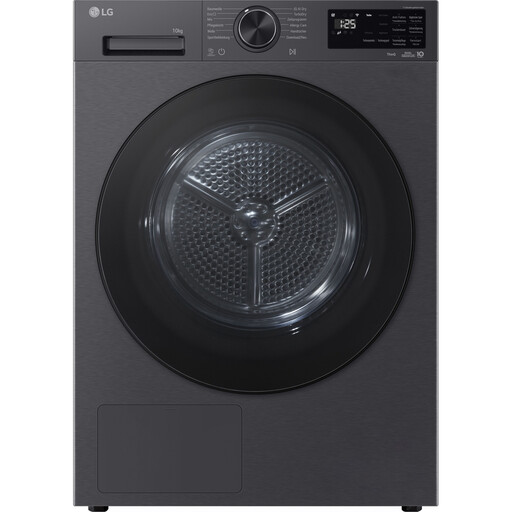
LG RT10X7B heat-pump tumble dryer, 10 kg, energy efficiency class C
A Towels programme and the described load adjustment are useful features to consider when choosing a dryer for towels; check that the rated capacity suits your usual loads.
The rated capacity is 10 kg. The listed features include energy efficiency class C and AI Dry with moisture sensing.
View at Joybuy
 No image available
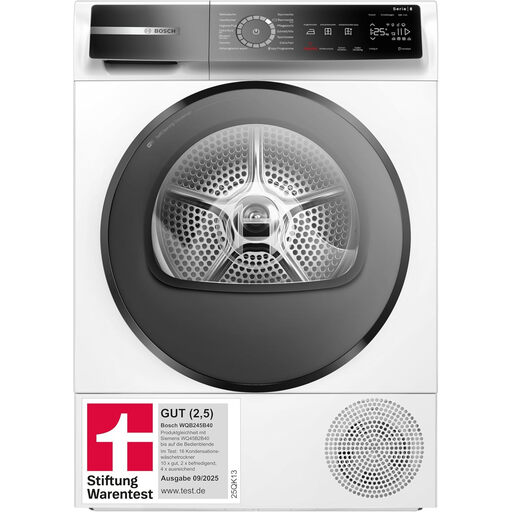
Bosch WQB245B40 Serie 8 heat-pump tumble dryer, 9 kg, energy efficiency class C
A Half-Load function and a Towels programme are listed if you are specifically looking for these features for small towel loads.
The rated capacity is 9 kg. The listed features include energy efficiency class C and AutoDry.
View at Joybuy
 No image available
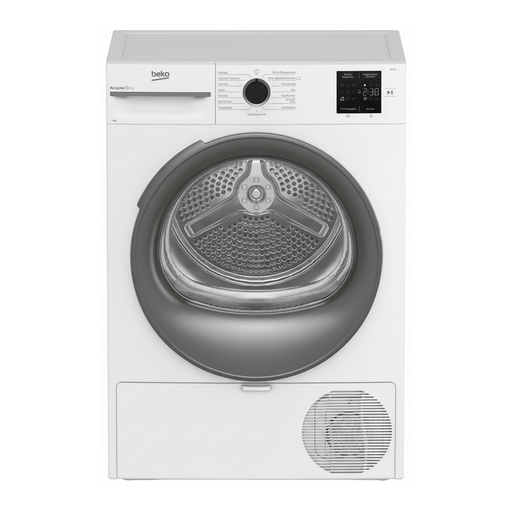
Beko BM3T38210W1 heat-pump tumble dryer, 8 kg, energy efficiency class E
The listed Towels programme may help when choosing a dryer for towels; use it only if it is suitable for the care labels on your items.
The rated capacity is 8 kg. The listed features include 15 programmes, including Towels, and adjustable dryness levels.
View at Joybuy
 No image available
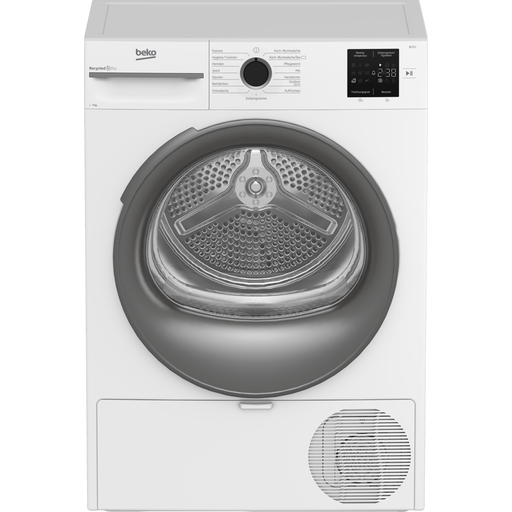
Beko BM3T37210W1 heat-pump tumble dryer, 7 kg, energy efficiency class E
The rated capacity and listed Towels programme may be relevant for smaller towel loads; compare the drum capacity with your largest usual load.
The rated capacity is 7 kg. The listed features include energy efficiency class E, sensor drying and an appliance depth of 54.5 cm.
View at Joybuy
Frequently asked questions
Can every towel go in the tumble dryer?
No. First check the care label on each towel and follow any instructions for gentle drying. Then choose a suitable programme.
Will a 40-minute programme reliably dry a small towel load?
You cannot use this to establish a fixed drying time for towels. Bosch describes the 40-minute programme on the WQG233D40 as being for small loads of synthetic fibres and thin materials, not as a guaranteed drying time for absorbent towels.
What should I consider when installing and maintaining a tumble dryer?
Compare the dimensions and guidance in the manual for the specific model with your available space, including the door opening and required clearances. Bosch Home Appliances Germany recommends cleaning the fluff filter after every drying cycle; check the relevant manual for guidance on other filters and the condensate container.
How can I estimate electricity costs from the energy label?
The current label gives energy consumption in kWh per 100 Eco drying cycles. To get an approximate figure for one standardised Eco cycle, divide this value by 100 and multiply it by your electricity price per kWh. Small towel loads and other programmes may use a different amount.
Which energy label must an online listing in Germany display?
Since 1 July 2025, online retailers in Germany have had to display the EU energy label, with classes A to G, for household tumble dryers. An older rating on the A+++ to D scale is not a current energy efficiency class; the European Commission explains the change to the scale.


