Households with large bedding loads
If you regularly dry sheets and covers, the permitted load for the bedding programme and a reversing drum are important things to check. Bosch lists this combination for the WQG233DR91 model.


Start by choosing a model with a bedding programme and permitted load that suit your sheets and covers. A reversing drum is particularly worth checking if large items tend to tangle together. For a shared utility room, compare condensation efficiency, noise levels, dimensions and installation requirements. If you use the dryer frequently, the energy consumption in kWh per 100 Eco cycles can also help you compare models.
If you regularly dry sheets and covers, the permitted load for the bedding programme and a reversing drum are important things to check. Bosch lists this combination for the WQG233DR91 model.
If you share a room with others, consider ventilation and the model’s installation requirements as well as noise levels and available space.
If you use the dryer regularly, compare its energy consumption per 100 Eco cycles and ongoing maintenance requirements with your household’s needs.
First, check that the permitted load for the programme is suitable for your bedding. Then consider the conditions in your shared laundry room. If you dry laundry frequently, factor in energy consumption and maintenance too.
| What to consider | What to look for | Who it matters most to |
|---|---|---|
| Loading bedding correctly | Check the permitted load for the bedding programme, whether the drum reverses, and the care labels on your textiles. | When I dry sheets and covers together, I want to know whether the programme is suitable for the load. Around 26% of consumers put this first. |
| Moisture in the room | Compare the condensation efficiency shown on the current energy label, and check the ventilation, clear air vents and installation instructions. | In a shared room, I want to keep an eye on moisture levels and the ventilation needed. Around 21% of consumers prioritise room humidity. |
| Energy use when drying frequently | Compare kWh per 100 Eco cycles using the same label basis. Also take programme duration and how often you use the dryer into account. | If the dryer runs often, I want to be able to compare the stated energy consumption of different models. Around 21% of consumers put energy use first. |
| Noise and ease of use | Check the noise level in dB(A), the appliance dimensions and door opening, and whether a condensate drain can be used where you plan to put the dryer. | When sharing a laundry room, practical operation and a good fit with the room’s setup matter to me. Around 16% of consumers prioritise noise and ease of use. |
| Purchase and ongoing costs | Take energy use and maintenance requirements into account, and check what services and connections are needed at the installation site. | If I want to use an appliance for the long term, I want to weigh up the purchase price, electricity and regular maintenance together. Around 16% of consumers put total costs first. |
Since 1 July 2025, household tumble dryers sold in shops and online have used the A to G energy label scale. Older energy ratings are therefore not directly comparable.
Check the label for the specific model and its energy consumption in kWh per 100 Eco cycles. The European Commission explains the current labelling rules in EU legislation published via EUR-Lex.
Even with a heat pump tumble dryer, installation and ventilation can affect moisture levels in the room.
Check the model’s installation requirements, keep the specified air vents clear and make sure the shared room can be ventilated sufficiently.
Depending on the room, you may need additional ventilation or a different place for the dryer.
The appliance’s maximum capacity does not automatically mean that every specialist programme can take the same load. The programme must also be suitable for the care labels on your textiles.
Before you buy, check the programme table for the specific model and split a load if it exceeds the permitted load for that programme.
The WQG233DR91 is worth considering for large bedding loads if you want a dedicated bedding programme.
The 8 kg TR9W75780 is an option if you also want to dry thicker blankets that are explicitly suitable for tumble drying.
The T1 TWC640WP offers an 8 kg option if you want to compare stated condensation efficiency.
The 8 kg B3T42240S is a heat pump option with sensor drying for regular loads.
These heat pump tumble dryers are options for bedding loads, with designated Bedding or bed linen programmes and a range of capacities. Before choosing, check the permitted load for the specific programme.
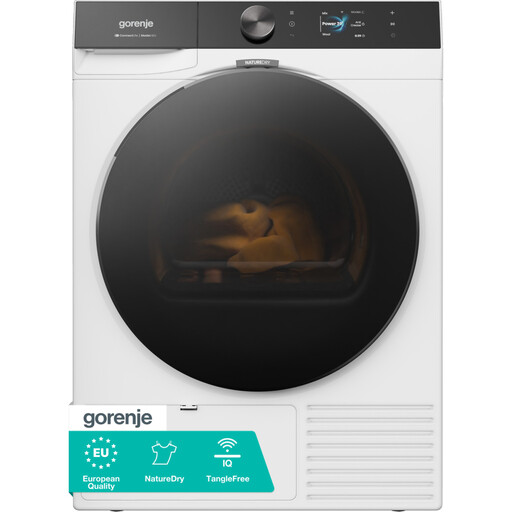 No image available
The Bedding-XL programme and reversing drum are suited to large bedding loads, provided they are within the programme’s permitted load.
The product details also list AutoDrain and a humidity sensor. The dryer needs adequate ventilation when installed and uses the flammable refrigerant R290. Do not damage the refrigerant circuit.
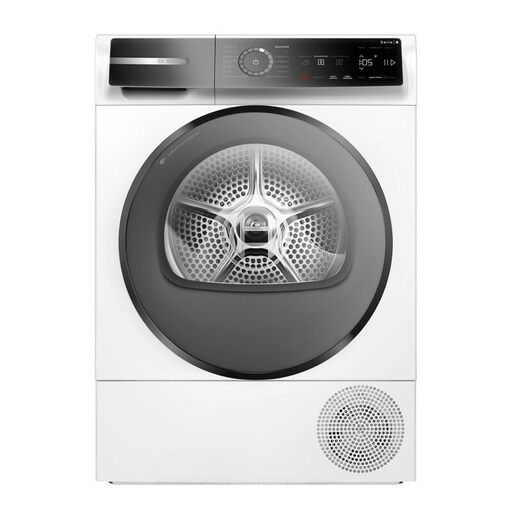 No image available
The Bed-Linen programme and reversing drum are useful for bedding loads. Check the programme table to make sure the load is suitable.
The product details list 57 dB, a condensation efficiency rating of A and a self-cleaning condenser. The lint filter should be cleaned after every drying cycle. Make sure the room is adequately ventilated.
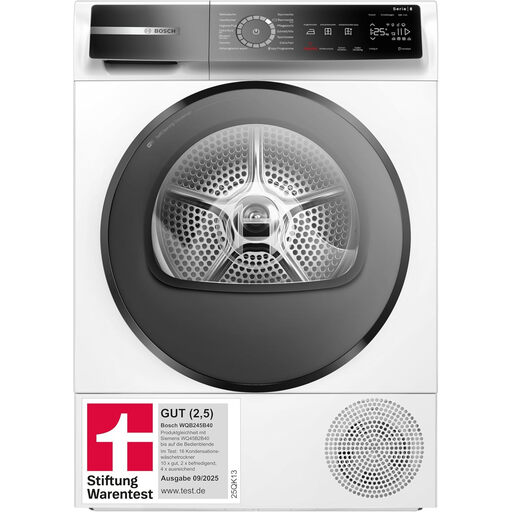 No image available
A Bedding programme and reversing drum are listed for bedding loads. Check the permitted load for this programme.
The product details list 88% condensation efficiency, 61 dB on the Eco programme and a self-cleaning condenser. The dryer needs adequate room ventilation, and the lint filter should be cleaned after every drying cycle.
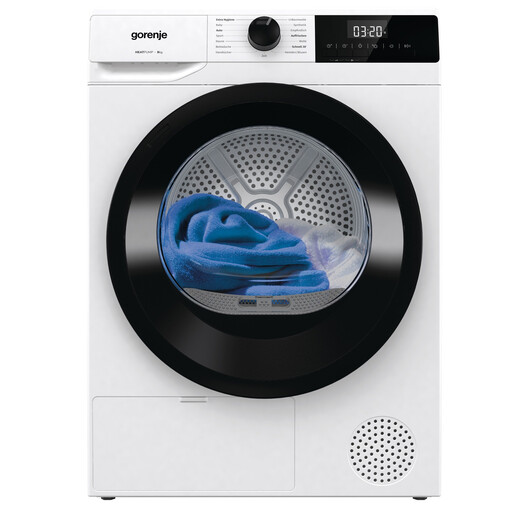 No image available
The Bedding-XL programme and reversing drum are designed for bedding loads. Keep the programme limit in mind.
The product details list 85% condensation efficiency, 64 dB and AutoDrain. Make sure the room is adequately ventilated. The dryer uses the flammable refrigerant R290; do not damage the refrigerant circuit.
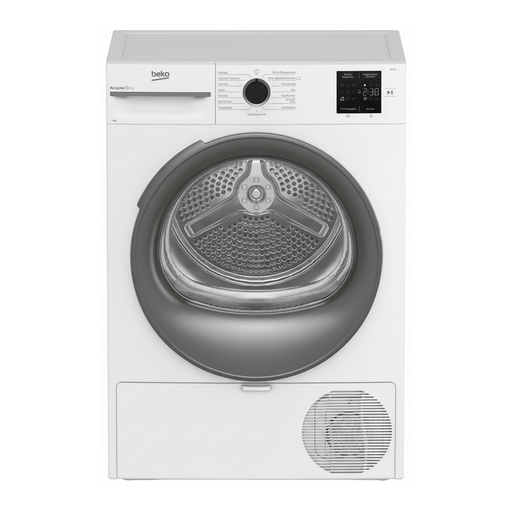 No image available
The listed Bedding programme makes this model worth considering for bedding loads. Check that your load is within the programme’s permitted capacity.
The product details list 15 programmes, including Down, and a delay start of up to 24 hours. The display provides reminders to empty the tank and clean the filter.
Not necessarily: the 9 kg figure refers to the appliance’s maximum capacity, not automatically the permitted load for every specialist programme. Compare your usual load with the programme table and follow the care labels on your textiles.
Check the available space, make sure the air vents are clear and follow the installation instructions for the specific model. Ensure the room has adequate ventilation. Whether you can install your own appliance there, and when you can use it, depends on the rules for your particular space.
Since 1 July 2025, household tumble dryers sold in shops and online have used the A to G energy label scale. The European Commission explains this labelling in EU legislation published via EUR-Lex. Check the label for the specific model rather than using older A+++ ratings as a direct basis for comparison.
The current label shows energy consumption in kWh per 100 Eco drying cycles. To work out what this might mean for you, you’ll also need to estimate how many comparable cycles you expect to run and check your electricity tariff. A bedding programme may differ from the Eco test programme.
Bosch recommends cleaning the lint filter after every use and emptying the condensate container each time, unless the water is drained away as described in the appliance instructions. Follow your model’s instructions for maintaining the heat exchanger.