Households with lots of cotton laundry
After hiking trips, you may have several cotton items or towels that are suitable for tumble drying. The key is choosing a drum size that suits the loads you actually dry day to day.


If you regularly have cotton laundry that can go in the tumble dryer and have room for a separate appliance, choose a drum size that suits your usual loads. Also compare the Eco programme duration and kWh per 100 cycles on the current energy label. For outdoor clothing, follow the care label and the guidance for the relevant programme. Air-drying can be an alternative if you have enough time and drying space.
After hiking trips, you may have several cotton items or towels that are suitable for tumble drying. The key is choosing a drum size that suits the loads you actually dry day to day.
If you wash technical jackets or delicate fabrics alongside cotton, the care label and the right programme are essential. An outdoor programme is not a blanket recommendation for every garment.
If space is limited, check the appliance dimensions and door clearance at the intended location. A washer-dryer is only a space-saving alternative if its maximum drying load suits your needs.
A good fit if: you regularly have cotton laundry that is suitable for tumble drying, and the appliance capacity suits your usual loads.
The trade-off: Space requirements, Eco programme duration and energy consumption vary by model. The Eco programme duration does not guarantee how long other programmes will take.
A good fit if: you have enough time and suitable drying space after your trip, or if some items must not go in the tumble dryer.
The trade-off: This method does not use electricity for a tumble dryer, but it does take time and space.
A good fit if: there is no room for a separate tumble dryer or a practical clothes airer.
The trade-off: The German consumer advice centre notes that washer-dryers use more electricity and water than separate appliances. You may also only be able to dry part of the wash load straight after washing.
| What matters | What to check when buying | Who should pay particular attention |
|---|---|---|
| Capacity for cotton | Compare your usual load size with the maximum load for the programme you plan to use. Check the Eco programme duration at full load separately. | After a hiking trip, I may have several cotton items to dry and want to avoid unnecessary extra cycles. Around 36% of consumers put suitable cotton capacity first. |
| Caring for mixed fabrics | Check the care label, temperature settings and programme table for the specific appliance. For outdoor clothing, also follow the garment manufacturer's care instructions. | When I have technical clothing alongside cotton, I want to dry each item in line with its care label. Around 21% of consumers prioritise caring for a mix of travel clothes. |
| Winter electricity consumption | Compare kWh per 100 Eco cycles, Eco programme duration and condensation efficiency using the same current label basis. | If I use the tumble dryer regularly in winter, its stated energy consumption matters particularly to me. Around 29% of consumers put low running costs first. |
| Installation and maintenance | Check the appliance dimensions, door clearance and installation instructions. Compare the noise level, condensation water options and access to the lint filter. | If space is limited, I want to know in advance whether the appliance will be easy to use in its intended location and what maintenance it needs. Around 14% of consumers prioritise space and ease of use. |
The scales and measurement methods are not directly comparable, so comparing ratings across different generations of energy labels can be misleading.
When making your decision, check the current energy label and product information for the same model. The European Commission states that online tumble dryers have used the A-to-G scale since 1 July 2025.
The stated Eco programme load does not automatically tell you what load is suitable for another programme. Care requirements may differ between cotton and technical clothing.
Before drying items together, check their care labels against the programme table for the specific appliance.
Even with a self-cleaning condenser, you may still need to clean the lint filter and other parts that the manual says are accessible. Lint and dust can build up; the German consumer advice centre warns that this may pose a fire risk.
Before buying, check the maintenance instructions for the specific model and follow the stated cleaning intervals.
The 9000 AbsoluteCare Plus range is an option for households that want to dry suitable outdoor clothing as well as cotton.
The WQG235DEX is a documented 8 kg example for comparing sensor-controlled drying and a self-cleaning condenser.
The iQ300 WQ33A2C9K is another documented 8 kg option, with autoDry and a quick programme.
The TWP803-031D is a documented 8 kg model for comparing cotton programme duration and stated energy consumption.
The TWC640WP is a documented 8 kg T1 model for comparing controls and maintenance features.
This Joybuy selection includes heat pump tumble dryers for cotton laundry suitable for tumble drying. Depending on the model, programmes for sportswear or outdoor clothing may also be listed.
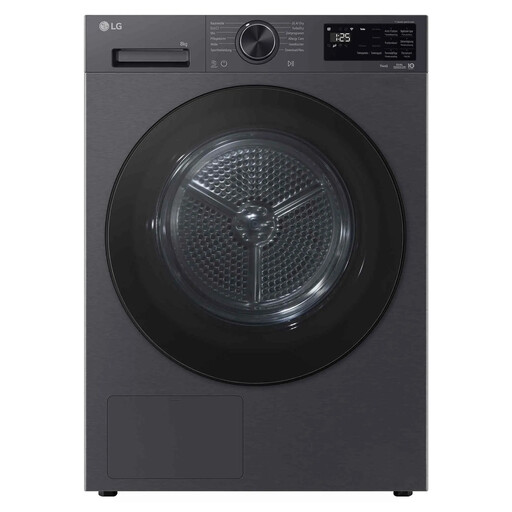 No image available
A cotton programme is listed for cotton laundry suitable for tumble drying; the stated capacity is 8 kg.
The stated energy consumption is 85 kWh per 100 cycles, and the appliance has a self-cleaning condenser. The description says the lint filter needs cleaning.
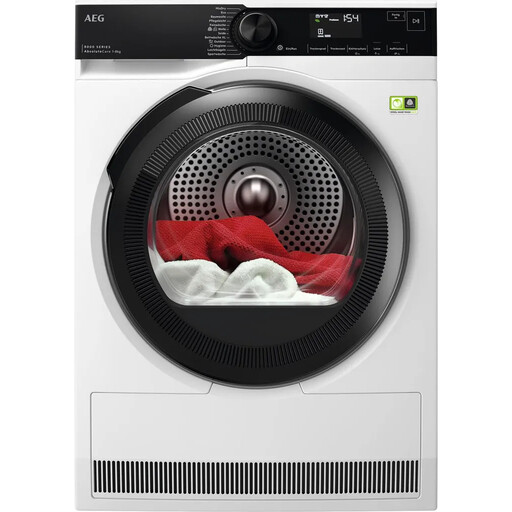 No image available
A cotton programme is listed for cotton laundry, along with outdoor and sports programmes. Check the care label on each item before drying it.
The stated energy consumption is 85 kWh per 100 cycles. The filter should be cleaned after every use.
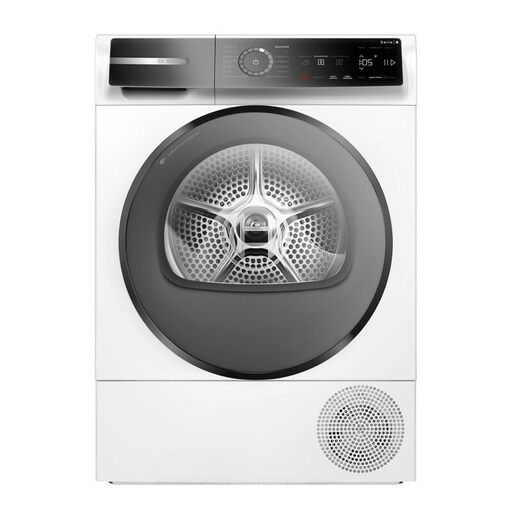 No image available
The stated 9 kg capacity makes this an option for larger loads; sportswear and delicate programmes are also listed.
The stated noise level is 59 dB, and the appliance has a self-cleaning condenser. The lint filter must be cleaned after every drying cycle.
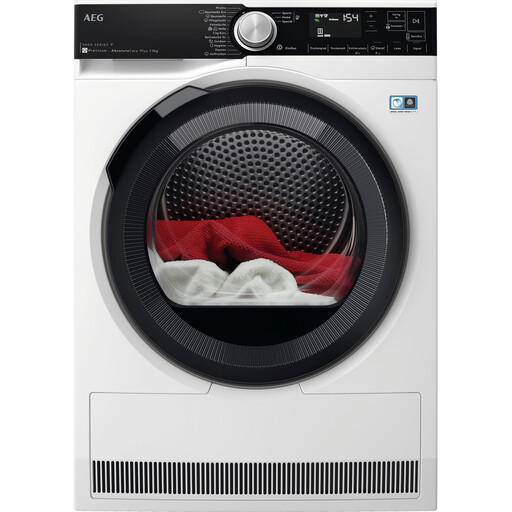 No image available
With a stated capacity of 9 kg and a cotton programme, this model is suitable for larger cotton loads. Outdoor, Waterproofing and wool programmes are also listed; always follow the care instructions for each garment.
The stated energy consumption is 106 kWh per 100 cycles. The instructions include cleaning the filter and regularly emptying the condensate container.
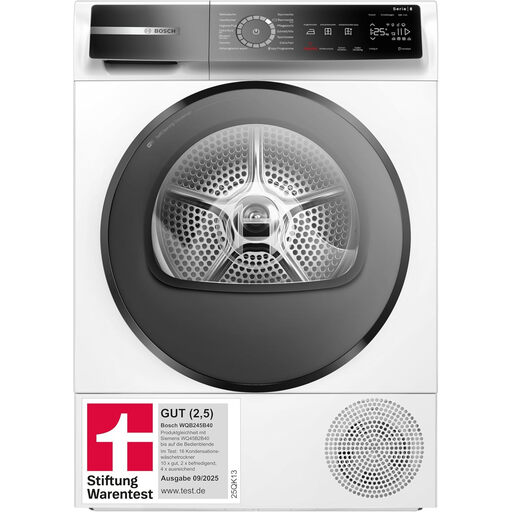 No image available
The stated capacity is 9 kg, and a cotton programme as well as sportswear and delicate programmes are listed.
The stated energy consumption is 110 kWh per 100 cycles, and the noise level is 61 dB(A) on the Eco programme. The lint filter must be cleaned after every cycle.
No. Always check the care label on each garment. The tumble-drying symbols tell you whether tumble drying is allowed and at what temperature. For outdoor clothing, also follow the manufacturer's care instructions.
Not necessarily. The stated Eco programme duration applies to the Eco programme at maximum load. For a quick programme, check the fabric type and the permitted load for that programme separately.
Compare kWh per 100 Eco cycles and the Eco programme duration using the same current label basis. Other programmes and load sizes may differ, and old and new label figures should not be compared directly.
Clean the lint filter regularly, along with the condenser or accessible filters if the instructions require it. The German consumer advice centre warns that accumulated lint and dust can become a fire hazard over time. Always follow the care instructions for your specific model.
Since 1 July 2025, online listings for household tumble dryers must display the EU energy label with its A-to-G scale. The European Commission sets out this labelling requirement; it does not mean you must choose an appliance in a particular efficiency class. Washer-dryers are covered by different product-specific rules.