For regular loads of tumble-dryer-safe cotton laundry, a heat pump tumble dryer is a suitable option if its capacity, energy consumption and the duration of the programme you actually use suit your loads. Compare the current A to G energy label and the programme duration at full load; a quick programme tells you nothing about how long a full cotton load takes. Also check the available space, ventilation and permitted ambient temperature at the installation site, and sort other hiking clothes according to their care labels.
Who is a tumble dryer suitable for after a hiking holiday?
Households with several cotton loads
After a trip, you may have towels, underwear and other tumble-dryer-safe cotton items to wash. Capacity and the duration of the full-load programme can help you plan several cycles; manufacturers list different capacities and programme durations for individual models.
Households that use a tumble dryer frequently
If you dry laundry frequently, you can compare the stated energy consumption with how full you typically load the drum. The German Environment Agency and the European Commission explain the current energy label for tumble dryers.
Households with a tricky installation space
If space is limited or the room is cold, the appliance dimensions, ventilation requirements and the temperature limits in the manual must all suit the intended location. AEG gives a permitted ambient temperature range of 5 to 35 °C for the appliances covered by its installation guide.
What should you look for when buying?
First, work out how much tumble-dryer-safe laundry you usually have at once. Then compare running times, energy consumption and installation requirements to find a model that suits your everyday needs.
| Buying consideration |
What should you check? |
Who is it important for? |
| Several cotton loads |
Compare the capacity with your usual loads and check the cotton programme duration at full load. |
If I have several loads after a trip, I want to dry them one after another without unnecessary bottlenecks. That is why around 36% of consumers put capacity and running time first. |
| Electricity costs with frequent use |
Compare the current energy label and stated consumption on the same basis; also consider how often you use the dryer and how full the drum is. |
If the tumble dryer runs regularly, I want to understand its energy consumption over repeated cycles. That is why around 29% of consumers prioritise running costs. |
| Installation location in winter |
Check the appliance dimensions, the clearance required and ventilation openings; follow the temperature requirements in the manual for the specific model. |
If the space is cramped or cold, I want to know before buying whether the appliance can be installed there according to the manual. That is why around 21% of consumers prioritise suitability for the installation location. |
| Different fabrics |
Read the care labels and only put suitable items together on an appropriate programme. |
If I have other hiking clothes as well as cotton laundry, I want to be able to sort them according to their care requirements. That is why around 14% of consumers prioritise choosing the right care for different fabrics. |
Which buying and usage mistakes should you avoid?
-
Assuming an older A+++ rating is the same as a current energy class
Since 1 July 2025, the EU A to G energy label has applied to tumble dryers sold in shops and online. An older A+++ rating is not a current energy class.
Compare the label and stated energy consumption for the specific model. The German Environment Agency and the European Commission explain the current scale.
-
Assuming a quick programme shows how long a full cotton load takes
Manufacturers list quick programmes separately from programmes for rated or full loads. For example, AEG gives a programme duration of 2 hours and 59 minutes at rated capacity for the TR8T75789 model.
Compare the duration of the programme you actually intend to use for your load.
-
Measuring only the appliance width
Depth, space for ventilation openings and the permitted room temperature can also be crucial for the intended installation location.
Measure the available space fully and read the installation instructions for the specific model.
-
Drying all your hiking clothes together on the cotton programme
Other fabrics may have different care requirements, and a cotton programme is not automatically suitable for every item of clothing.
Check the care labels and sort the laundry according to the drying instructions for each item.
Which brands are worth considering?
The examples below refer to the specified model ranges and manufacturer information; they are not a blanket assessment of the brands.
Bosch
The WQB245B40 is a heat pump tumble dryer with a rated capacity of 9 kg, making it a model worth comparing for larger loads.
- Bosch Home Appliances Germany lists Auto Dry, a self-cleaning condenser and an Extra Short programme.
- The quick-programme description does not confirm how long a full cotton load takes. App features may require a connection and an account.
AEG
The TR8T75789 combines an 8 kg rated capacity with listed programmes for different fabrics.
- AEG Germany states that the model uses 85 kWh per 100 cycles and takes 2 hours and 59 minutes at rated capacity.
- Claims about extra fabric care come from the manufacturer; the stated duration does not apply universally to every programme or load.
Beko
The B3T42249S is an 8 kg heat pump model with sensor drying.
- Beko Germany lists energy class C on the current scale and 63 dB(A) for this model.
- These details alone do not tell you how long a full cotton load takes.
Siemens
The WQ35G2D90 is an 8 kg heat pump tumble dryer with listed cotton and cotton Eco programmes.
- Siemens Home Appliances Germany lists autoDry, a self-cleaning condenser and 61 dB(A).
- A quick programme should not be confused with the duration for a full cotton load.
Miele
The TWC640WP is an 8 kg T1 heat pump model with DirectSensor.
- Miele Germany lists the model’s dimensions as 850 × 596 × 643 mm.
- Voluntary guarantees and optional services are different from your statutory rights if goods are faulty; the German consumer advice centre explains the difference.
Joybuy products for cotton laundry and multiple loads
The Joybuy models below are heat pump tumble dryers with information on cotton laundry and repeated use.
 No image available
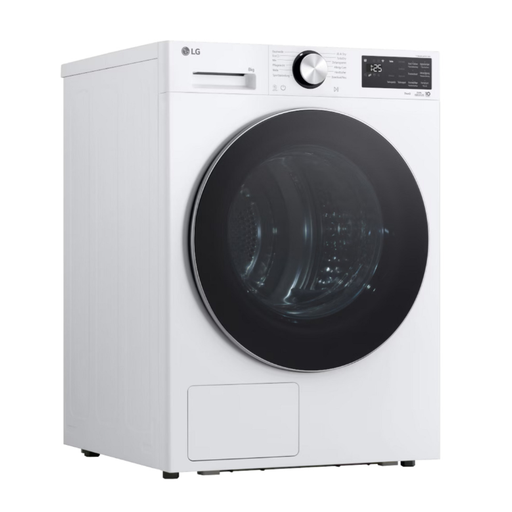
LG RT80X72W heat pump tumble dryer, 8 kg, energy class B
A cotton programme and an 8 kg capacity are listed for tumble-dryer-safe cotton laundry.
Stated energy consumption: 85 kWh per 100 cycles. The standard programme duration at full load is 253 minutes.
View at Joybuy
 No image available
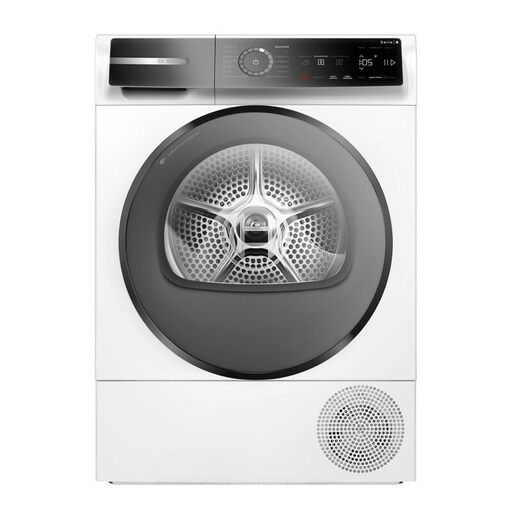
Bosch WQB246D41 Series 8 heat pump tumble dryer, 9 kg, energy class B
The stated rated capacity of 9 kg is worth considering for larger tumble-dryer-safe loads.
The Eco programme takes 265 minutes at full load. The product information lists energy class B.
View at Joybuy
 No image available
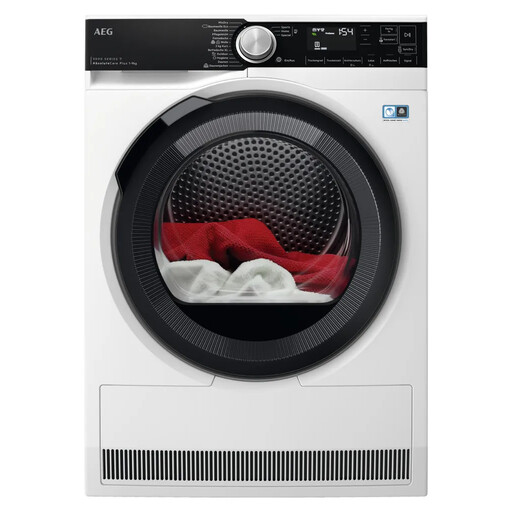
AEG TR9W80690 9000 Series AbsoluteCare Plus heat pump tumble dryer, 9 kg
A 9 kg capacity and a cotton programme are listed for larger cotton loads.
According to the product description, MixDry is designed for mixed loads of cottons and synthetics. No energy class is listed here.
View at Joybuy
 No image available
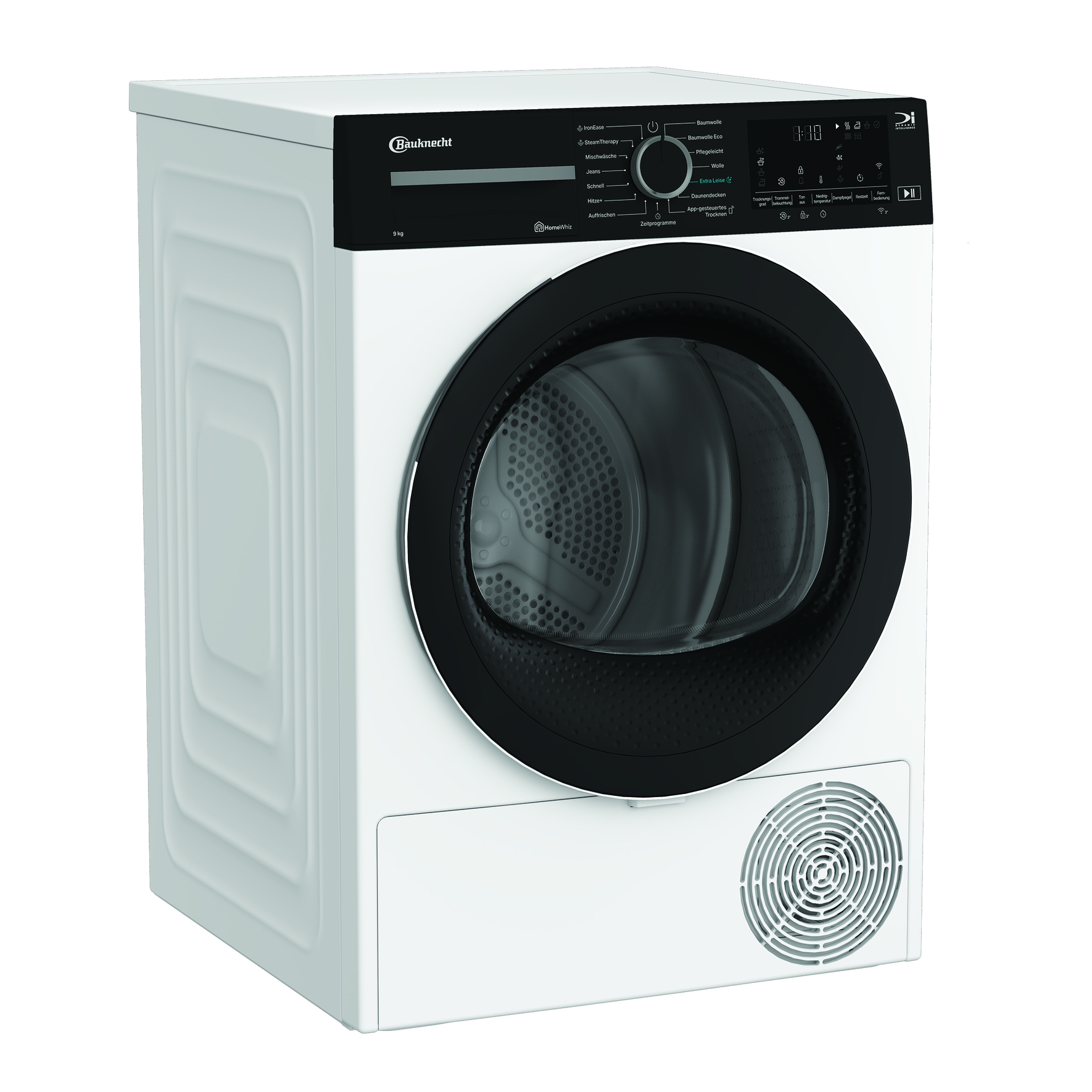
Bauknecht BD 9C WBS heat pump tumble dryer, 9 kg, energy class C
This model is listed with a 9 kg capacity and an Eco cotton programme for larger cotton loads.
According to the product information, the standard cotton programme takes 195 minutes at full load. The filter and container need regular cleaning.
View at Joybuy
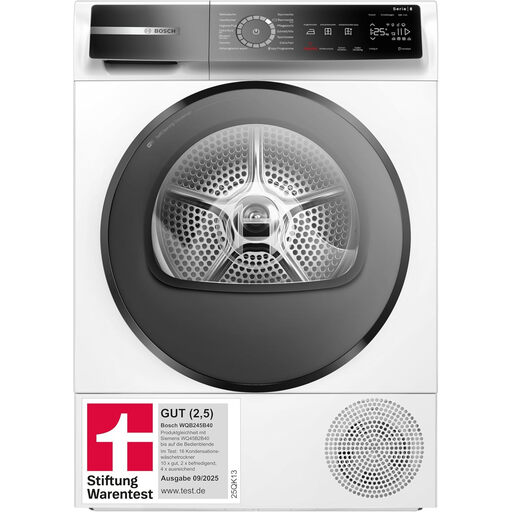 No image available
Bosch WQB245B40 Series 8 heat pump tumble dryer, 9 kg, energy class C
A 9 kg capacity and cotton and cotton Eco programmes are listed for larger cotton loads.
Stated energy consumption is 110 kWh per 100 cycles. The Eco programme takes 3 hours and 15 minutes at full load; the fluff filter also needs regular cleaning.
View at Joybuy
Frequently asked questions about tumble dryers in winter
Which energy class should I compare when buying a new tumble dryer in Germany?
Since 1 July 2025, the A to G scale has applied to tumble dryers sold in shops and online. Compare current label and product information; an older A+++ rating is not a current class. The German Environment Agency and the European Commission point this out.
Can I keep a tumble dryer in an unheated cellar?
That depends on the temperature and the instructions for the specific model. AEG says that appliances covered by its installation guide must not be installed where the temperature is below 5 °C or above 35 °C, and that ventilation openings must be kept clear. Do not assume these details apply to other models without checking.
What should I clean after drying?
Follow the instructions for the filter, container and condenser in your appliance manual. AEG recommends regularly cleaning the filters and heat exchanger or condenser for the appliances covered by its guidance. A self-cleaning condenser does not automatically mean that no other maintenance is needed.
Who should I contact if there’s a fault, and what happens to my old appliance?
Your statutory rights if goods are faulty are against the seller and are separate from a voluntary guarantee, as the German consumer advice centre explains. Retailers, including online sellers, also have legal obligations to take back old appliances; check the return or collection arrangements that apply to your purchase before completing it.


