Hosts working to a tight deadline
If your towels need to be ready by a set arrival time, the length of the right programme matters just as much as the number of loads you’ll need to run.


A heat pump tumble dryer is a good fit for guest towels if the selected programme’s maximum load suits the number of towels and its cycle time works with your schedule. If you regularly have guests coming and going, you should also weigh up the energy use shown on the current energy label, the right drum size and the care required. Short programmes designed for other fabrics don’t mean your towels will dry just as quickly.
If your towels need to be ready by a set arrival time, the length of the right programme matters just as much as the number of loads you’ll need to run.
If you have several sets to dry, it’s worth checking the number of towels against the maximum load for the programme you’ll be using, rather than relying on the stated capacity alone.
If you dry laundry regularly, you should also consider energy use, moisture sensors and the care the machine needs.
First, compare the maximum load and cycle time of a suitable towel programme with the time you have available. Then consider the drum size, ongoing energy use, installation and maintenance.
| Buying priority | What to check before buying | Who is this especially important for? |
|---|---|---|
| Having towels ready on time | Check the towel programme or a suitable cotton programme, its maximum load and cycle time. Bosch limits its advertised 40-minute function to small loads of lightweight synthetic fabrics. | If I need to have the towels ready by a set arrival time, I plan around the right programme and all the loads I’ll need to run. Around 36% of consumers put a fixed deadline first. |
| Drying the number of towels you need | Compare the dry weight, maximum programme load and number of cycles needed. The stated capacity alone doesn’t tell you how much a particular programme can hold. | If I have several sets to dry, I want to know how many towels will fit in a suitable programme load. For around 29% of consumers, the number of towels is the main consideration. |
| Considering energy use if the dryer will be used often | Verbraucherzentrale recommends comparing energy use in kWh per 100 Eco cycles. This figure doesn’t automatically represent the energy used by a towel programme. | If I regularly dry towels for guests, I look at energy use and make sure the machine is loaded appropriately. Around 21% of consumers give particular weight to running costs. |
| Planning for installation and maintenance | Check the dimensions, ventilation requirements in the manual and access to the filters. Verbraucherzentrale warns that a build-up of fluff and dust can be dangerous. | If space is tight or the machine will be used often, I need to make sure installation and regular maintenance are practical. Around 14% of consumers see this as their main concern. |
Short cycle times only apply to the fabrics and load sizes specified by the manufacturer. Bosch says its 40-minute function is for small loads of lightweight synthetic fabrics; AEG specifies a maximum load of 4 kg for SpeedDry. Neither claim guarantees a set drying time for a full load of towels.
Plan around the cycle time and maximum load of the programme that’s actually suitable. Allow for any additional cycles you’ll need before your guests arrive.
Since 1 July 2025, household tumble dryers have used the rescaled EU energy label, with classes from A to G. The old plus-rated classes use a different scale.
Compare the current energy label for the specific appliance and its consumption in kWh per 100 Eco cycles. Verbraucherzentrale cites this figure as a guide to Eco mode efficiency.
A large drum that is often only half full isn’t automatically the right choice. The German Environment Agency points out that an oversized dryer, often run half empty, can use more energy per kilogram of laundry.
Compare the number of towels you usually dry, and the number you’ll need for guests, with the programme load and the number of cycles required.
A self-cleaning feature doesn’t replace the care instructions for the filters and appliance. Verbraucherzentrale warns about dangerous fluff and dust build-up, and you’ll also need to follow the installation requirements for the model you choose.
Check the care instructions and installation requirements before you buy. AEG requires the ventilation slots to be clear, with unobstructed air intake and exhaust, for the dryers covered by its guidance.
The WQG235D90 is a specific example of a heat pump tumble dryer with a dedicated towel programme.
The B3T4224SD is an example of an 8 kg heat pump tumble dryer with sensor-based drying.
The TR7T50689 from the 7000 series combines a stated capacity of 8 kg with ProSense and MixDry.
The TWC640WP is an 8 kg T1 heat pump tumble dryer with PerfectDry and connected controls.
The product cards below feature heat pump tumble dryers with a stated capacity of 8 or 9 kg. Some models list a towel programme or moisture control; for planning, still check the maximum load and cycle time for the specific programme, as well as the current energy label.
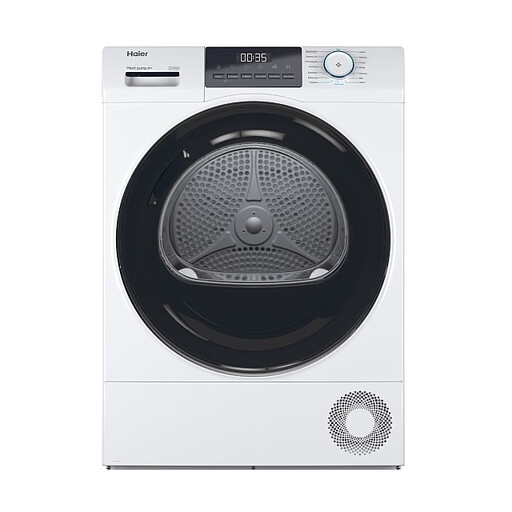 Image unavailable
An option for mixed loads if sensor drying and a time-remaining display are useful for planning.
8 kg; sensor drying; several drying programmes; time-remaining display.
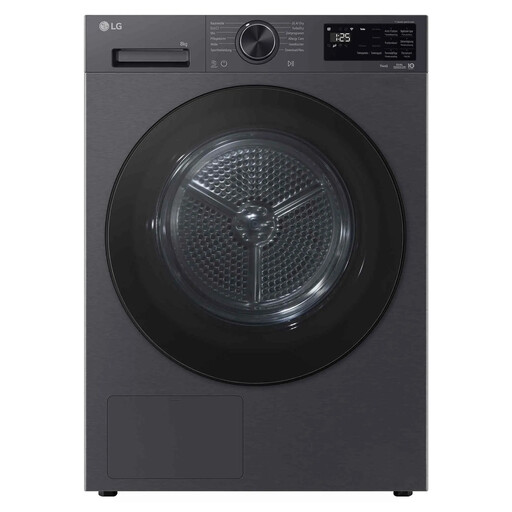 Image unavailable
This model could be a good choice if you want a dedicated towel programme for the type of laundry you dry most often.
8 kg; Towels programme; AI Dry; SensorDry; 85 kWh per 100 cycles according to product information.
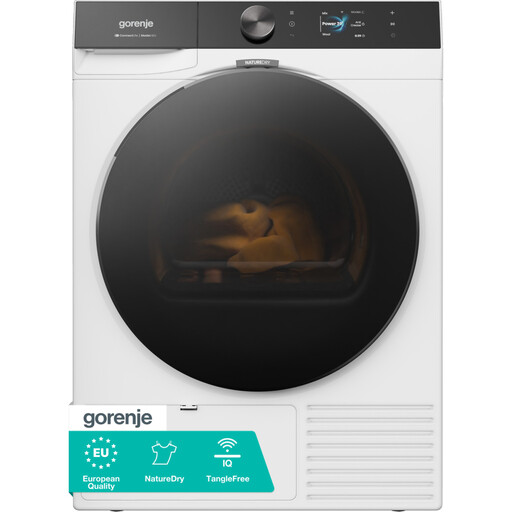 Image unavailable
The larger stated capacity and a dedicated towel programme may suit several sets of towels; check the programme’s actual load limit separately.
9 kg; 15 programmes; Towels programme; AutoDry with moisture sensor; time-remaining display; automatic water drainage.
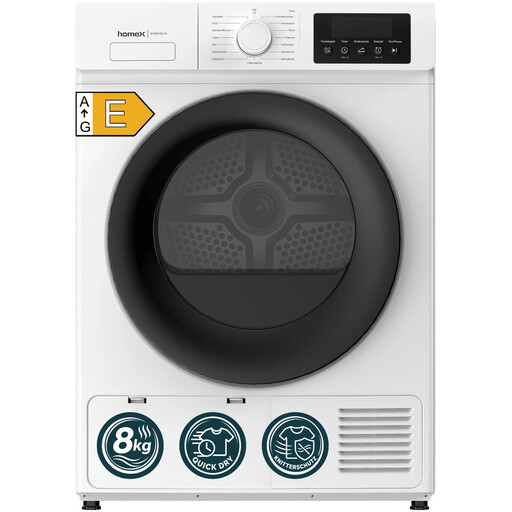 Image unavailable
If you’re looking for a towel programme and adjustable drying levels, check which setting is suitable for the care labels on your towels.
8 kg; 15 programmes including Towels; adjustable drying levels; time-remaining display; delay start; 130 kWh per 100 cycles according to product information.
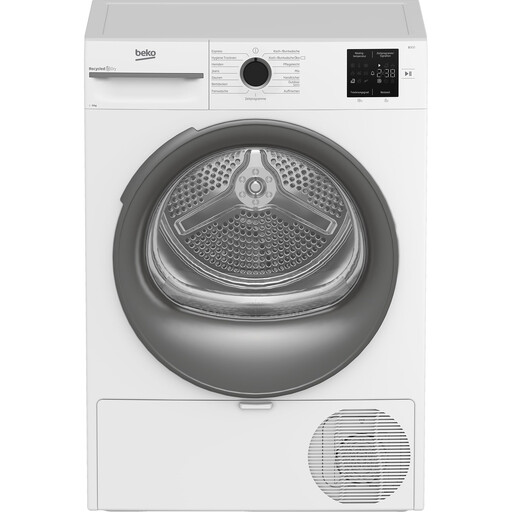 Image unavailable
The 9 kg capacity can be a starting point when considering larger loads; check it against the maximum load for the programme you choose.
9 kg; 15 programmes; hygiene and express programmes; 34 cm diameter door opening.
Only if the care label says they can be tumble dried. The tumble-drying symbol and its dots indicate the permitted treatment; a crossed-out symbol means the item must not be tumble dried. A towel programme doesn’t override this instruction. GINETEX Germany explains the meaning of care symbols.
No, not unless the manufacturer gives a time that applies to the fabric type and load size. Bosch says its 40-minute function is for small loads of lightweight synthetic fabrics; AEG specifies a maximum load of 4 kg for SpeedDry. Plan around a suitable programme and its maximum load.
Follow the instructions for the specific model and meet its stated ventilation requirements. AEG requires the ventilation slots to be clear, with unobstructed air intake and exhaust, for the dryers covered by its guidance. Clean the filters and condenser as instructed in the relevant manual; Verbraucherzentrale warns about dangerous fluff and dust build-up.
The EU energy label shows energy use in kWh per 100 drying cycles on the Eco programme. To work out the cost of one Eco cycle, divide this figure by 100 and multiply it by your electricity price per kWh. Other programmes and load sizes may use different amounts of energy; the Eco figure doesn’t show the consumption of every towel programme.
Since 1 July 2025, household tumble dryers have used the EU energy label with efficiency classes from A to G, replacing the previous plus-rated classes. The European Commission gives this date for the updated requirements; washer-dryers aren’t covered by the tumble dryer rules referred to here. Check the label for the specific appliance you’re considering.