When school clothes need to be ready again quickly after a rainy day, the stated programme duration isn’t the only thing to consider in a heat pump tumble dryer. You also need to check which fabrics and load sizes the quick programme actually allows. For bedding and other bulky items, check the load limit for the relevant programme and whether the dryer has a stated reverse-tumbling function. Bosch Hausgeräte Deutschland and Siemens Hausgeräte Deutschland list these features for specific models. If you use your dryer frequently, compare energy consumption and running time using the same up-to-date EU energy label, and check care labels and installation dimensions too.
Which dryer is right for you?
Households short on time when drying school clothes
If clothes need to be ready again quickly after a rainy day, check the quick programme’s permitted load size and fabric type. Leifheit describes time pressure and bad weather as situations in which some households use a tumble dryer.
Households with bulky laundry
If you often dry bedding or other bulky items that are suitable for tumble drying, check that there’s a suitable programme and find out its load limit. Bosch Hausgeräte Deutschland and Siemens Hausgeräte Deutschland list bedding programmes or reverse-tumbling functions for specific models.
Households that use their tumble dryer frequently
If you use your dryer regularly, it’s helpful to compare energy consumption and running time on the same labelling basis. Verbraucherzentrale recommends comparing consumption in kWh per 100 drying cycles on the Eco programme. You may also want to consider where the appliance will go and how noisy it is.
What should you look for when buying?
First, check whether your clothes are suitable for tumble drying and which programme is designed for the load you need to dry. Then you can make a meaningful comparison of running time, energy consumption and space requirements.
| What you need |
What to check before buying |
Who this matters to most |
| Dry a small load in time |
Check the programme table for permitted load sizes and fabric types; don’t assume running times apply to other programmes. |
If individual school clothes need to be dry by a set time, check that the programme is approved for that exact load. Around 33 % of consumers put drying time for small loads first. |
| Bedding and bulky items |
Compare the relevant bulky-item or bedding programme, its load limit and whether the dryer has a stated reverse-tumbling function. |
If you regularly dry large items that are suitable for tumble drying, you need a programme designed for them, not just a high rated capacity. Around 33 % of consumers prioritise suitability for bulky items. |
| Energy consumption with frequent use |
Compare the current A-to-G energy label and Eco programme consumption in kWh per 100 cycles, along with the Eco programme running time. |
If you use your dryer often, comparable energy consumption matters more than a single quick-programme figure. Around 25 % of consumers prioritise running costs. |
| Fabrics and installation location |
Check care labels, appliance dimensions, the space needed to open the door and the installation instructions for the specific model. |
If you’re unsure whether your clothes are suitable or the appliance will fit in the space available, check both before choosing. Around 9 % of consumers prioritise these care or installation considerations. |
Common buying decisions and their consequences
-
Assuming a 9 kg capacity means every programme can handle a full load
The permitted load may be lower for some programmes than the maximum rated capacity. Overloading can stop laundry from drying properly; Siemens Hausgeräte Deutschland highlights these programme limits.
Before buying, check the programme table for quick and bulky-item programmes. In everyday use, an unsuitable load may mean you have to run another drying cycle.
-
Comparing old A+++ ratings directly with the current energy label
To compare energy consumption, use figures based on the same labelling system. The European Commission explains the move to the current A-to-G label for tumble dryers.
Use the current energy label and product information sheet for the specific model, rather than treating old and new ratings as equivalent.
-
Assuming clothes are suitable for tumble drying
How a garment can be treated depends on its care label, not just on the programmes available. Using an unsuitable programme can damage fabrics.
Check the care symbols before drying. GINETEX Germany explains that the care label tells you the maximum permitted treatment.
Brands and specific model features
Bosch
For the German WQG233DR91 model, Bosch Hausgeräte Deutschland lists a 9 kg rated load and a bedding programme with reverse tumbling.
- A half-load option is listed for this model.
- The WQG233DR91 doesn’t have a self-cleaning condenser. Its rated capacity doesn’t mean every programme can take a full load.
Siemens
For the German WQ33G2D21 model, Siemens Hausgeräte Deutschland lists a 9 kg capacity, a Sheets programme and a reversing drum.
- A half-load option is also listed.
- Siemens warns that exceeding a programme’s load limit or using a clogged fluff filter can affect drying performance. These features don’t apply to all Siemens models.
AEG
For the TR7T6E699, AEG Deutschland lists a 9 kg rated capacity and a SpeedDry programme for smaller loads.
- According to AEG, SpeedDry dries up to 4 kg in 75 minutes.
- The manufacturer’s figure applies to this programme and isn’t a promise for full drums or every type of school clothing. AEG also lists 110 kWh per 100 cycles and 3:05 hours at rated capacity for this model.
Samsung
Samsung Deutschland lists the DV90F09F4SU2 as a 9 kg model in energy efficiency class A.
- In its test, F.A.Z. Kaufkompass gave this specific model a positive assessment for energy consumption and drying performance.
- F.A.Z. Kaufkompass also cited the controls and limited door-opening angle as drawbacks. The test result applies to this model, not all Samsung tumble dryers.
Beko
For the German B5T69219 heat pump tumble dryer, Beko Deutschland lists a 9 kg capacity and OptiSense sensor drying.
- Beko gives this model an energy efficiency rating of B.
- Beko lists a noise level of 64 dBA and an appliance depth of 67,2 cm. Check the noise level and dimensions against your needs.
Heat pump tumble dryers at Joybuy
This selection of Joybuy products includes heat pump tumble dryers for different laundry loads and situations. For each model, check which fabrics and load sizes are suitable for the programme you want to use.
 No image available
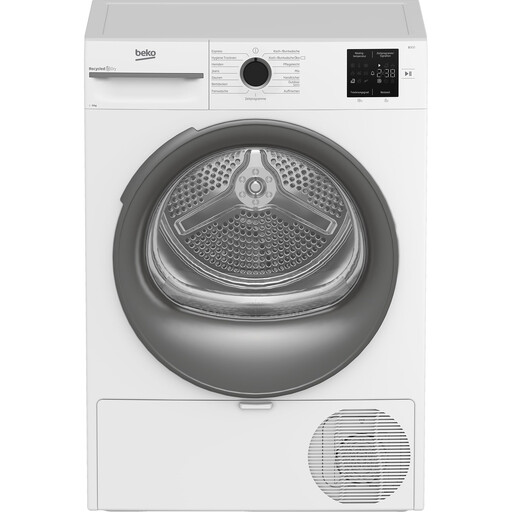
Beko BM3T39210W1, 9 kg
The product description lists bedding, duvets and dressing gowns as examples of bulky laundry items.
Heat pump tumble dryer; 9 kg; energy efficiency class E; 15 programmes; 34 cm opening.
An express programme is listed. Check the programme table to see which load size and fabric type are permitted.
Joybuy
 No image available
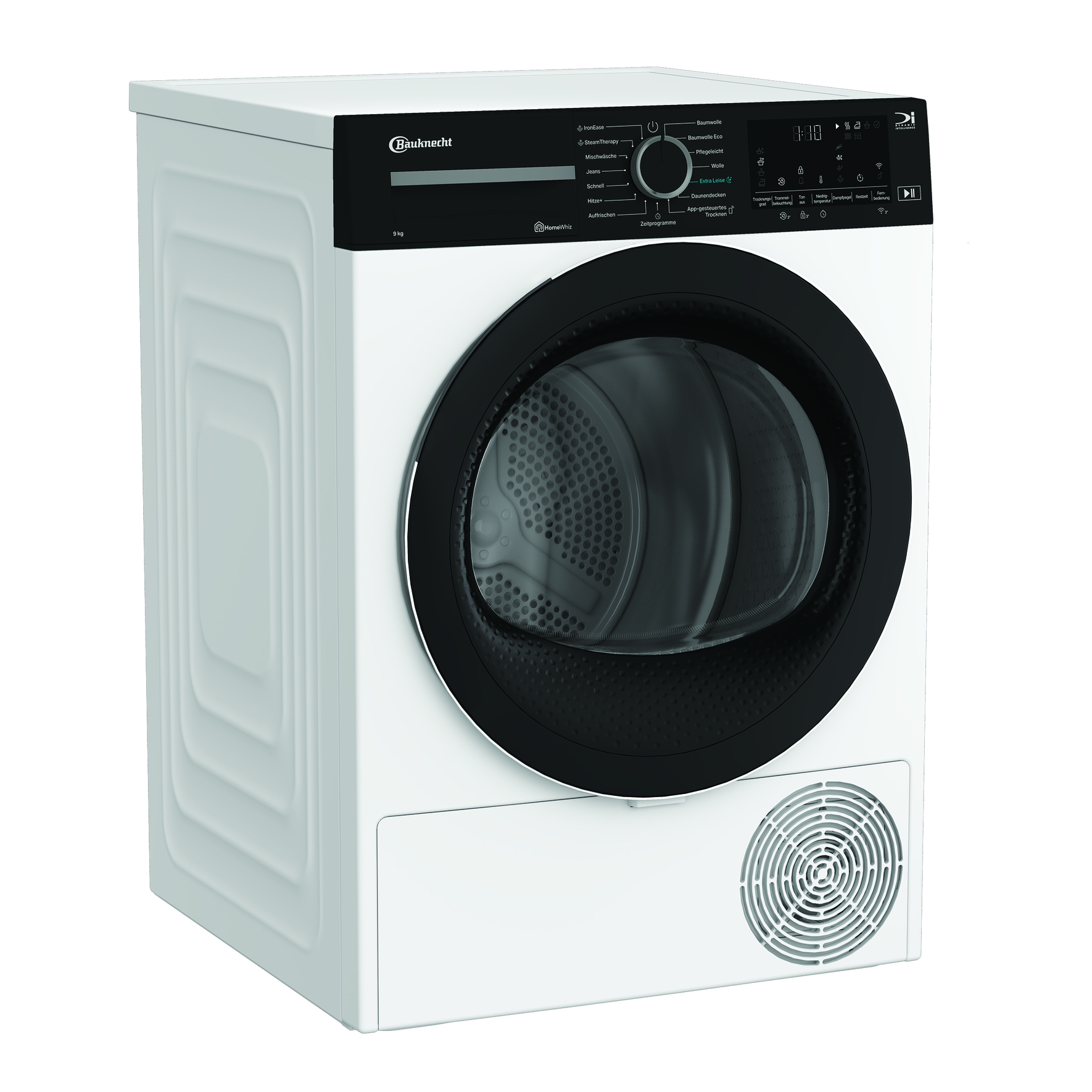
Bauknecht BD 9C WBS, 9 kg
The stated capacity and reversing drum movement may be useful when checking suitability for larger loads of laundry.
Heat pump tumble dryer; 9 kg; energy efficiency class C; reversing drum movement.
The product description lists programmes for jeans, wool, synthetics and Eco Cotton.
Joybuy
 No image available
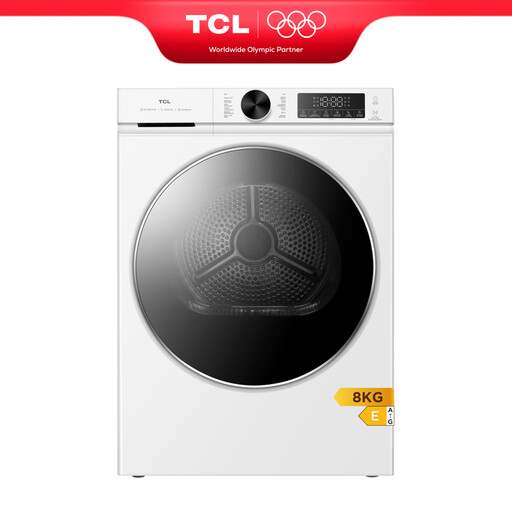
TCL DP4408WE1DE, 8 kg
This model has a Quick-Dry programme. Check that its running time and load limit suit the school clothes you need to dry.
Heat pump tumble dryer; 8 kg; energy efficiency class E.
Quick Dry is listed as taking up to 30 minutes, with no specific load size stated.
Joybuy
 No image available
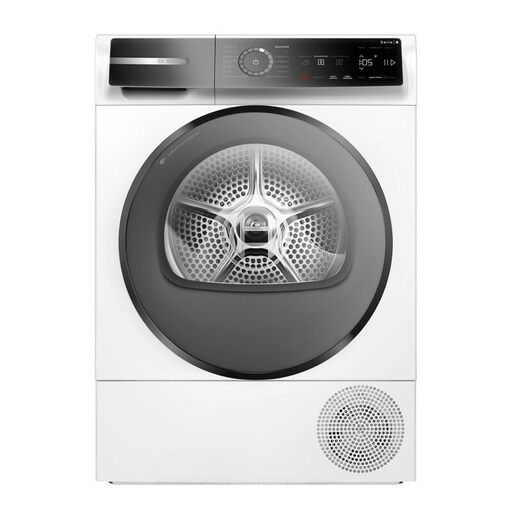
Bosch WQB246D41 Series 8, 9 kg
The listed half-load function may be useful for smaller loads; check the programmes and load limits for each one.
Heat pump tumble dryer; 9 kg; energy efficiency class B; reversing drum; half-load function.
The product description lists a self-cleaning condenser unit.
Joybuy
 No image available
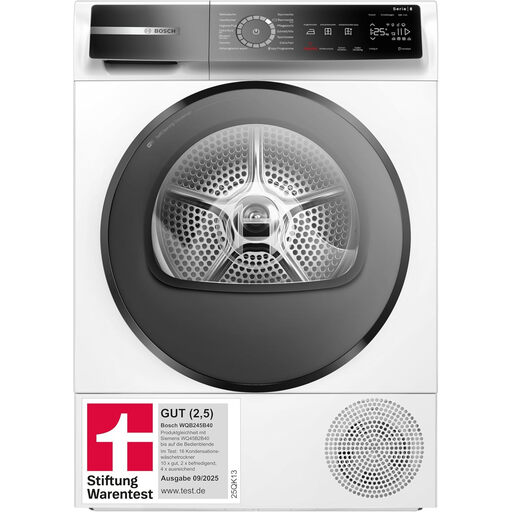
Bosch WQB245B40 Series 8, 9 kg
The product description lists a bedding programme and a half-load option. Match the programmes to the loads you plan to dry.
Heat pump tumble dryer; 9 kg; energy efficiency class C; reverse tumbling; half-load option.
The model is listed as using 110 kWh per 100 drying cycles. The product description also lists AutoDry, Smart Dry, SelfCleaning Condenser and Home Connect.
Joybuy
Frequently asked questions
Can every school coat or sports garment go in a heat pump tumble dryer?
No. The care label on each garment tells you how it can be treated; a crossed-out tumble dryer symbol means it must not go in the dryer. A delicate programme doesn’t override the care label, as GINETEX Germany explains in its guide to care symbols.
Why is bedding still damp even though the drum is large?
Exceeding the load limit for the selected programme or having a clogged fluff filter can affect drying performance. Siemens Hausgeräte Deutschland recommends observing programme load limits. Clean the filter according to the manufacturer’s instructions and choose a suitable programme for the fabrics.
What should I check before installing the dryer?
Measure the floor space and appliance depth, and allow room to open the door. The installation instructions for the specific model are the most important reference. AEG Support advises that tumble dryers covered by its installation guide need clear ventilation slots and adequate ventilation.
How can I compare the energy consumption of different tumble dryers?
Compare kWh per 100 Eco cycles and the Eco programme running time on the current EU energy label. Verbraucherzentrale recommends checking energy consumption. The label figure is based on the Eco programme and isn’t a guarantee of consumption for quick or bedding programmes.
Which energy label applies when buying in Germany?
The current A-to-G label applies to household tumble dryers covered by EU rules. The European Commission explains that the new label was introduced from July 2025, so you shouldn’t compare old A+++ ratings directly with the current scale.


