If you regularly wash cotton laundry, a separate heat pump tumble dryer could be a good choice, provided its drum capacity, Eco energy use and programme duration suit your loads and schedule. In a shared space, you’ll also need to consider ventilation, floor space, condensation and clear arrangements with other users. The European Commission says a condenser tumble dryer does not need an exhaust vent to the outside, but you should still check the installation instructions.
Who would benefit from a tumble dryer in a shared space?
Households with regular cotton laundry
If you often dry towels or other cotton laundry in winter, compare drum capacity and energy use against the amount of washing you typically do. The Verbraucherzentrale recommends using energy consumption per 100 Eco cycles as a basis for comparison.
Users of a shared drying room
When a room is shared, ventilation, floor space, moisture output and consideration for other users all affect where you can install the appliance. The Umweltbundesamt notes that tumble dryers are shared in apartment blocks, while AEG requires adequate ventilation for its appliances.
Households with a set drying schedule
If you need your cotton laundry to be dry by a particular time, the Eco programme duration matters as much as the load size. Compare the figures for the specific model and plan your use of the shared appliance accordingly.
What should you look for when buying?
Start by comparing Eco energy use, load capacity and programme duration for the cotton loads you typically dry. Then check whether installation, ventilation, water disposal and maintenance will be practical in your shared space.
| Priority |
What to check before buying |
Who is this important to? |
| Energy use |
Compare kWh per 100 Eco cycles and Eco programme duration; calculate the cost using your own electricity tariff. |
If I dry laundry frequently, I want to understand the running costs. Around 31% of consumers put energy use first. |
| Room humidity and installation |
Check condensation efficiency, ventilation options, appliance dimensions and the clearance needed for the door. |
If several people use the room, I want to account for moisture and floor space when choosing where to install the appliance. Around 25% of consumers prioritise a suitable shared space. |
| Load size and drying time |
Compare your usual cotton loads with the rated capacity and Eco programme duration. |
If I need to dry laundry within a set time window, the load needs to suit the programme and drum. Around 25% of consumers put suitable load sizes and waiting times first. |
| Shared use and maintenance |
Check the noise level, condensation water disposal and access to the lint filter, and agree who is responsible for what. |
If several people use the appliance, I want to be able to organise cleaning and water disposal reliably. Around 19% of consumers prioritise easy shared use. |
Avoid common buying mistakes
-
Comparing only efficiency classes or old labels
Since 1 July 2025, tumble dryers have used the A to G scale. Classes from different generations of energy labels are not directly comparable.
Compare current appliances using energy consumption in kWh per 100 Eco cycles, and take the Eco programme duration into account. The Verbraucherzentrale identifies this energy-use figure as an important basis for comparison.
-
Assuming a condenser tumble dryer will keep the room dry
A condenser tumble dryer can still release moisture into the room; condensation efficiency varies by model. AEG says its appliances need adequate ventilation.
Check the label value, ventilation options and installation instructions for the specific appliance.
-
Automatically choosing a large drum or a quick programme
The right load capacity depends on the cotton loads you usually dry. A quick programme is not necessarily designed for a full load of cotton laundry; when the appliance is shared, the actual programme duration matters too.
Compare your typical laundry loads with the permitted programme capacity and Eco programme duration.
-
Overlooking maintenance and condensation water disposal
Depending on the appliance, you’ll need to carry out regular tasks such as cleaning the lint filter and disposing of condensation water. If the appliance is shared, unclear responsibilities can make it harder to use.
Agree in advance who will empty the container and clean the lint filter; check the instructions to see what maintenance the heat exchanger needs.
Key brands at a glance
AEG
For the TR9W75780, AEG lists a heat pump tumble dryer with an 8 kg capacity, 85 kWh per 100 cycles, 91% condensation efficiency and a noise level of 63 dB(A).
- AEG lists automatic load sensing, a reversible door and a quiet option for this model.
- High condensation efficiency does not mean the room will stay moisture-free. AEG requires adequate ventilation; check the installation requirements in the instructions for the specific appliance.
Bosch
Bosch lists the WQA233C41 as a heat pump tumble dryer with an 8 kg capacity. The brand gives a noise level of 62 dB(A), condensation efficiency of 88% and dimensions of 842 × 598 × 613 mm.
- Bosch lists Auto Dry and a half-load option.
- If you need a direct drain, check whether a suitable drainage connection is available for the specific model code.
Miele
Miele lists the TWC640WP as a T1 heat pump tumble dryer with an 8 kg capacity. Its product sheet gives figures of 95 kWh per 100 Eco cycles, an Eco programme duration of 170 minutes, 64 dB(A) and condensation efficiency of 95%.
- Miele lists an integrated condensation water drain and a reversible door.
- These figures apply to this model. Check whether the programme duration and features suit your needs.
Beko
Beko lists the B3T4224SD as a heat pump tumble dryer with an 8 kg capacity, energy efficiency class C, sensor drying and a noise level of 62 dB(A).
- Beko lists OptiSense and a Silent programme for this model.
- Claims about performance and testing on the product page are the manufacturer’s own. Also compare the programme duration and condensation efficiency of the specific appliance.
Joybuy products for cotton laundry in winter
This selection features separate heat pump tumble dryers for cotton loads. Their capacity, Eco figures and installation requirements should suit the way you use a shared space.
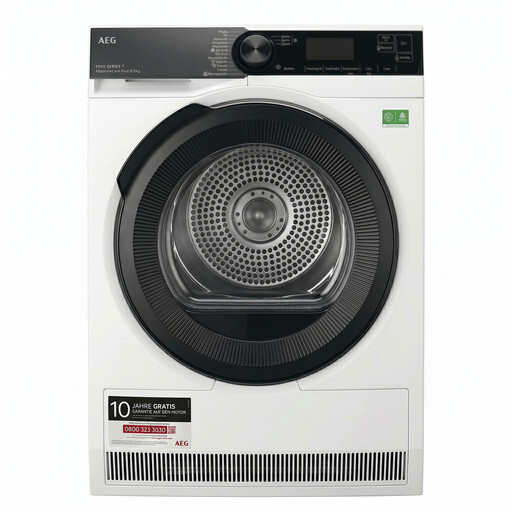 Image unavailable
AEG TR9W75780, 8 kg
The 8 kg capacity gives you a useful benchmark for regular cotton loads; compare it with the amount of laundry you typically dry.
For this model, AEG lists 85 kWh per 100 cycles, 91% condensation efficiency and 63 dB(A). The installation space needs adequate ventilation; the lint filter and condensation water container also need regular attention.
Joybuy
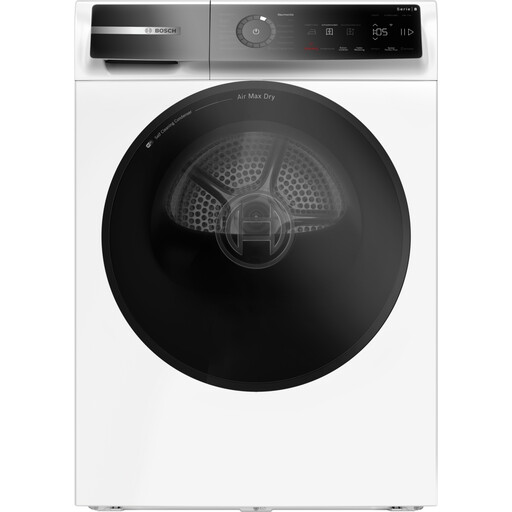 Image unavailable
Bosch WRB247C40, 9 kg
The 9 kg capacity in the product name may be useful for larger cotton loads; compare it with the amount of laundry you typically dry.
The product name lists a self-cleaning condenser and energy efficiency class A. The installation guidance says the room should be well ventilated; the lint filter and condensation water container also need attention.
Joybuy
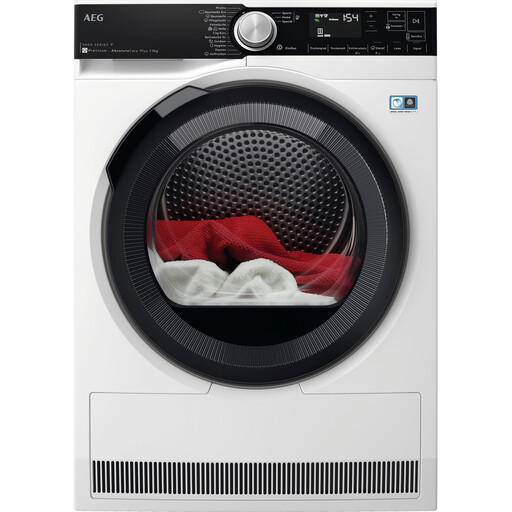 Image unavailable
AEG TR9DW80690, 9 kg
Before planning when to use the appliance, compare the 9 kg capacity listed in the product name with the cotton loads you typically dry.
The product name also lists a noise level of 63 dB and energy efficiency class C. AEG recommends adequate ventilation, and the lint filter should be cleaned regularly.
Joybuy
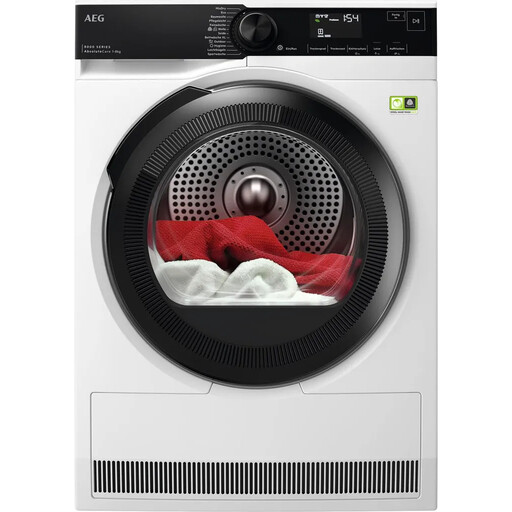 Image unavailable
AEG TR8T75780, 8 kg
The 8 kg capacity is a useful comparison for regular cotton loads; check whether it suits the amount you usually put in the drum.
The product name lists energy efficiency class B. Adequate ventilation is required for installation, and the lint filter and condensation water container need regular attention.
Joybuy
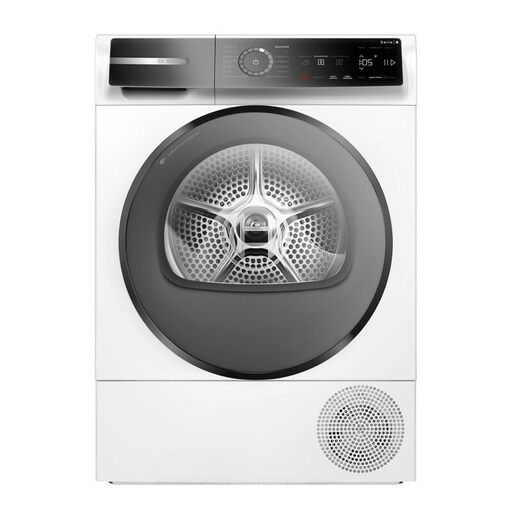 Image unavailable
Bosch WQB246D41, 9 kg
The 9 kg capacity in the product name may suit larger cotton loads; check whether your usual loads make good use of this drum size.
The product name lists energy efficiency class B. The installation space needs adequate ventilation, and the lint filter and condensation water container need attention.
Joybuy
Frequently asked questions
Can I compare an old A+++ label with a current class C tumble dryer?
No. Since 1 July 2025, tumble dryers have used the new A to G scale. Compare current appliances using their label figures, particularly kWh per 100 Eco cycles, rather than treating classes from different generations of energy labels as equivalent.
Does a heat pump tumble dryer need an exhaust hose to the outside?
No. The European Commission says a condenser tumble dryer does not need an exhaust vent to the outside. Depending on the appliance, condensation water is collected in a container or drained away; you should still consider room ventilation and follow the model’s instructions.
What should I clean after drying?
AEG recommends cleaning the lint filter after every drying cycle. How to care for the heat exchanger depends on the specific model; always follow its instruction manual.
How can I estimate a tumble dryer’s electricity costs?
Divide the label figure in kWh per 100 Eco cycles by 100, then multiply it by the number of Eco cycles you expect to run and your electricity price per kWh. This calculation applies to the stated Eco conditions; it does not guarantee the same costs for every cotton programme or load size.
What EU requirements apply to new household tumble dryers?
Household tumble dryers placed on the market for the first time since 1 July 2025 are subject to EU ecodesign requirements, including requirements on energy use and, for condenser tumble dryers, condensation efficiency. Energy labelling rules also apply. The European Commission and EUR-Lex describe these requirements for appliances placed on the market. They do not, however, allow you to determine the market placement date of every individual older listing.


