Households that often dry small loads
If you regularly dry just a few items, the drum size, moisture sensors and programmes should suit the amount of laundry you typically wash.


Choose a heat pump tumble dryer based on the amount of laundry you typically dry and the programmes you can actually use for small loads. A smaller drum isn’t automatically more efficient if you need to run extra cycles. Also compare the appliance dimensions, door clearance, condensation efficiency, noise level and energy consumption on the current EU label. The German Environment Agency highlights the importance of drum size and how you use the appliance.
If you regularly dry just a few items, the drum size, moisture sensors and programmes should suit the amount of laundry you typically wash.
Check the space available, including room for the door to open, as well as condensation efficiency, the noise rating and the installation instructions for the specific model.
For small loads containing different fabrics, suitable programmes and the care instructions on garment labels are important.
Start by comparing your typical loads with the space available. Then consider energy use and fabric-care information alongside the programmes you’re likely to use.
| What matters when buying | What to check | Who this matters most to |
|---|---|---|
| Capacity and small-load programmes | Compare your typical laundry load with the rated capacity and check for programmes specifically suited to smaller loads. | If I usually dry just a few items, I don’t want the maximum capacity — which I rarely need — to be my only selection criterion. Around 36% of consumers prioritise a suitable capacity and small-load programmes. |
| Installation and room conditions | Check the appliance depth with the door open, the installation instructions, condensation efficiency and the noise rating for the Eco programme. | In a compact utility room, the appliance needs to fit in the available space with the door open. Around 29% of consumers prioritise whether it will suit their room. |
| Electricity consumption | Only compare figures based on the same label generation and programme; also consider how often you’ll use the appliance. | If running costs matter to me, I don’t want to assume that the energy label figure is the same as the consumption of a small-load programme I use regularly. Around 21% of consumers prioritise the electricity costs associated with how they use their appliance. |
| Fabric care and maintenance | Check the programmes for your fabrics, as well as the care instructions, filter access and manual for the specific model. | If you often dry wool, silk or mixed fabrics, you’ll need suitable programmes and want to know how appliance care will fit into your routine. Around 14% of consumers focus on these factors. |
The amount of laundry you typically dry matters more for regular use than a maximum capacity you rarely need. An appliance that’s only partly full may use more energy per kilogram. However, extra cycles in a smaller drum can cancel out this advantage.
Compare your usual laundry loads with the rated capacity and check which small-load programmes are available.
Bosch describes the 40-minute programme on the WTH85VWIN as suitable for small loads of thin synthetic fabrics and lightweight materials. It isn’t designed for every type of fabric.
Check the programme table for the model you’re considering. For towels, cotton and mixed loads, follow the care labels.
For the Bosch WTH85VWIN, the manufacturer lists a depth of 613 mm, or 1105 mm with the door open at 90°. The space needed for the door to swing open can make a significant difference.
Measure the space you’ll need to operate the appliance, too, and check the intended location against the installation instructions for the specific model.
Since 1 July 2025, household tumble dryers have used the rescaled EU energy label, with ratings from A to G. An older A+++ rating isn’t the same classification.
Compare the current label rating and consumption in kWh per 100 Eco cycles on a like-for-like basis. The European Commission explains the new scale.
The DPS7206PA is a heat pump tumble dryer with a rated capacity of 7 kg and OptiSense sensor drying. Beko gives these specifications for this model.
For the WQ35G2DG0, Siemens lists an 8 kg capacity, moisture sensors and a ‘Half Load’ option.
For the 8 kg WTH85VWIN, Bosch describes Auto Dry and a quick programme for certain fabrics.
AEG describes its 8 kg TR9W75780 model as featuring AbsoluteCare, MixDry and ProSense.
For the TWC640WP, Miele lists an 8 kg capacity, app control and optional service plans.
This selection includes heat pump tumble dryers with a range of drum sizes and programmes. Check which capacity and features suit your typical loads and intended installation space.
 No image available
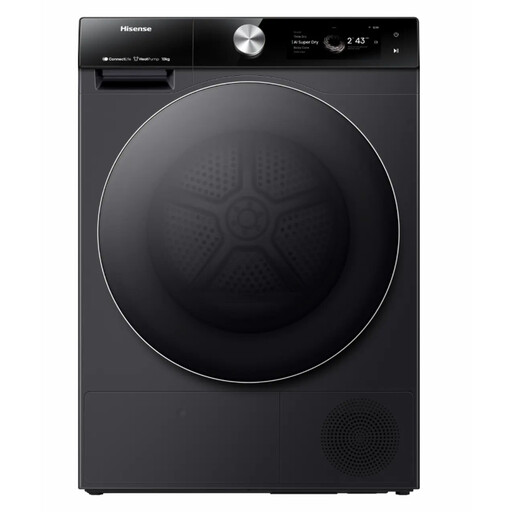
The sensor drying and range of programmes may suit consumers who want to dry different types of fabric.
Heat pump tumble dryer with a rated capacity of 8 kg. According to the product description, the sensor drying stops the cycle when the laundry is dry.
 No image available
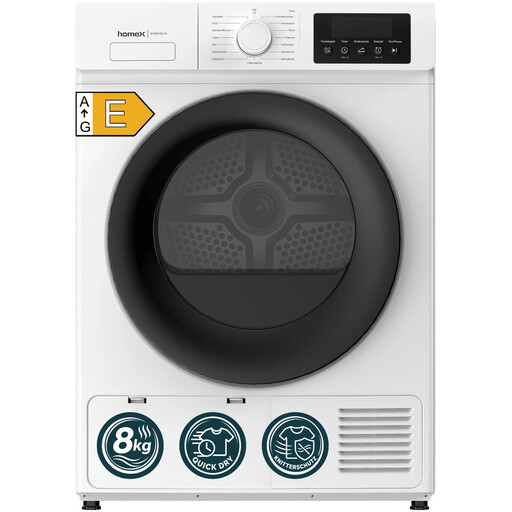
Automatic adjustment of the drying time may appeal to consumers who dry loads of different sizes.
Heat pump tumble dryer with a rated capacity of 10 kg. The product description lists AI Auto Dry, with sensors to monitor moisture and temperature.
 No image available
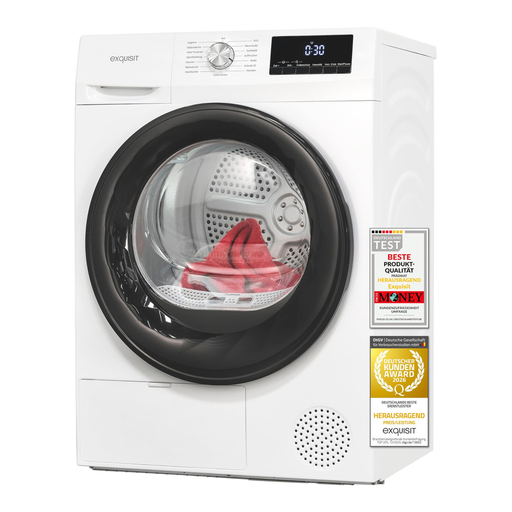
The listed choice of programmes may suit consumers who dry different fabrics and want to plan when their appliance starts.
Freestanding heat pump tumble dryer with a rated capacity of 8 kg and 15 programmes, including Quick, Mix and Wool. The description lists a 4–24-hour delay start and dimensions of 60 × 85 × 65 cm. The earlier A++ energy efficiency rating isn’t directly comparable with the current A to G EU label.
 No image available
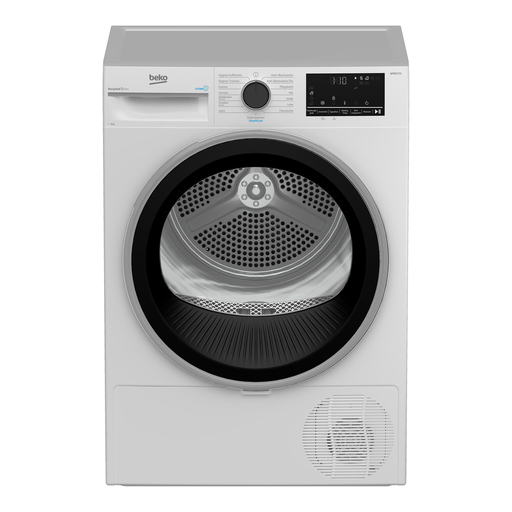
The 7 kg rated capacity is one size to compare if you mostly dry smaller loads.
The product description lists 15 programmes, including a Quick 30 cycle, and dimensions of 54 × 66 × 84,5 cm.
 No image available
The sensor drying and programmes for different fabrics may suit consumers who dry more than one type of material.
Heat pump tumble dryer with a rated capacity of 8 kg and 15 programmes. The description lists a Silent programme. According to the description, you’ll need a compatible stacking kit to stack it on a washing machine.
Use the kWh per 100 Eco cycles figure on the current EU label as a common basis for comparison, rather than as a measurement of your preferred small-load programme. Also consider how full the drum usually is. The German Environment Agency notes that a larger appliance which is often only partly full may use more energy per kilogram. However, a smaller drum isn’t automatically more efficient if it means running extra cycles.
Measure the space where the appliance will stand, as well as the area in front of it when the door is open. Also check the noise and condensation information for the specific model, and read its installation instructions before deciding where to put it.
Check the manual for the specific model to see which parts need cleaning or emptying, and how often. A self-cleaning condenser doesn’t automatically mean the whole appliance is maintenance-free.
To estimate your own electricity costs, you’ll need the consumption in kWh per 100 Eco cycles, how many drying cycles you expect to run and your electricity tariff. Other programmes may use a different amount of energy from the Eco programme, so the label figure isn’t an electricity bill for every type of small load.
Since 1 July 2025, household tumble dryers have used the rescaled EU energy label, with ratings from A to G. Older A+++ ratings aren’t directly comparable with the current classes. The European Commission explains the change.