First, choose a dryer that suits the conditions in the space where it will be installed, then match its capacity to the size of your usual cotton loads. In a shared laundry room, you’ll also want to consider noise, condensation efficiency and a practical way to manage condensation water and clean the filters.
Who should consider these options?
Households with a cool shared laundry room
If you dry cotton laundry in winter in a shared space, check the temperature, ventilation and available space against the instructions for your specific appliance. AEG Support says that the dryers covered by its installation guide require an ambient temperature between 5 and 35 °C.
Households with regular cotton loads
Choosing the right drum capacity is important if you do laundry regularly. The Verbraucherzentrale recommends comparing programme duration and energy consumption on the same label basis, too.
People who use a shared laundry room
If you share the space with others, you may want to factor in noise, humidity and who’s responsible for emptying the condensation water and cleaning the filters. The Verbraucherzentrale lists noise levels and condensation efficiency among the figures to compare on the energy label.
What should you look for when buying?
First, check the appliance instructions to make sure the room is suitable. Then compare capacity and drying results, along with the label figures for energy consumption, duration and noise. The Verbraucherzentrale recommends considering these details together.
| What matters |
What to check before buying |
Who should pay particular attention |
| Suitability of the installation space |
Check the temperature range and ventilation requirements in the instructions for the specific model. |
If the room gets cold in winter, I want to know first whether the instructions say my appliance can be used there. Around 33% of consumers consider suitability for the installation space their top priority. |
| Capacity for your cotton loads |
Check the rated capacity, the cotton or Eco programme, and the drying result you want. |
For my usual cotton loads, I want the drum size and drying result to be a good match. Around 27% of consumers prioritise choosing the right load size. |
| Energy consumption |
Compare kWh per 100 Eco drying cycles alongside the Eco programme duration and capacity. |
If the dryer runs often, I want to be able to compare energy consumption on a like-for-like Eco basis. Around 20% of consumers focus on energy consumption. |
| Use in a shared laundry room |
Compare the noise level and condensation efficiency; check the model’s water container, drainage and filter-cleaning requirements. |
In a shared space, I want to agree in advance how to manage noise, humidity, the water container and filter cleaning. Around 20% of consumers pay particular attention to sharing the appliance. |
Common buying misconceptions
-
Assuming older efficiency ratings match the current energy label
New EU ecodesign and energy labelling requirements for household tumble dryers have applied since 1 July 2025. Older efficiency ratings cannot be directly compared with the current scale.
Check the current EU energy label and product fiche for the specific appliance. The Federal Institute for Materials Research and Testing (BAM) explains when the new requirements came into force.
-
Assuming a cool basement is automatically suitable
The fact that a dryer uses heat pump technology doesn’t prove that a particular room is suitable for that appliance. Temperature limits, space and ventilation requirements can vary by model. In cool rooms, you may also notice moisture on cold surfaces.
Check the actual winter temperature and ventilation options against the instructions for your chosen model. AEG Support gives a range of 5 to 35 °C for the dryers covered by its installation guide; this does not automatically apply to other appliances.
-
Assuming a self-cleaning condenser means the appliance needs no maintenance
A self-cleaning condenser doesn’t take care of every filter-cleaning task. You may still need to follow the maintenance instructions for other parts of the appliance.
Check the cleaning instructions for your specific model and agree with other users of the space who will look after the filters and condensation water after each drying cycle.
Brands and specific models to help you compare
AEG
For its 8-kg TR8T75780 model, AEG lists 85 kWh per 100 operating cycles, 91% condensation efficiency and 63 dB(A). These figures apply to this model.
- MixDry may appeal to households that want to dry mixed loads as well as cotton.
- AEG Support lists temperature and ventilation requirements for the appliances covered by its installation guide. Check the instructions for your specific model before installing it for winter use.
Bosch
Bosch home appliances lists a noise level of 56 dB(A) and a self-cleaning condenser for its 9-kg WQB246CNBY model.
- Its stated capacity can be a useful point of comparison if you regularly have larger loads.
- Capacity, dimensions and maintenance requirements all need to suit your installation space and how you use the appliance.
Siemens
For its 8-kg WQ35G2D00 model, Siemens home appliances lists a noise level of 61 dB(A), a self-cleaning condenser and autoDry.
- The model-specific figures give you clear points of comparison for noise and condenser maintenance.
- Siemens home appliances says this model does not come with a condensation water drain hose. Check the accessories and connection requirements if you want to use a fixed drain.
Beko
Beko lists sensor drying and a noise level of 64 dBA for its 8-kg B5T68219 model.
- Sensor drying is a model-specific feature to consider if you’re interested in how the appliance controls the drying process.
- Beko promotes a Silent programme, but that alone doesn’t guarantee a general noise advantage for every drying cycle.
Samsung
Samsung Germany lists a capacity of 9 kg and energy efficiency class A for its DV90F09F4SU2 model.
- The model details provide a comparison point for larger loads and the stated energy efficiency class.
- Check that the controls and door opening on the specific appliance suit your installation space.
Joybuy product options
This selection includes heat pump tumble dryers with rated capacities of 8 and 9 kg, suitable for regular or larger cotton loads.
 No image available
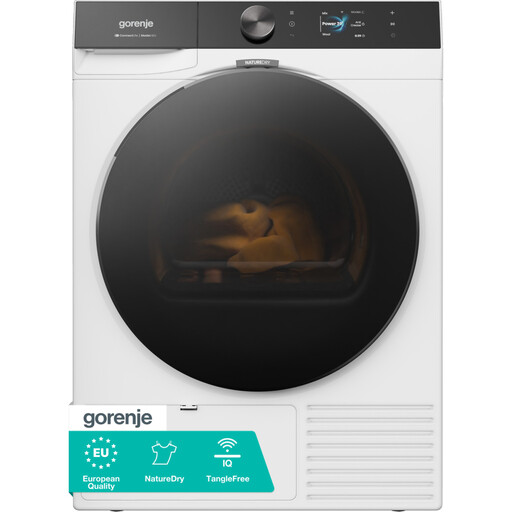
GORENJE DG89BP heat pump tumble dryer, 9 kg
An option for larger cotton loads, with a rated capacity of 9 kg. Check the details of the cotton programme in the specific product listing.
Clean the fluff filter after every use. Check whether AutoDrain is in use; otherwise, the condensation water container will need emptying regularly.
View at Joybuy
 No image available
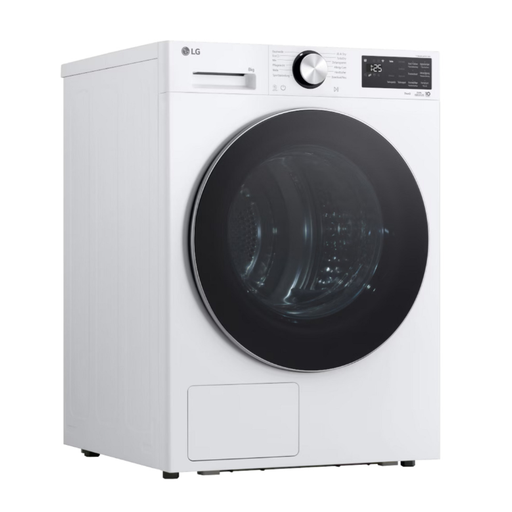
LG RT80X72W heat pump tumble dryer, 8 kg
An option for regular 8-kg cotton loads. Check that your usual load size is within the appliance’s capacity.
Before buying, check the water drainage and filter-cleaning requirements for this model.
View at Joybuy
 No image available
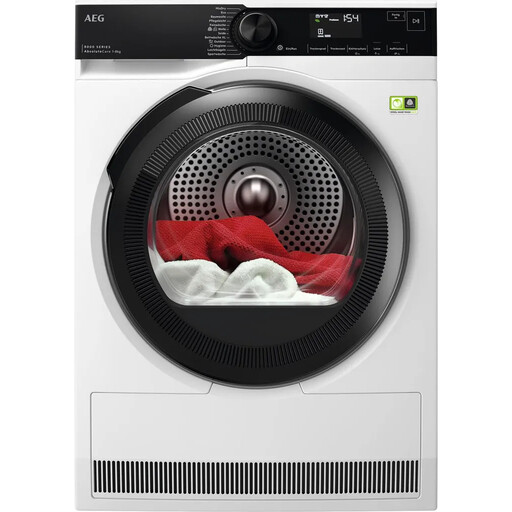
AEG TR8T75780 heat pump tumble dryer, 8 kg, MixDry
For regular 8-kg loads. MixDry is listed in the product name as a feature for mixed laundry loads.
Clean the filter after every use and empty the condensation water container regularly.
View at Joybuy
 No image available
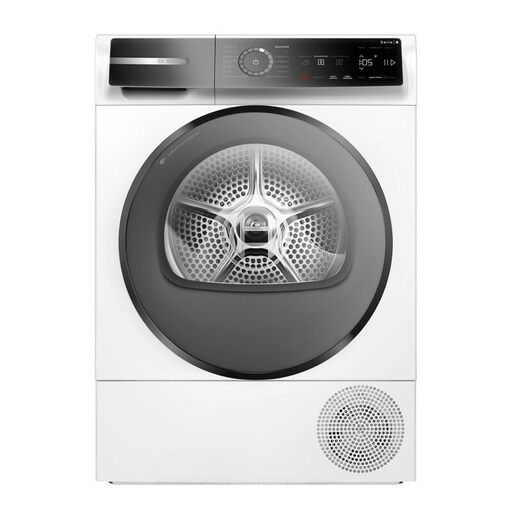
Bosch WQB246D41 Series 8 heat pump tumble dryer, 9 kg
An option for larger loads, with a rated capacity of 9 kg. Check that the dimensions will fit the space you have in mind.
Clean the fluff filter after every use. If you want to use a drain, check that the required drain kit and connection are suitable for your installation space.
View at Joybuy
 No image available
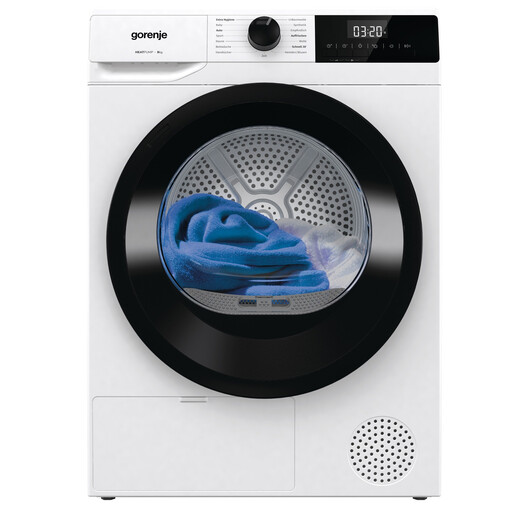
Gorenje DHNE82 heat pump tumble dryer, 8 kg
A freestanding option for regular 8-kg loads. Match the capacity to the amount of cotton laundry you usually dry.
Check the instructions for filter and condenser maintenance. If AutoDrain isn’t connected, you’ll need to empty the condensation water container.
View at Joybuy
Frequently asked questions
What does the energy consumption figure on the energy label mean?
It shows the electricity used in kWh per 100 drying cycles on the Eco programme. Compare it alongside capacity and programme duration; it isn’t a guaranteed figure for every cotton setting.
Can I keep a heat pump tumble dryer in a cold utility room during winter?
That depends on the instructions for the specific appliance and the actual temperature in the room. AEG Support gives a range of 5 to 35 °C for the appliances covered by its installation guide and requires adequate ventilation. For other appliances, follow their own instructions.
What needs to be done after a drying cycle in a shared laundry room?
Follow the appliance instructions and any arrangements with other users for filter cleaning and emptying condensation water. You can’t assume a heat pump tumble dryer has a fixed condensation water drain; check whether a drain hose is included with the specific model and how to connect it.
Can I simply install my own tumble dryer in a shared laundry room?
It isn’t possible to give a blanket yes or no without knowing the rules for using the space and whether any structural alterations are involved. Section 20 WEG covers structural alterations to communal property; whether it applies to a particular installation depends on the circumstances.


