Households that often dry bedding
If you dry smaller items with duvet covers, check the programme, permitted load and drum reversal for the specific model. AEG also recommends fastening buttons and zips before drying.


If you often dry bedding and small loads, look for a heat pump tumble dryer with a suitable bedding programme, a reversing drum and a clearly stated option for adjusting the cycle to smaller loads. For example, Bosch lists these features for the WQG243DR10; with other appliances, check the programme limits, sensor technology and care instructions for the exact model variant. Also compare energy consumption and programme duration using the same current EU label basis: a high rated capacity alone doesn’t tell you how well an appliance suits small loads.
If you dry smaller items with duvet covers, check the programme, permitted load and drum reversal for the specific model. AEG also recommends fastening buttons and zips before drying.
If your tumble dryer is often only partly loaded, features that are specifically described as adjusting the cycle time or drying settings are worth considering. Siemens lists a half-load option for the WQ35G2D90; AEG describes ProSense load sensing on the TR8AMZ78.
If you dry clothes regularly, compare energy consumption in kWh per 100 Eco cycles and programme duration using the current EU label. The consumer advice centre also recommends taking the stated electricity consumption into account when buying.
First, check that the bedding programme is suitable for your fabrics and find out what load it allows. Then compare how the appliance handles small loads, its energy consumption, how much care it needs and its dimensions.
| What matters | What to look for when buying | Who it matters most to |
|---|---|---|
| Drying bedding without it tangling into a ball | Check the programme and permitted load in the instructions; confirm that the drum reverses during that specific programme. | If I dry duvet covers with smaller items, I want to avoid tangling and follow the care instructions. Around 25% of consumers mainly want a programme suitable for a bedding load. |
| Drying small loads appropriately | Check whether the specific model has a half-load option or load or moisture control. | If I often dry only a small amount of laundry, I want to make sure the programme is suited to the load. Around 25% of consumers mainly prioritise frequent small loads. |
| Comparing energy consumption | Compare kWh per 100 Eco cycles and programme duration using the same current label basis. | If the tumble dryer runs often, I want to compare energy consumption like for like and take the cycle time into account. Around 20% of consumers prioritise ongoing electricity costs. |
| Assessing maintenance requirements | Check the extent of any condenser self-cleaning, as well as filter access and maintenance instructions. | If I dry clothes frequently, I want to know what regular maintenance is required. Around 15% of consumers mainly want appliance cleaning to be as straightforward as possible. |
| Making sure it fits the space | Check the appliance dimensions, access route, installation requirements and stated noise level for the model. | If space or access is limited, the appliance needs to fit the intended location. Around 15% of consumers prioritise a good fit in their chosen space. |
The rated load alone doesn’t tell you how the drum reverses during the selected programme or whether the appliance adjusts the cycle time for a small load.
For the specific model, check the bedding programme, permitted load, drum reversal and any clearly stated feature for small loads.
Since 1 July 2025, the EU energy label for tumble dryers has used ratings from A to G instead of the previous A+++ to D scale. The European Commission explains the change; it doesn’t, on its own, show that a particular appliance’s energy consumption has changed.
Compare kWh per 100 Eco cycles and programme duration using the same current label basis, rather than treating old and new ratings as equivalent.
Items can still gather inside an unfastened duvet cover. AEG also notes that drum reversal can vary by model and programme.
Fasten buttons or zips, follow the care label and check the instructions for the programme you’ll actually use.
This feature relates to cleaning the condenser; it doesn’t automatically cover all the appliance’s filter and care requirements.
Read the care instructions for the model variant you’re considering and check what regular maintenance is still required.
For the WQG243DR10, Bosch lists a bedding programme, drum reversal and a half-load option.
The Siemens iQ500 WQ35G2D90 is an option with drum reversal, a half-load setting and a self-cleaning condenser.
For the TR8AMZ78, AEG describes ProSense load sensing and lists programme durations for full and half rated capacity.
The Beko B3T42240S is a heat pump tumble dryer with a rated load of 8 kg and OptiSense sensor drying.
The Miele T2 TK100C WP is a heat pump tumble dryer with a rated load of 8 kg and specified intelligent drum reversal.
The following Joybuy products are heat pump tumble dryers with features that may be useful for small loads or programme selection. Before choosing, check whether the model has a programme suitable for your bedding.
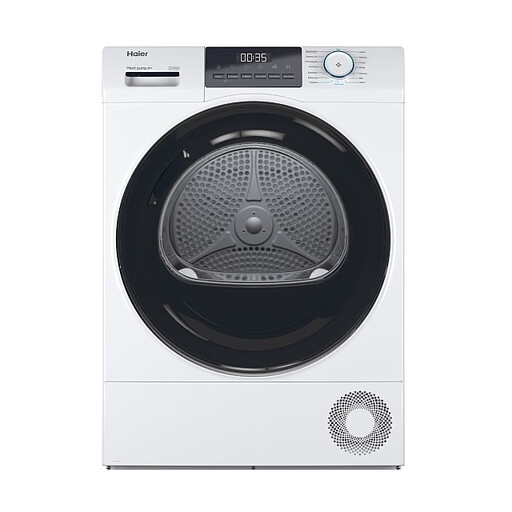 No image available
The stated sensor drying feature detects moisture and ends the cycle when the desired dryness level is reached.
Heat pump tumble dryer with a rated load of 8 kg and several drying programmes.
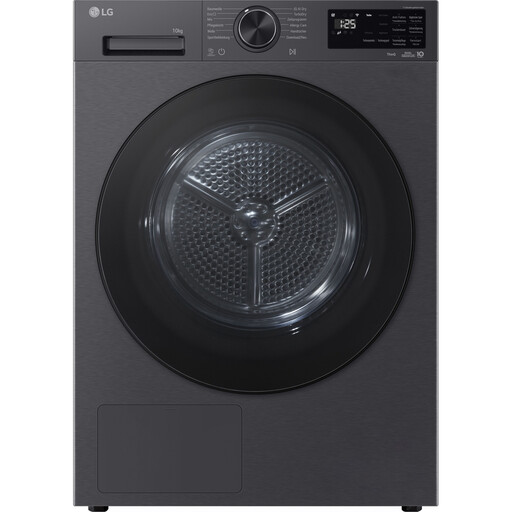 No image available
The stated AI-Dry feature adjusts the time and temperature to suit the load weight, fabric type and moisture level.
Heat pump tumble dryer with a rated load of 10 kg, energy efficiency class C, moisture sensor, TurboDry, self-cleaning condenser and Wi-Fi.
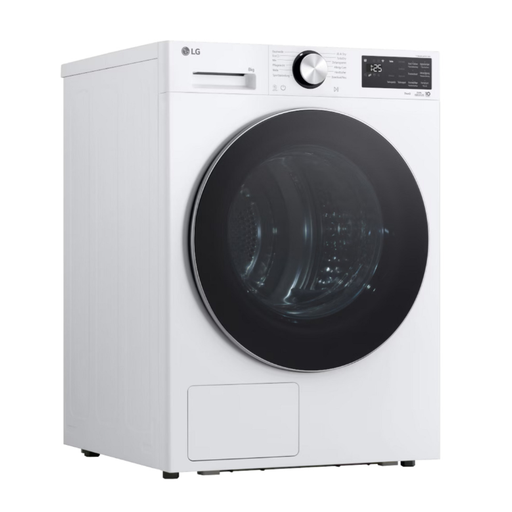 No image available
The stated AI-Dry and load detection features may be useful when comparing appliances for small loads; the product details also list programme durations for full and half loads.
Heat pump tumble dryer with a rated load of 8 kg, energy class B, Dual Inverter Heat Pump, TurboDry, self-cleaning condenser and Wi-Fi.
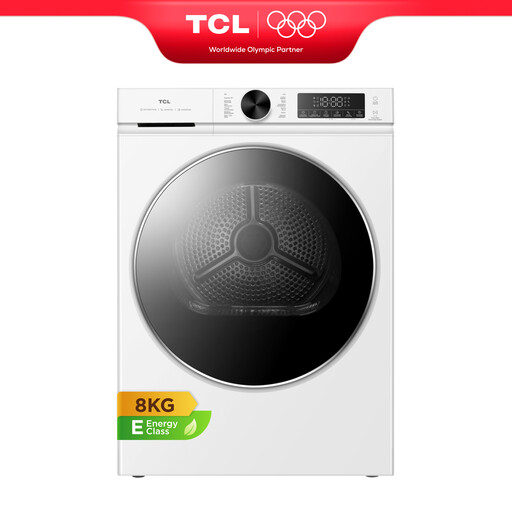 No image available
According to the product details, Auto Dry and Time Dry provide an automatic drying function and a selectable drying time.
Heat pump tumble dryer with a rated load of 8 kg, energy class E, 3D Drying™ and a 3-in-1 filter.
 No image available
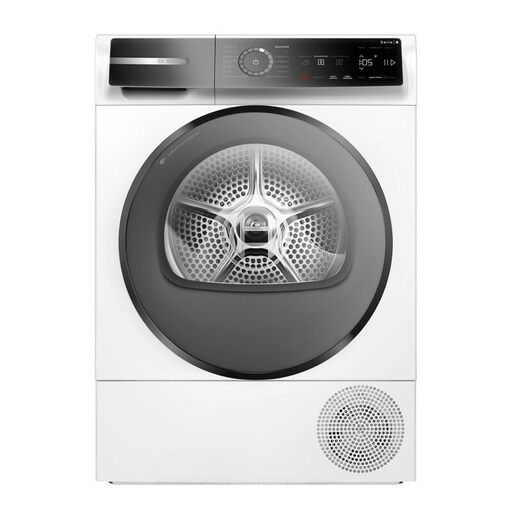
Listed features include a bedding programme with a reversing drum and a half-load option.
Heat pump tumble dryer with a rated load of 9 kg, energy class B, AutoDry, moisture sensor, Silent Dry and self-cleaning condenser.
No. Only tumble dry bedding if its care label says it’s suitable, and follow the programme instructions. AEG recommends fastening buttons or zips on duvet covers before washing and drying.
Not simply because of its duration or name. Bosch describes the 40-minute programme on the WQG243DR10 as being for small loads of synthetic fabrics and lightweight materials. So check which programme is intended for your fabrics and its load limit.
First compare the kWh per 100 Eco cycles shown on the current EU label. To work out your actual costs, you’ll also need your electricity tariff and an energy consumption figure that reflects the programmes and loads you use. The label figure alone doesn’t describe a specific small bedding load.
Household tumble dryers sold in the EU must carry an energy label. Since 1 July 2025, the rescaled A to G ratings have applied; they aren’t directly comparable with the previous A+++ to D scale. The European Commission notes that the Ecodesign changes don’t apply retrospectively to appliances placed on the market before the date and still held in retailers’ stock.
Goods bought in the EU are covered by a statutory minimum guarantee of two years from receipt; the seller is responsible for this. The European Union distinguishes these rights from a voluntary manufacturer’s guarantee, which may provide additional cover.