When you need just a few school clothes in a hurry, look for a Short or Half Load function specifically designed for small loads. Its cycle time won’t necessarily apply to a full drum or thick clothing. For washed outdoor clothing, use a suitable programme only if the care label says the item can be tumble dried. If you regularly dry larger loads, make sure the drum capacity and energy consumption are a good match, using the same EU energy label basis for comparison.
Who is this selection for?
Families who need school clothes ready for the next day
After rainy days, you may urgently need to dry a small load of everyday clothes that are suitable for tumble drying. Bosch and Siemens describe functions for small loads, each subject to specified fabric and load limits.
Families with technical and rainwear clothing
Muddy outdoor layers need to be washed first. The care label then determines whether they can go in the tumble dryer. Siemens, Bosch and AEG provide care guidance and outdoor functions for suitable fabrics.
Households with frequent rainy-weather loads
If you regularly dry several suitable loads, compare drum capacity and energy consumption using the energy label. The Verbraucherzentrale recommends energy consumption per 100 Eco cycles as a comparison figure; the Umweltbundesamt points out that a large drum that is often only half full is not automatically more efficient.
What should you look for when buying?
First, check which fabrics are suitable for tumble drying. Then compare the functions for small, urgent loads or outdoor clothing. If you use the dryer frequently, consider drum capacity and energy consumption together.
| What to consider |
What to look for |
Who should pay particular attention? |
| Small, urgent loads |
Check which fabrics and load sizes the Short programme or Half Load function is designed for. |
If you only need a few suitable school clothes ready for the next morning, a function that fits the load matters more than a short cycle time quoted for a different load. Around 31% of consumers put small, urgent loads first. |
| Outdoor clothing |
Compare the outdoor programme and its permitted load; the care label on each garment is always the deciding factor. |
If you want to dry washed rainwear or technical clothing, make sure every item is suitable for tumble drying. Around 25% of consumers prioritise caring for these outdoor layers. |
| Drum capacity |
Choose a rated capacity that suits your usual loads of tumble-dryer-safe laundry; separate items by material and thickness where needed. |
If several rainy days leave you with a lot of suitable laundry, choosing the right drum capacity is important. Around 25% of consumers focus mainly on fitting larger or multiple loads into the drum. |
| Energy consumption and where you plan to put the dryer |
Compare kWh per 100 Eco cycles, Eco programme duration and the noise rating on the product data sheet or energy label. |
If you use the dryer regularly or plan to put it near living areas, energy consumption and noise can affect everyday life. Around 19% of consumers pay particular attention to electricity use and how the appliance will operate in their home. |
The Verbraucherzentrale recommends considering energy consumption per 100 Eco drying cycles alongside programme duration. The Umweltbundesamt points out that an oversized drum used for loads that are often only partly full does not automatically use less energy per kilogram of laundry.
Common misconceptions
-
An outdoor programme replaces washing or checking the care label
Unwashed, dirty fabrics should not go in the tumble dryer. A special programme does not make a jacket suitable for tumble drying if it is not designed for it.
Wash muddy clothes first, then check the care label. Use a programme only for suitable fabrics and stay within its load limit.
-
A short cycle time applies to thick or full loads too
Bosch’s 40-minute cycle time for the WQG233D40 applies to small loads of thin synthetic fabrics. It does not mean that thick jackets or a full drum will take the same time.
Before buying, check which fabrics and load sizes the Short programme is designed for.
-
The energy efficiency class alone is enough to compare models
The class on its own does not tell you how long the Eco programme takes or whether the drum is the right size for your usual loads.
Compare energy consumption per 100 Eco cycles, Eco cycle time and capacity on the same energy label basis, and consider the loads you typically dry at home.
A closer look at relevant brands
Bosch
The Series 6 WQG233D40 reviewed here is an option for smaller suitable loads and everyday family laundry.
- For this 8 kg model, Bosch lists Auto Dry, a Half Load option and Super 40. The 40-minute cycle time applies to small loads of thin synthetic fabrics.
- The stated Short programme time does not apply to full drums or thick outdoor clothing.
Siemens
The iQ500 WQ35G2D00 reviewed here combines a function for smaller loads with an outdoor programme.
- For this 8 kg model, Siemens lists autoDry, Half Load and Outdoor; the stated noise level is 61 dB(A).
- An outdoor programme does not mean that a particular child’s jacket is suitable for tumble drying. Check the care label on every garment.
AEG
The 8000 AbsoluteCare TR8T70789 reviewed here is aimed at households looking to care for suitable outdoor clothing as well as everyday laundry.
- For this 8 kg model, AEG lists outdoor care and MixDry for suitable mixed loads. The product data sheet gives it a B rating and consumption of 85 kWh per 100 cycles.
- These manufacturer specifications do not mean that every mixed fabric or rain jacket is suitable for the appliance. Follow the care label and programme limits.
Beko
The BM3T38210W1 is a documented 8 kg heat pump model you can compare for its core features and energy consumption figures.
- For this model, Beko lists sensor drying, energy efficiency class E and a noise level of 64 dB(A).
- Compare these figures with the features and energy label values that matter to your household, rather than treating individual specifications as an overall verdict.
Heat pump tumble dryers at Joybuy
This selection includes heat pump tumble dryers with a range of drum capacities for suitable school clothes and family laundry. Always check the care label and the instructions for the relevant programme before use.
 No image available
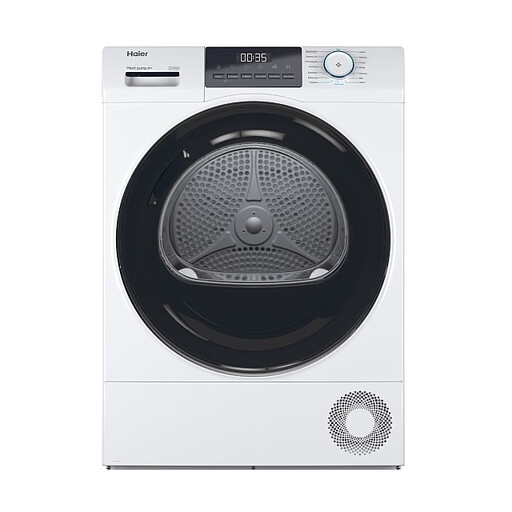
Haier I-Pro 1 HD80-E929E-DE heat pump tumble dryer, 8 kg
The stated drum capacity may suit households that regularly dry larger suitable loads.
Heat pump tumble dryer; capacity: 8 kg.
View at Joybuy
 No image available
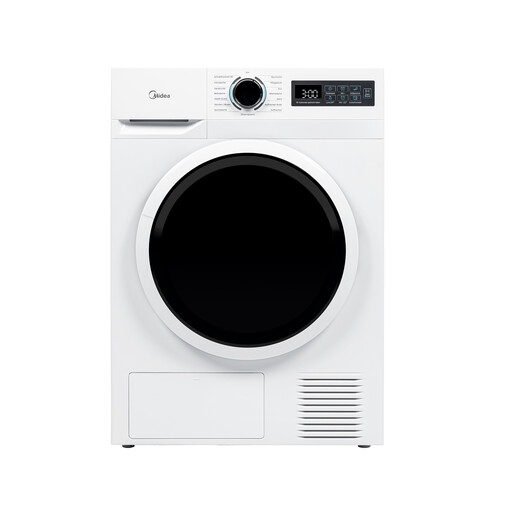
Midea MD110H70B-E heat pump tumble dryer, 7 kg
The stated capacity gives you a practical starting point for matching drum size to your usual suitable loads.
Heat pump tumble dryer; capacity: 7 kg.
View at Joybuy
 No image available
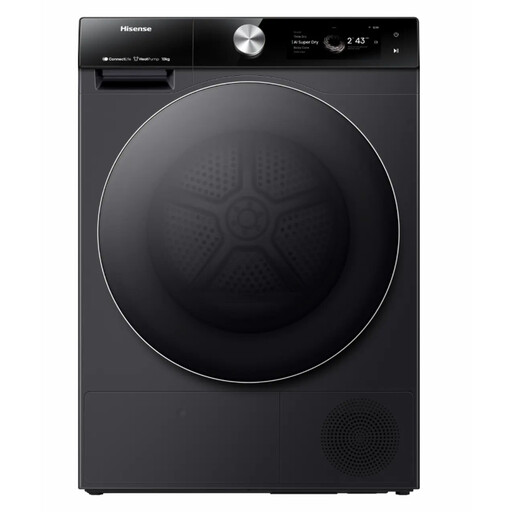
Hisense DH7S107BB heat pump tumble dryer, 10 kg, black
The stated capacity can help households with larger suitable loads compare their options.
Heat pump tumble dryer; capacity: 10 kg.
View at Joybuy
 No image available
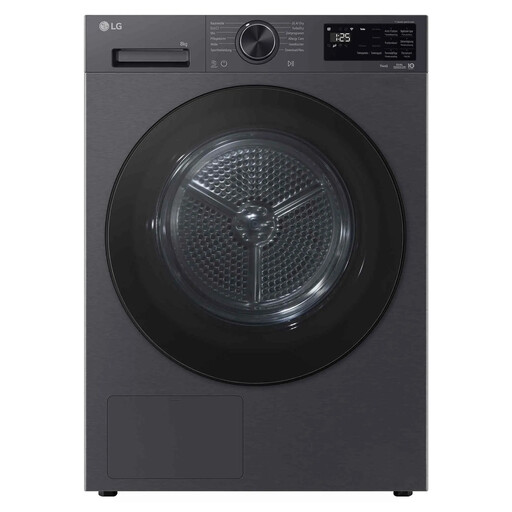
LG RT80X7B heat pump tumble dryer, 8 kg
The capacity figure helps you check how well this model matches the amount of suitable laundry in your household.
Freestanding heat pump tumble dryer; capacity: 8 kg.
View at Joybuy
 No image available
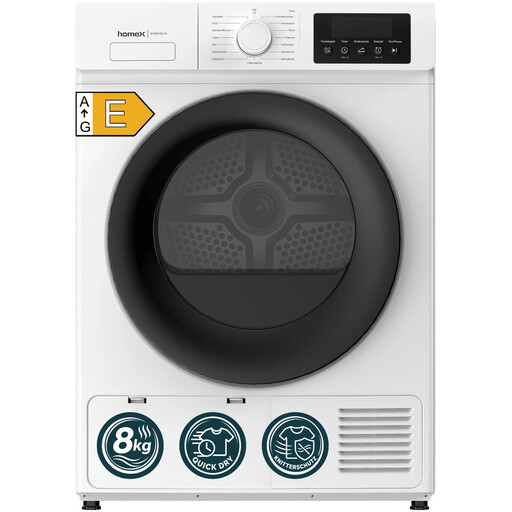
homeX WT8W1E-W heat pump tumble dryer, 8 kg
Compare the stated drum capacity with your usual suitable loads before choosing a model.
Freestanding heat pump tumble dryer; capacity: 8 kg.
View at Joybuy
Frequently asked questions
Can a muddy rain jacket go straight into the tumble dryer?
No. Wash dirty clothing first; the care label and the programme’s permitted load then determine whether and how the jacket can be tumble dried. Siemens and Bosch highlight these care limits.
Does a 40-minute cycle mean a thick school jacket will be dry in time too?
No. Bosch’s 40-minute cycle time for the WQG233D40 applies to small loads of thin synthetic fabrics. It is not a guarantee for thick clothing or a full drum.
Which figures can help you compare electricity use?
Compare energy consumption in kWh per 100 Eco drying cycles and the Eco programme duration on the same energy label basis. The Verbraucherzentrale recommends these figures as a guide; Short programmes may differ.
Which energy label rules apply to tumble dryers in Germany?
The EU energy label scale from A to G has applied to tumble dryers since 1 July 2025. The updated Ecodesign requirements apply to appliances newly placed on the EU market; retailers’ stock placed on the market before then is not covered solely because it is sold later. The European Commission and EUR-Lex are the authoritative sources.


