Households that often wash small loads
If you regularly wash just a few items, you won’t want to wait until you have a full drum. Look for programmes designed for smaller loads and check how the cycle time adjusts to the amount of laundry.


A heat pump tumble dryer is a good choice for frequent small loads if its programmes and sensors are suited to your fabrics, and you have somewhere suitable to put it. Check the exact dimensions rather than relying on the capacity in kilograms, and compare energy use using the current energy label: the German consumer advice centre recommends comparing kWh per 100 drying cycles on the Eco programme.
If you regularly wash just a few items, you won’t want to wait until you have a full drum. Look for programmes designed for smaller loads and check how the cycle time adjusts to the amount of laundry.
If there’s little room for the appliance or for hanging out your washing, check the exact model’s external dimensions, door opening and installation instructions. The capacity in kilograms is no substitute for measuring up.
If you’ll need to wear certain items again soon, suitable quick and mixed-load programmes are important. Check which fabrics and load sizes each programme is designed for.
For small loads, suitable programmes and available space matter just as much as capacity. Also compare current energy-use figures on the same label basis.
| Priority | What to check when buying | Who it matters to |
|---|---|---|
| Small loads | Sensor controls and options specifically designed for smaller loads; check which fabrics are suitable for quick programmes. | If I don’t want to wait for a full drum, I need a programme that suits my laundry. Around 36% of consumers who prioritise small loads are likely to consider this their main concern. |
| Space for the appliance | The appliance’s height, width and depth, as well as the door opening and installation instructions for the model. | If I have little room for the appliance and laundry, the capacity needs to suit my daily needs without taking up more space than I have. Around 29% of consumers who prioritise the space available are likely to consider this their main concern. |
| Running costs | kWh per 100 Eco drying cycles on the current energy label; make sure you compare like with like. | If I use the dryer regularly, I want to estimate the running costs without assuming the label figure will match my personal energy use. Around 21% of consumers who prioritise running costs are likely to consider this their main concern. |
| Few spare clothes | Care labels and whether quick or mixed-load programmes are suitable for the fabrics in question. | If I only have a few spare items, I want to be able to wear them again soon without using a programme that ignores their care requirements. Around 14% of consumers who particularly value being able to wear their clothes again soon are likely to consider this their main concern. |
A 7 kg appliance isn’t automatically narrow. Beko lists the B3T41230 as 59.8 cm wide.
Measure the space available, the room needed to open the door and the route for getting the appliance into place, using the exact model dimensions.
Poor planning could mean extra work to plan the installation or make alterations.
Bosch specifies that the 40-minute cycle on the WTH85VWJN is for small loads of synthetic fibres and lightweight fabrics.
Check the fabric type and programme guidance before making a short cycle time your main reason for buying.
The European Commission notes that new ecodesign measures for tumble dryers have applied since July 2025. The current label uses a rescaled energy-efficiency scale.
Compare kWh per 100 Eco drying cycles on the same basis, rather than directly comparing old A+++ ratings with current classes.
Having little space to store clothes doesn’t necessarily mean you won’t have room for a separate tumble dryer. The German consumer advice centre notes that washer-dryers use more electricity and water than separate appliances.
First check whether you can fit a separate appliance. Consider a washer-dryer if there’s no room for separate appliances and its drying capacity suits your needs.
The model examples below illustrate different features and dimensions. They don’t indicate which models are currently available or whether they’ll suit every household.
The B3T41230 is a heat pump tumble dryer with a 7 kg capacity and OptiSense sensor drying.
For its 8 kg WQ35G2D00 model, Siemens lists a half-load option for smaller amounts of laundry.
The 8 kg TR7T50589 dryer features MixDry and ProSense for mixed loads and loads of different sizes.
The 8 kg WTH85VWJN combines Auto Dry with a quick programme for certain small loads.
The HD80-C33637 is an 8 kg heat pump tumble dryer with a listed cabinet depth of 586 mm.
The Joybuy products below are heat pump tumble dryers with a range of capacities and programmes. For small loads, check in particular which programmes and fabrics are suitable for each model.
 No image available
The sensor drying described stops the cycle when the selected dryness level is reached. Several programmes are listed for different fabrics.
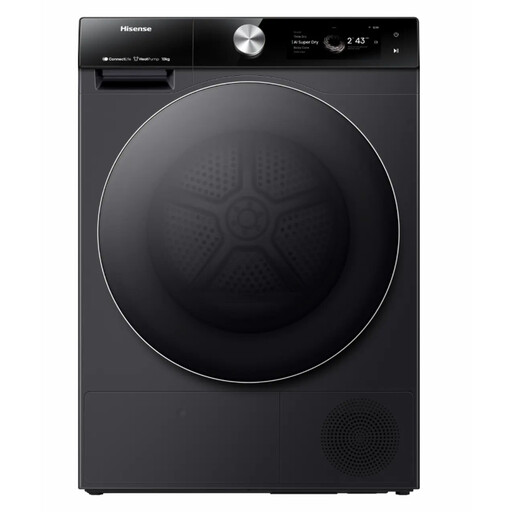 No image available
This 10 kg model may be worth considering if you wash larger loads as well as small ones. According to the description, AI Auto Dry adjusts the cycle based on moisture and temperature.
The description also mentions Wi-Fi control and an anti-crease function.
 No image available
For different load sizes, the AI-Dry function described can adjust the time and temperature based on weight, fabric type and moisture levels.
The listed programmes include Mix, Wool and Sportswear. According to the description, the appliance requires a properly earthed 220–240-V socket.
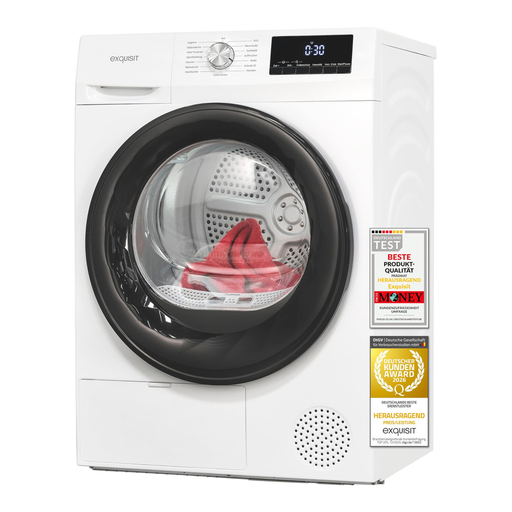 No image available
The listed Quick-30' cycle may be suitable for a small load, provided the fabrics and care instructions allow for it.
The model has 15 programmes and a delay start of 4 to 24 hours. The instructions recommend cleaning the lint filter before or after every drying cycle.
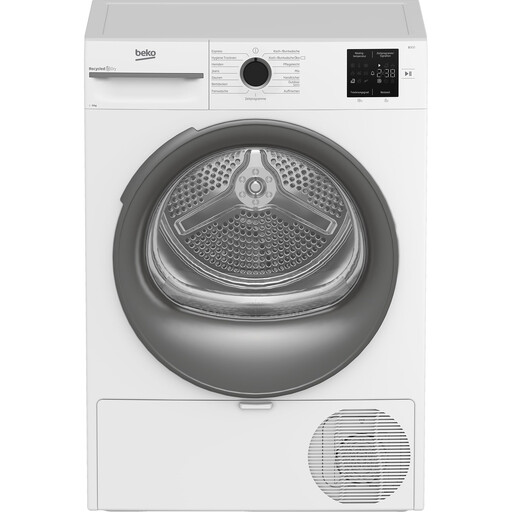 No image available
For different laundry needs, the model is described as offering sensor drying and several programmes, including Express and Freshen Up.
The stated capacity is 9 kg. Check the programme guidance to see whether it’s suitable for particular fabrics.
No. Compare the exact external dimensions and allow space for the door to open. Beko lists the 7 kg B3T41230 as 59.8 cm wide; the 8 kg Siemens WQ35G2D00 is also 59.8 cm wide.
No. Bosch specifies that the 40-minute cycle on the WTH85VWJN is for small loads of synthetic fibres and lightweight fabrics. Before using it, check the fabric type and the programme information for your particular appliance.
The label shows energy use in kWh per 100 drying cycles on the Eco programme. A rescaled label has applied since July 2025, so you shouldn’t compare old and new label figures directly. The figure isn’t an individual measurement for other programmes or your own small load.
Measure the space using the model’s dimensions and follow the installation guidance in the relevant instruction manual. The German consumer advice centre recommends cleaning the lint filter and condenser regularly, in line with the appliance requirements.
Old electrical appliances must not go in household rubbish; take them to an authorised collection point instead. Germany’s Federal Ministry for the Environment outlines retailers’ take-back obligations under certain conditions. Before entering into a contract, check the terms that apply to any collection you require.