What should you look for when buying?
| Priority |
What to check before buying |
Who it matters most to |
| Keeping to your time slot |
Which fabrics and maximum load are allowed for the programme; consider the Eco cycle duration separately. |
If your laundry needs to be ready by the end of a set time slot, choosing a suitable quick programme is essential. Around 33% of consumers put timing first. |
| Energy use for small loads |
Compare your usual load size, half-load or load-sensing functions, and the kWh per 100 Eco cycles shown on the current label. |
If you often dry small loads, don’t judge energy use by the maximum drum capacity alone. Around 33% of consumers prioritise energy use when drying small loads frequently. |
| Shared installation space |
Check the appliance dimensions, including the door and connection area, noise rating, condensation drainage and local rules for using the space. |
If several people use the same laundry area, space and ease of handing over the appliance also matter. Around 17% of consumers prioritise installation and ease of use in a shared space. |
| Caring for different fabrics |
Check care labels and the load allowed for the specific programme; look closely at mixed-load or sensor drying options. |
When drying different fabrics, it’s important to choose a suitable programme rather than simply the shortest cycle. Around 17% of consumers prioritise having the right care options for different fabrics. |
For comparing energy use, the Verbraucherzentrale says the energy label shows kWh per 100 drying cycles on the Eco programme. Since 1 July 2025, tumble dryers have used new energy classes from A to G. The Bavarian State Research Centre for Agriculture notes that old and new label figures aren’t directly comparable because the testing methods have changed.
Suitable products at Joybuy
The following heat pump tumble dryers are suited to small or mixed loads. Check which fabrics and load sizes are allowed for each programme, as well as the conditions at your chosen installation location.
 No product image available
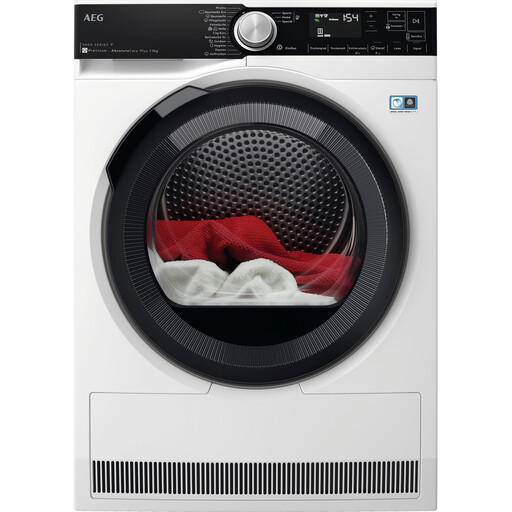
AEG TR9DW80690 Series 9000, 9 kg
For varying load sizes: according to the product description, ProSense adjusts drying time and energy use to the size of the load.
The product description lists a 3 kg quick programme. It also specifies energy class C, 63 dB and R290 refrigerant.
Clean the lint filter regularly. If you don’t have a suitable condensation drain, you’ll need to empty the container. Don’t damage the refrigerant circuit and leave repairs to a qualified professional.
View at Joybuy
 No product image available
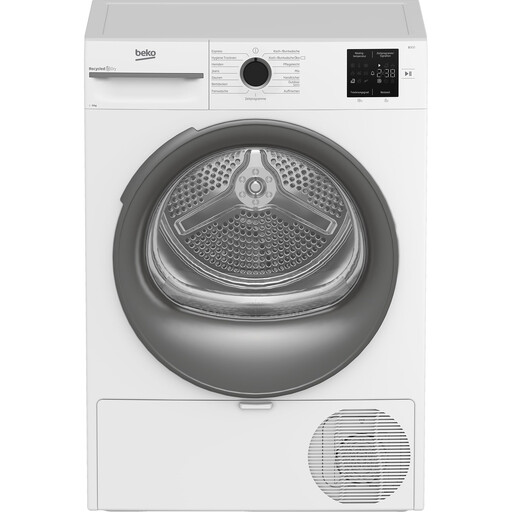
Beko BM3T39210W1, 9 kg
For different types of laundry: the product description lists 15 programmes, including Express and Freshen Up.
It also lists energy class E and the AquaWave drum.
The product description recommends cleaning the condenser twice a year and looking after the filters as directed in the appliance instructions.
View at Joybuy
 No product image available
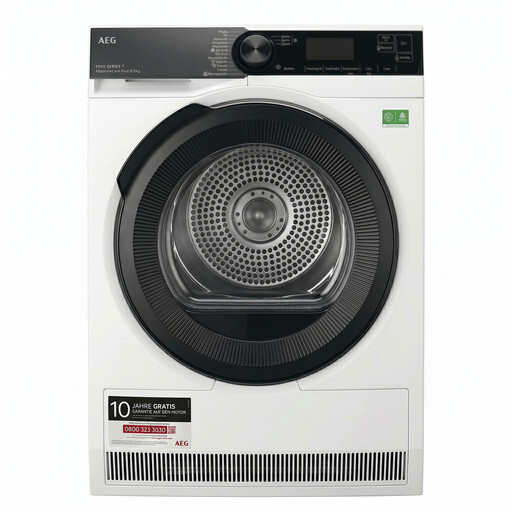
AEG TR9W75780, 8 kg
For small and mixed loads: the product description lists a 3 kg quick programme, MixDry and ProSense, which adjusts the cycle to the load size.
The product name also specifies energy class B and AbsoluteCare for wool and silk.
Clean the lint filter after every use and empty the condensation container regularly.
View at Joybuy
 No product image available
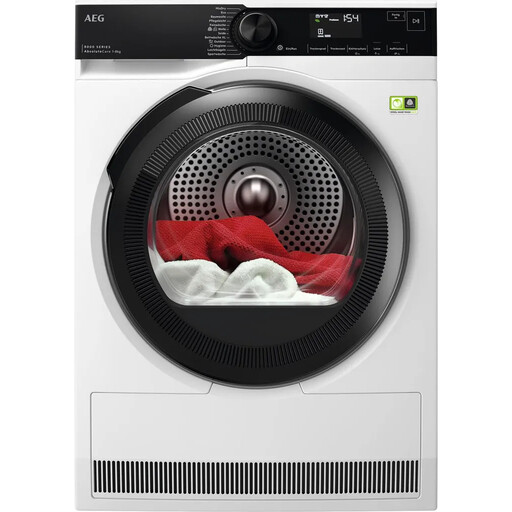
AEG TR8T75780, 8 kg
For varying load sizes: according to the product description, ProSense adjusts drying time and energy use to the size of the load; MixDry is listed for mixed loads.
A moisture sensor and energy class B are also listed.
Clean the lint filter after every use and empty the condensation container regularly.
View at Joybuy
 No product image available
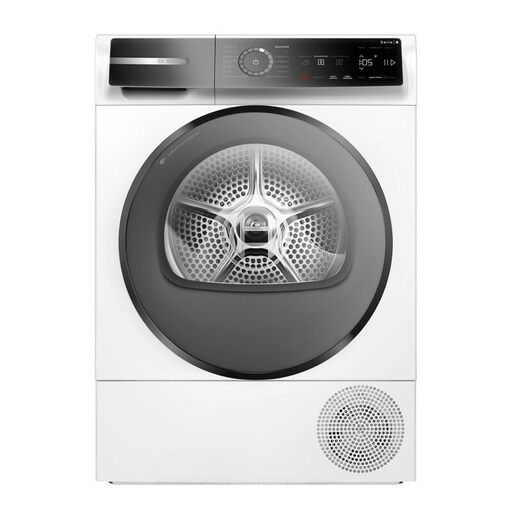
Bosch WQB246D41 Series 8, 9 kg
For smaller loads, the product description lists a half-load function and an Eco cycle duration of 160 minutes at partial load.
Also listed are AutoDry, energy class B, a start delay of 1 to 24 hours and direct condensation drainage.
Clean the lint filter after every drying cycle. You can install the supplied drain hose instead of emptying the container.
View at Joybuy
Frequently asked questions
Is 40 minutes enough for every small load?
No. Bosch Hausgeräte Deutschland describes the 40-minute cycle on the WQA233C9K as being for small loads of synthetic fibres and thin fabrics. Check that the fabrics and load size are suitable for the quick programme; the Eco cycle duration is a different figure.
How do I get a shared tumble dryer ready for the next person?
Bosch recommends cleaning the lint filter after every drying cycle. If there’s no drain hose connected, you’ll need to empty the condensation container; Siemens Hausgeräte Deutschland explains this for its appliances. Always follow the instructions for your specific model.
Which energy figure should I use to compare models?
Compare the kWh per 100 Eco cycles figure on current EU energy labels, and factor in your electricity tariff and how often you use the dryer. The test figure doesn’t guarantee the energy use for every small load; old and new label figures aren’t directly comparable because the testing conditions have changed.
Who should I contact if the appliance develops a fault after purchase?
For consumer purchases in the EU, you’re entitled to a statutory guarantee of at least two years from the seller. This is separate from any additional manufacturer’s warranty on offer.
Does the energy label already have to show a repairability index?
No. As at 2 November 2026, displaying one isn’t yet compulsory. According to the Federal Institute for Materials Research and Testing, this requirement starts on 1 January 2027; displaying the index voluntarily is already possible.


