Who might benefit from having their own tumble dryer?

Small loads for one person

If you usually do your laundry on your own, a dryer that suits your loads matters more than having the biggest possible drum. The German Environment Agency points out that a smaller drum does not automatically use less energy if you need to run more cycles.

Shared flat with a joint energy budget

If you tumble-dry often, compare the consumption figures for the models you’re considering and how often you’ll use them. Combining loads could also be a factor in your decision.

Shared flat with limited space

If space is tight, the appliance’s dimensions, access to its intended location and a practical door opening all matter. Check the instructions to make sure the connections and installation are suitable for the space you have in mind.

What should you look for when choosing one?

Your own heat pump tumble dryer

A good fit if: You often have individual loads suitable for tumble drying and the space and connections suit the model you’ve chosen.

Consider: A small-load function doesn’t tell you exactly how much energy it will use for your laundry.

Shared tumble dryer or airer

A good fit if: You can coordinate and combine loads, or have enough room to hang your laundry to dry.

Consider: Sharing a dryer requires some coordination; air-drying takes time and suitable space.

Washer-dryer

A good fit if: There’s no room for a separate tumble dryer and an airer, and you’ve weighed up the features of a combined appliance.

Consider: The consumer advice centre considers washer-dryers less favourable in energy terms. A combined appliance is not a like-for-like alternative to a separate heat pump tumble dryer.

What matters What to look for Who it matters most to
Small loads Compare the amount of laundry you typically dry with the rated capacity. Check whether the model specifically lists a small-load function or sensor drying. If I usually dry my laundry on my own, I want suitable programmes without assuming the kilogram figure tells me how much energy my load will use. Small loads are the top priority for around 33% of consumers.
Running costs Compare the current EU energy label and product data sheets on a like-for-like basis, and take your own usage into account. Since 1 July 2025, tumble dryers have used the A to G scale, as explained by the European Commission. If we tumble-dry often in our shared flat, I want to consider the consumption figures alongside how often we use the appliance. Running costs are the top priority for around 27% of consumers.
Fitting the appliance Measure the space, access route and door opening; check the connection and installation instructions for the specific model. Beko and Bosch each publish dimensions for their models, which you’ll need to check against your available space. If space is limited in our flat, I want to know before buying whether the appliance will actually fit where we plan to put it. Finding an appliance that fits is the top priority for around 20% of consumers.
Care and servicing Check the instructions for filter access and cleaning, and find out how to handle condensation water. If several flatmates use the appliance, I want to know how easy it will be to organise filter care day to day. Care and servicing are the top priority for around 20% of consumers.

Common buying mistakes

  • Choosing solely by the lowest kilogram rating

    A smaller drum doesn’t automatically use less energy if you need to run extra drying cycles. The German Environment Agency highlights this relationship.

    Compare the loads you typically dry and how often you use the appliance before judging its capacity or small-load function.

    If you tumble-dry frequently, extra cycles can wipe out the expected benefit of a smaller drum.

  • Comparing old and new energy efficiency ratings as if they were the same

    Since 1 July 2025, tumble dryers have used the EU A to G scale. Older ratings such as A+++ are not the same classification, so they can’t be compared directly.

    Use the current energy label and product data sheet for the exact model as your guide.

  • Assuming a washer-dryer is an equivalent replacement

    A combined appliance can save floor space, but the consumer advice centre assesses its energy performance differently from that of separate appliances.

    Weigh the space saved against a separate tumble dryer, a shared appliance and an airer.

Brands and models to consider

Beko

The 7 kg heat pump tumble dryers BM3T37210W1 and B3T41230 are specific models with sensor drying. Their dimensions and features differ.

  • Beko lists both models at 7 kg and energy efficiency class E. The BM3T37210W1 is listed as 54.5 cm deep, while the B3T41230 is 60.5 cm deep; the latter also features OptiSense.
  • These are manufacturer specifications, not independent evidence of running costs for very small loads.

Bosch

The Series 6 heat pump tumble dryer WQG233D40 is a specific option if you’re looking for a clearly stated setting for smaller loads.

  • Bosch lists an 8 kg capacity, energy efficiency class C, 64 dB(A) and a ‘Half Load’ function.
  • According to Bosch, the condenser is not self-cleaning. The function does not provide a quantified saving for a particular small load.

AEG

The 7000 SensiDry TR7TS75690 is a 9 kg model for a shared flat that also dries mixed or larger loads.

  • AEG lists MixDry for mixed loads and ProSense to adjust the drying time.
  • These are manufacturer specifications. A higher rated capacity alone doesn’t prove an advantage for mostly small loads.

Miele

The T2 heat pump tumble dryer TE100C WP adds a specific 8 kg model to the comparison.

  • Miele lists DryProtect and FragranceDos among its features.
  • These manufacturer specifications don’t show an advantage for very small loads or tell you what your individual drying costs will be.

Heat pump tumble dryers at Joybuy

The product options below include heat pump tumble dryers with different rated capacities, as well as a washer-dryer set. For small loads in a shared flat, the rated capacity alone doesn’t tell you how much energy a specific drying cycle will use.

Haier I-Pro 1 HD80-E929E-DE heat pump tumble dryer, 8 kg

Haier I-Pro 1 HD80-E929E-DE, 8 kg heat pump tumble dryer

This 8 kg model could suit a shared flat that occasionally dries larger loads as well as smaller ones.

The product description lists sensor drying and several programmes. Capacity alone doesn’t tell you how much energy a very small load will use.

View at Joybuy
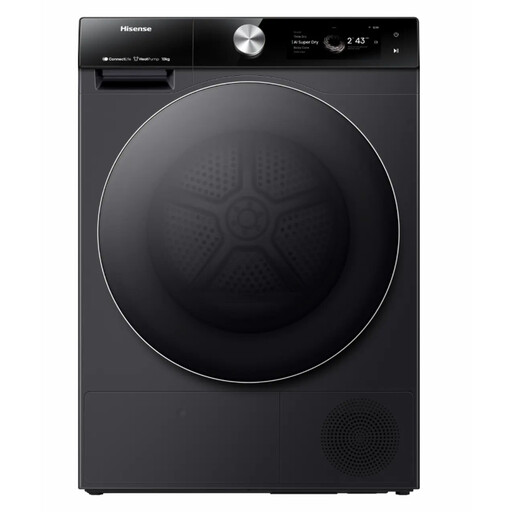
Hisense DH7S107BB heat pump tumble dryer, 10 kg

Hisense DH7S107BB, 10 kg heat pump tumble dryer

The 10 kg rated capacity could suit a shared flat planning to dry larger combined loads too, but it doesn’t offer any particular proof of performance for small loads.

The product description lists Wi-Fi control, a TFT display, AI Auto Dry and an anti-crease function. Think about which features you’ll actually use day to day.

View at Joybuy

LG RT80X7B freestanding heat pump tumble dryer, 8 kg

LG RT80X7B, 8 kg heat pump tumble dryer

This 8 kg model is worth comparing if you’re looking for a freestanding heat pump tumble dryer with features designed to adapt the drying process.

The product title lists AI Dry and Dual Filter, while the product description mentions sensor features. Check the care instructions and measurements against the space you have available for this specific model.

View at Joybuy
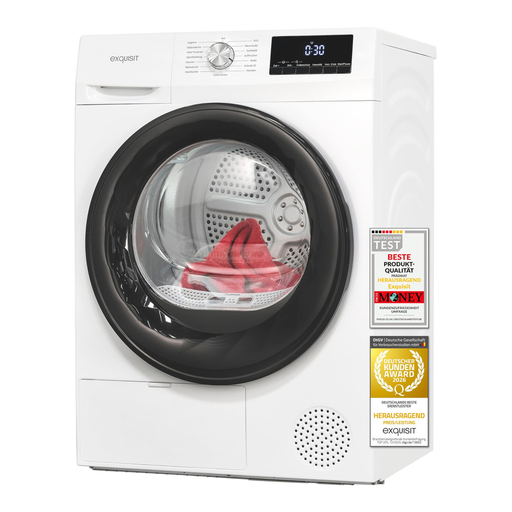
Exquisit heat pump tumble dryer, 7 kg

Exquisit heat pump tumble dryer, 7 kg

The 7 kg rated capacity gives you a specific size to compare, but doesn’t tell you on its own how well it will dry a single small load.

The product title lists 15 programmes and a 4–24-hour delay start. According to the product description, the lint filter should be cleaned after every drying cycle.

View at Joybuy
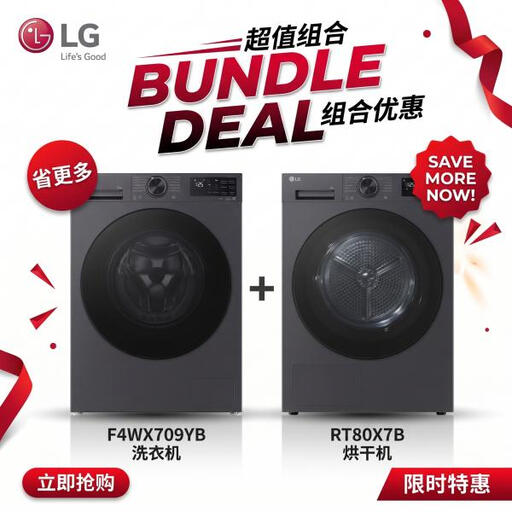
LG Smart Laundry Duo with a 9 kg washing machine and an 8 kg heat pump tumble dryer

LG Smart Laundry Duo: F4WX709YB washing machine and RT80X7B tumble dryer

This set is only suitable if you’re looking for both a washing machine and a tumble dryer, and have room for both appliances.

The product title lists a 9 kg washing machine and an 8 kg heat pump tumble dryer. This is a set, not a single tumble dryer.

View at Joybuy

Frequently asked questions

Is a 7 kg tumble dryer enough for individual loads of laundry?

It depends on the amount of laundry you actually have and how often you tumble-dry. The kilogram figure refers to the rated capacity. As the German Environment Agency explains, a smaller appliance doesn’t automatically use less energy if it means running extra cycles. Also check that the programmes are suitable for your fabrics.

How can I check the installation and care requirements before buying?

Measure the available space and access route, then read the installation and connection details in the instructions for the specific model. Also check how to handle condensation water and whether the filters are easy to reach for routine care.

Which consumption figures should we compare in a shared flat?

Compare the current EU energy label and product data sheets on a like-for-like basis, taking into account how often you’ll use the appliance. Since 1 July 2025, tumble dryers have used the A to G scale; the rating alone doesn’t tell you what a particular drying cycle will cost.

Is a manufacturer’s guarantee the same as the statutory warranty?

No. Your statutory warranty is against the seller, while a guarantee is voluntary and subject to its own terms. The consumer advice centre explains that additional repair rights, subject to certain conditions, apply to purchases made from 31 July 2026: if you choose a repair rather than a replacement for a fault within the first two years, the warranty period for the appliance may be extended from two to three years.

Which energy label applies to tumble dryers?

Since 1 July 2025, the EU label with the A to G scale must be displayed for tumble dryers in shops and online, as explained by the European Commission. Older A+++ ratings are not on the same scale.