Households without room for a second appliance
If you want to machine-dry your cotton laundry but don’t have space for a second appliance, consider a suitable washer-dryer stack. Bosch and Miele offer model-specific stacking kits for this purpose.


First, check whether you have room for a freestanding tumble dryer or whether your washing machine and dryer can be safely stacked using a suitable stacking kit. Bosch and Miele point out that accessory compatibility depends on the model. Choose the drum capacity to suit your usual cotton loads and compare energy consumption, programme duration and condensation efficiency on the energy label. A heat pump tumble dryer also needs a suitable location with good airflow.
If you want to machine-dry your cotton laundry but don’t have space for a second appliance, consider a suitable washer-dryer stack. Bosch and Miele offer model-specific stacking kits for this purpose.
If you regularly dry laundry, it’s worth choosing a drum size that suits your usual loads and comparing energy consumption and programme duration. The Verbraucherzentrale and the German Environment Agency recommend considering capacity alongside how you actually use the appliance.
If the tumble dryer will go in an alcove or small room, you’ll need to consider more than its external dimensions: the required airflow and condensation efficiency matter too. The Verbraucherzentrale and AEG highlight these points to check.
A good fit if: you have a suitable space and regularly dry cotton laundry.
Consider: the appliance needs its own space, and an oversized drum may not be ideal if you often dry partial loads.
A good fit if: there’s no room for another appliance beside the washing machine and both models are suitable for stacking.
Consider: you’ll need to check appliance compatibility, choose the right stacking kit and, if necessary, arrange installation.
A good fit if: there’s no room for a second appliance or a clothes airer, and the drying capacity meets your household’s needs.
Consider: the Verbraucherzentrale says typical washer-dryers use more electricity and water than a washing machine and separate tumble dryer. You may also be unable to dry a full wash load in one go.
A good fit if: you have a suitable drying space outside your small living area, or can dry individual loads there.
Consider: air-drying takes space and time. Indoors, you’ll need to ventilate the room to remove excess moisture.
| Buying priority | What to check when buying | Who should pay particular attention? |
|---|---|---|
| Space and installation | Check the installation dimensions, door opening, ventilation and, for a stack, compatibility between the washing machine, tumble dryer and stacking kit. | If there’s no room for a second appliance beside the washing machine, a safe stacking solution matters to me. Around 31% of consumers put space and installation first. |
| Cotton load size | Compare your usual laundry load with the maximum capacity. Check the cotton programme, moisture control and programme duration. | I want to dry typical loads of towels or clothes properly, rather than choosing a drum based only on its maximum capacity. Around 25% of consumers prioritise a suitable cotton load size. |
| Energy consumption | Compare the current energy rating and kWh per 100 Eco cycles. When comparing costs, use the same number of cycles. | If I dry laundry frequently, I want to factor the stated energy consumption into my choice. Around 25% of consumers focus primarily on electricity costs. |
| Room humidity and ventilation | Check the condensation efficiency, installation guidance and clear ventilation openings for the specific appliance. | If the tumble dryer is going in a small room, I want to make sure air can circulate and the space is suitable according to the instructions. Around 19% of consumers prioritise room humidity and ventilation. |
Depth, door opening, airflow and the space needed for safe installation all affect whether the tumble dryer will fit where you plan to put it.
Measure the entire installation space and check the instructions. If you’re stacking appliances, make sure the specific models are compatible.
A washer-dryer stack may also require a suitable stacking kit and, if necessary, installation.
A larger capacity isn’t automatically the right choice. The German Environment Agency points out that a tumble dryer that’s too large and often only half full can use more energy per kilogram of laundry.
Choose a capacity that suits your usual cotton loads and compare them with the stated maximum capacity.
Condensation efficiency and the conditions where the appliance is installed matter even with a heat pump tumble dryer. In a small room, air should be able to circulate freely.
Check the label rating and installation instructions for the specific model, and don’t cover any ventilation openings.
According to the Verbraucherzentrale, many washer-dryers can only dry part of a wash load at a time. It also says typical washer-dryers use more electricity and water than separate appliances.
If saving space is your priority, compare the washing and drying capacities, as well as the energy label details for the specific appliance.
Bosch’s heat pump tumble dryer range includes models with different capacities and features.
According to Beko, the B3TSW48C9ZW has an 8 kg drum and sensor drying.
According to the manufacturer, the TR8T65889 is an 8 kg heat pump tumble dryer designed to be stacked using a stacking kit.
The WT45HVA3 is an 8 kg tumble dryer with programmes for cotton laundry and a condensate drain hose.
According to Miele, the TK300C WP is an 8 kg heat pump tumble dryer that’s suitable for stacking.
This selection includes freestanding heat pump tumble dryers for cotton laundry, with a range of drum sizes and stated energy label ratings.
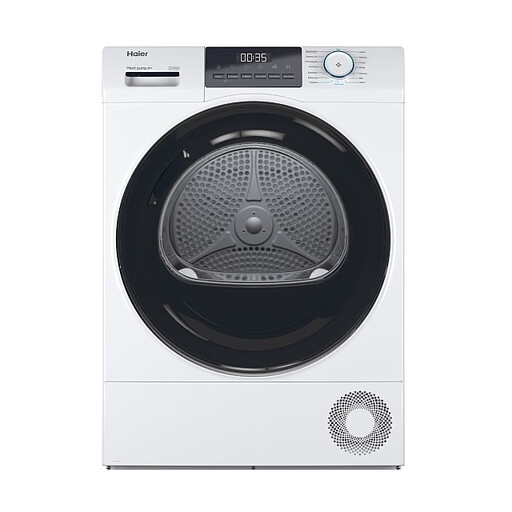 No image available
The stated 8 kg capacity and sensor drying are useful points to consider if you have cotton loads with different drying needs.
8 kg; sensor drying; several drying programmes.
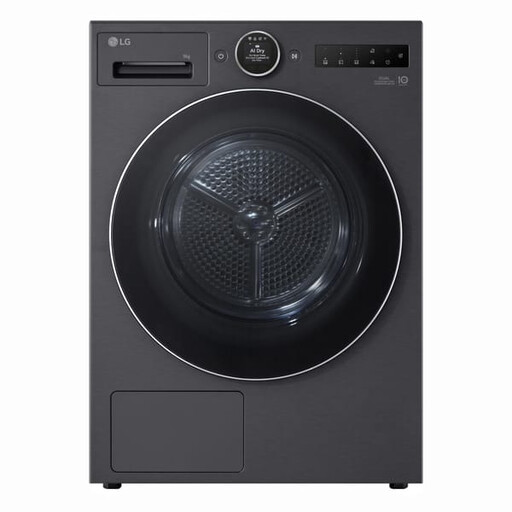 No image available
The 9 kg capacity and stated cotton programme may suit large, frequent loads.
9 kg; cotton programme; energy rating A; 79 kWh per 100 cycles; condensation efficiency 91 %.
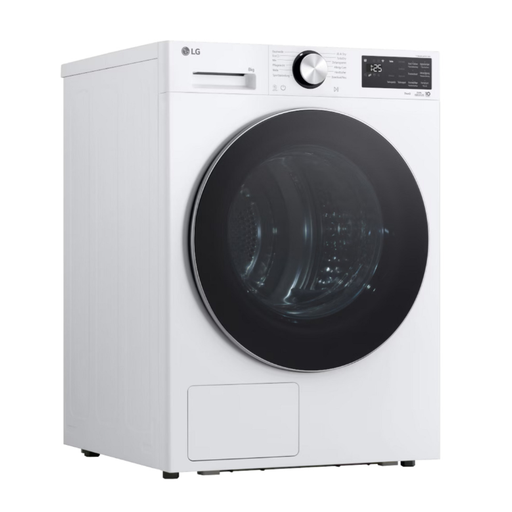 No image available
The stated cotton programme and 8 kg capacity give you specific points to compare against your usual loads.
8 kg; cotton programme; energy rating B; 85 kWh per 100 cycles; condensation efficiency 91 %.
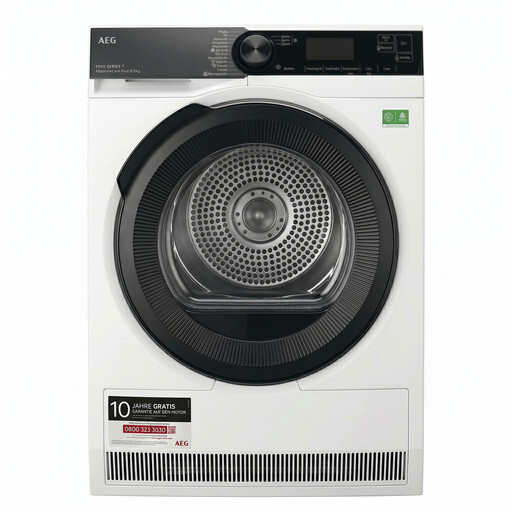 No image available
The stated cotton programme and 8 kg capacity can help you check whether the drum size suits your usual loads.
8 kg; cotton programme; energy rating B; 85 kWh per 100 cycles; condensation efficiency rating B.
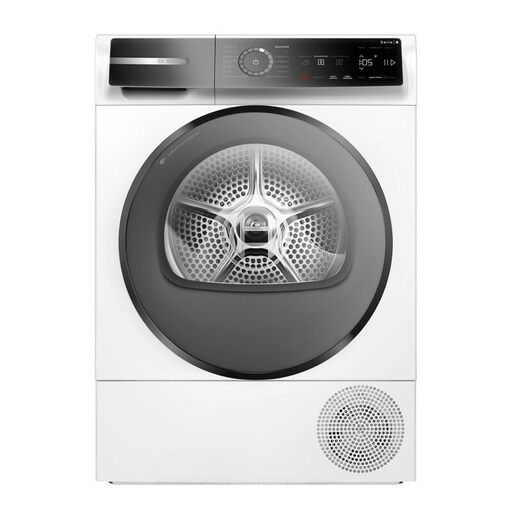 No image available
The 9 kg capacity is worth comparing if your usual cotton loads are on the larger side.
9 kg; energy rating B; condensation efficiency rating B; 59 dB; moisture sensor and automatic drying programmes.
No, matching widths alone aren’t enough. Check the installation instructions and make sure a stacking kit is suitable for those exact two appliances. Bosch says its kit helps prevent the dryer from shifting or falling.
They show energy use for 100 drying cycles on the Eco programme. The label also gives details such as capacity, programme duration, condensation efficiency and noise level. Actual energy use depends on the appliance and how you use it. The Verbraucherzentrale explains these label figures.
Follow the cleaning instructions for the lint filters, filters and, where applicable, heat exchanger on your chosen model. The German Environment Agency points out that well-spun laundry contains less residual water, which can reduce drying time and energy use.
You may need to buy a compatible stacking kit and arrange installation, in addition to the appliance itself. Check the specific offer to see which accessories are included and whether any additional services are available.
Since 1 July 2025, household tumble dryers have used the rescaled EU energy label from A to G. The European Commission gives this date for the requirements applying to new appliances. According to Your Europe, the label must also be visible when buying online. These rules don’t automatically apply to older appliances that were placed on the market before that date.