What should you look for when buying?
First, check that the care label, fabric type and permitted programme load are all compatible. Then compare Eco consumption, capacity and dimensions to make sure the dryer suits your everyday needs.
The proportions below refer to consumers choosing a heat pump tumble dryer for tumble-dryer-safe sportswear before a trip.
| Priority |
What to check when buying |
Who is this particularly important to? |
| Dry a small load in time |
Check for a sportswear or synthetics programme, suitable fabrics and the maximum programme load. The Eco running time is not the running time for a short programme. |
If I only have a few items to dry shortly before setting off, a suitable programme matters more than a general promise about drying times. Around 36% of consumers are likely to be most concerned about packing in time. |
| Care for fabrics appropriately |
Check the tumble-drying symbol and temperature instructions on the garment against the instructions for the programme you plan to use. A crossed-out tumble-drying symbol means the item must not be tumble dried. |
For performance or outdoor clothing, I want to check the care label against the programme, even if that rules out the shortest cycle. Around 29% of consumers are likely to put fabric care first. |
| Electricity consumption with frequent use |
Compare the current EU label and kWh per 100 Eco cycles across similar appliances. This figure does not show the consumption for a sportswear load. |
If the tumble dryer will also be used frequently day to day, the stated Eco consumption matters more to me than a short cycle for individual sportswear items. Around 21% of consumers are likely to focus mainly on running costs. |
| Capacity, space and maintenance |
Check the appliance dimensions, including the space needed for the door, your usual laundry load, permitted programme loads, the condensate drainage option and filter maintenance. |
I need to fit my usual household loads and take the available space, including room for the door, into account. Around 14% of consumers are likely to prioritise capacity and installation. |
GINETEX assigns one dot on the tumble-drying symbol to a lower temperature and two dots to a normal drying temperature. For comparing electricity consumption, Verbraucherzentrale recommends checking the figures per 100 Eco cycles. The maximum rated capacity does not automatically tell you how much laundry can go into a specialist programme.
Heat pump tumble dryers at Joybuy
The following Joybuy products are heat pump tumble dryers to consider when comparing capacity and features for getting ready for a trip and doing household laundry. For sportswear or outdoor fabrics, check that the product details and care label are compatible with the programme you choose.
 No image available
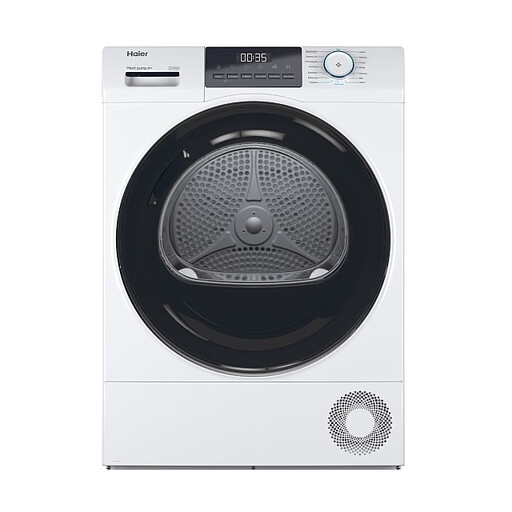
Haier I-Pro 1 HD80-E929E-DE, 8 kg
The stated capacity helps you compare it with your usual household loads as well as your needs when preparing for a trip.
Heat pump tumble dryer with an 8 kg capacity; the product name also lists sensor drying and several drying programmes.
View at Joybuy
 No image available
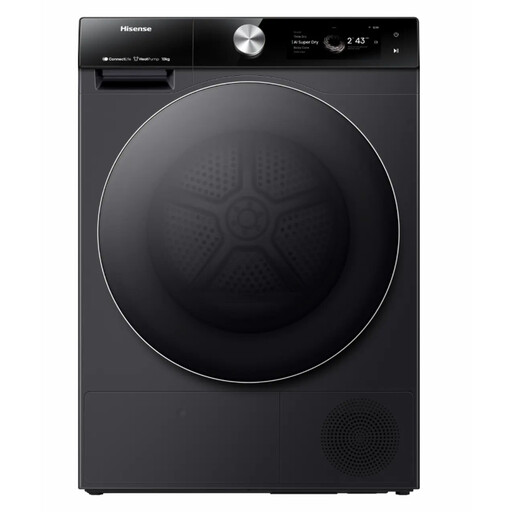
Hisense DH7S107BB, 10 kg
You can compare the stated capacity with your household laundry needs before or after a trip.
Heat pump tumble dryer with a 10 kg capacity; the product name lists Wi-Fi, AI Auto Dry, crease protection and a TFT display.
View at Joybuy
 No image available
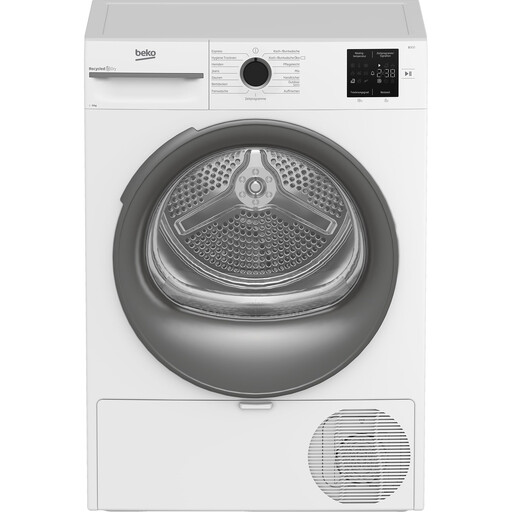
Beko BM3T39210W1, 9 kg
The 9 kg capacity can help you compare it with your usual household loads. Check the permitted load separately for each specialist programme.
Heat pump tumble dryer with energy rating E; the product name lists 15 programmes and an AquaWave drum.
View at Joybuy
 No image available
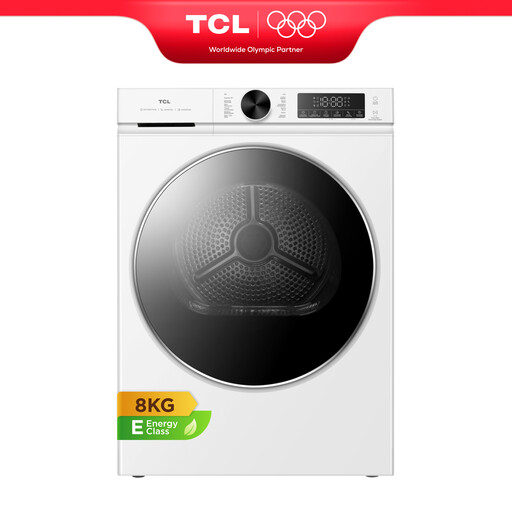
TCL DP4408WE1DE, 8 kg
The rated capacity gives you a starting point for comparing it with your usual laundry loads; it does not determine the load size for each programme.
Heat pump tumble dryer with energy rating E; the product name lists 3D Drying™ and a 3-in-1 filter.
View at Joybuy
 No image available
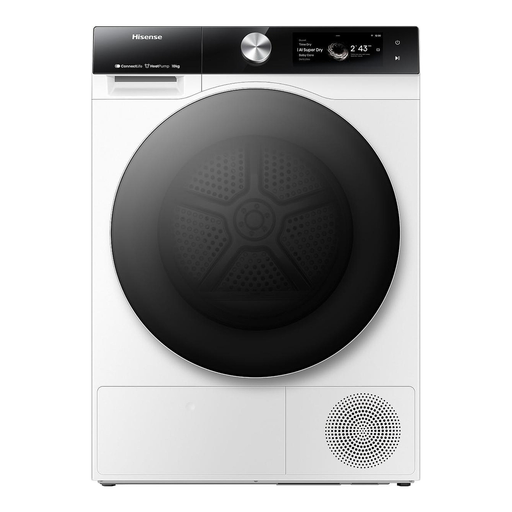
Hisense DH7S107BW, 10 kg
The stated capacity can help you compare it with larger household loads; check the permitted load for an individual programme separately.
Heat pump tumble dryer with a 10 kg capacity; the product name lists Wi-Fi control and crease protection.
View at Joybuy
Frequently asked questions
Can every tumble-dryer-safe sportswear item go in a quick or outdoor programme?
No. The care label and the instructions for the programme you choose must be compatible. GINETEX distinguishes between lower and normal drying temperatures, while AEG says its outdoor programme reaches 60 °C at certain points. This does not mean that clothing with different care instructions can be tumble dried in it.
How should I plan drying time before packing?
Choose a programme that suits the specific fabric type and permitted load, and allow extra time. The running time on the EU energy label is for the standardised Eco programme; a stated time such as “40 minutes” does not automatically apply to every sportswear load.
Which energy consumption figures can I compare?
Compare the consumption in kWh per 100 Eco cycles shown on the current EU energy label. This figure does not show the consumption of a sportswear programme. Your actual electricity costs also depend on how you use the appliance and your electricity tariff.
What should I check when it comes to installation and maintenance?
Check the appliance dimensions and the space needed for the door against your available space, and look at the condensate drainage option for the specific model. Bosch Hausgeräte recommends cleaning the fluff filter after every drying cycle; follow the appliance instructions for any other maintenance.
Which energy label scale applies to tumble dryers in Germany?
Since 1 July 2025, the EU energy label for tumble dryers sold in shops and online has had to show a scale from A to G. The European Commission explains this change; older ratings such as A+++ are not directly comparable with current energy label ratings.


