Households with a damp-prone drying area
If you currently dry towels indoors, consider the ventilation available and the appliance’s condensation efficiency. The consumer advice centre lists this as a factor to consider when buying.


A heat pump tumble dryer can complement your clothes airer for towels that are suitable for tumble drying, particularly if you regularly need them sooner or drying laundry indoors causes problems with damp. If you have enough time and space, and the room can be ventilated well, a clothes airer remains the more energy-efficient option. When choosing a tumble dryer, compare the capacity you typically need, where you plan to put it and its current energy label. The Eco figures on the label do not automatically indicate how long a towel programme will take.
If you currently dry towels indoors, consider the ventilation available and the appliance’s condensation efficiency. The consumer advice centre lists this as a factor to consider when buying.
If you regularly need towels, the capacity and programme time should suit your usual loads and schedule. The German Environment Agency recommends choosing an appliance size that matches your actual needs.
An additional tumble dryer takes up space and needs to remain accessible for maintenance. So check the appliance dimensions and the clearance required at your chosen location.
| What matters | What to check when buying | Who is this important to? |
|---|---|---|
| Humidity in the room | Check the condensation efficiency or class on the current label, as well as the ventilation available where you plan to put the appliance. | If I dry towels in a room that is prone to damp, I want to keep moisture released into the room to a minimum. Around 33% of consumers put this concern first. |
| Energy use | Compare the figure in kWh per 100 Eco cycles with how often you expect to use the dryer. To work out your personal costs, use your own electricity tariff. | If I only tumble dry some of my towels, I want to weigh up whether the additional electricity use is worthwhile for me. Around 27% of consumers prioritise energy use. |
| Load size and time | Compare the weight of a typical dry towel load with the rated capacity, and check the programme duration and permitted load for the towel programme. | If I need towels again by a certain time, I want to plan for a suitable drum size and a realistic programme duration. Around 20% of consumers prioritise load size and time. |
| Space and maintenance | Check the appliance dimensions, door opening, condensate drainage and access to the filters and condenser at the intended location. | If I want to put the tumble dryer next to my clothes airer, it needs to fit and remain accessible for regular maintenance. Around 20% of consumers prioritise space and maintenance requirements. |
Since 1 July 2025, the EU A to G scale has applied to tumble dryers. An earlier rating such as A+++ is therefore not directly comparable with a current product listing.
Compare the current EU label for the specific model and its consumption in kWh per 100 Eco cycles. The European Commission gives 1 July 2025 as the date the new scale came into effect.
According to Bosch, the 40-minute programme on the Bosch WQG233D40 is intended for small loads of lightweight synthetics. The Eco cycle time shown on the energy label also relates to a specific programme, so it does not automatically tell you how long towels will take.
For the specific model, check the towel programme, its permitted load and the stated programme duration.
A large rated capacity is not automatically the better choice if you mostly dry small loads. The German Environment Agency notes that appliances used with half loads most of the time are not necessarily energy-efficient.
Choose a capacity to suit a typical dry towel load rather than relying on the highest kilogram rating alone.
The WQG233D40 is an 8 kg model with a towel programme, Auto Dry and a half-load option.
The BM3T38210W1 is an 8 kg heat pump model. If space is limited, make sure to check its depth.
The WQ46B2D41 is a 9 kg model for households looking to accommodate larger towel loads.
The TWC640WP is an 8 kg heat pump model with DirectSensor and DryProtect.
The RT80V9C is an 8 kg model for which LG lists a self-cleaning condenser, plus time and energy-saving modes.
This selection includes heat pump tumble dryers with stated capacities of 8 to 10 kg for towels suitable for tumble drying.
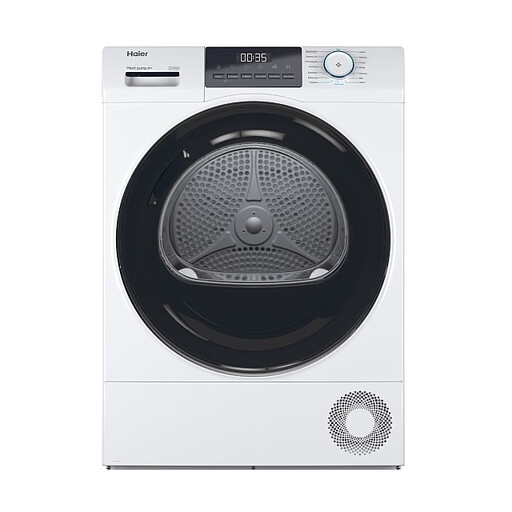 No image available
For towel loads suitable for tumble drying, within the stated 8 kg capacity.
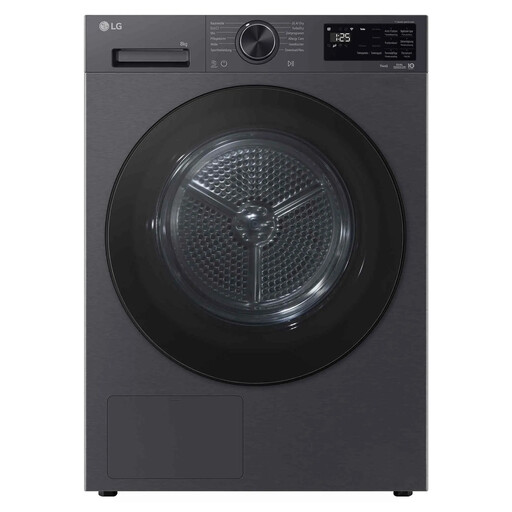 No image available
The stated 8 kg capacity can help you gauge whether the dryer is suitable for your towel loads.
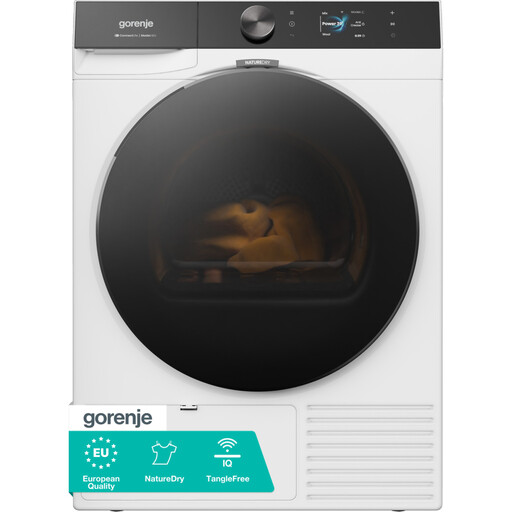 No image available
The 9 kg rated capacity gives you an indication of the size of towel loads the dryer is designed to handle.
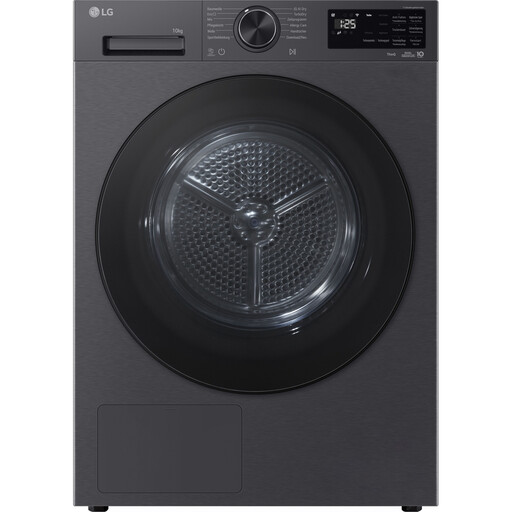 No image available
The stated 10 kg capacity is worth considering if you plan to dry larger towel loads.
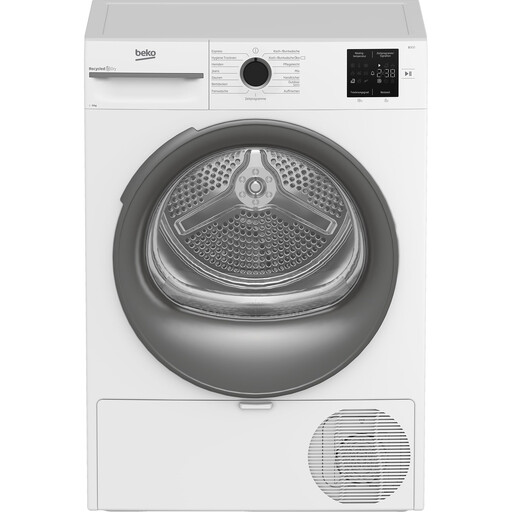 No image available
The 9 kg rated capacity can help you check whether the appliance size suits your usual dry towel loads.
The product name states energy class E.
No. Check the care symbol on each towel: GINETEX distinguishes between normal and lower drying temperatures, as well as textiles that must not be tumble dried. Choose a suitable programme and follow the textile’s care instructions.
Check the dimensions and condensate drainage requirements of the specific model against the space available, and make sure the filters and water container are accessible. Bosch recommends cleaning the fluff filter on the WQG233D40 after every drying cycle. For other appliances, follow the relevant user manual.
Divide the label figure in kWh per 100 Eco cycles by 100, then multiply the result by your expected annual number of Eco cycles and your electricity price in euros per kWh. Towel programmes and different ways of using the appliance may use different amounts of energy, so use your actual usage to work out your personal costs.
Since 1 July 2025, the EU A to G scale has applied to tumble dryers. The European Commission also distinguishes between the ecodesign requirements that apply from this date to newly marketed appliances and existing retailer stock that was placed on the market earlier.
Electrical appliances must not be put in household waste. The German Environment Agency lists taking them to a recycling centre and returning a similar large appliance when buying a new one as options. If your new appliance is being delivered, check the arrangements with the retailer in advance.