Households with a damp clothes airer
If you dry towels in living spaces, bear in mind the extra moisture and the need to ventilate regularly.


A suitably sized heat pump tumble dryer can be a useful addition to a clothes airer if you regularly have towels that are suitable for tumble drying, lack drying space or find that hanging washing raises humidity in your home. If hanging your washing works well and keeping electricity costs as low as possible is your priority, a clothes airer is the better choice: the German Environment Agency describes air-drying as the most energy-efficient way to dry laundry. When buying a tumble dryer, focus on the right capacity, condensation efficiency, energy use per 100 Eco cycles, and the space and maintenance it requires.
If you dry towels in living spaces, bear in mind the extra moisture and the need to ventilate regularly.
If you regularly have larger loads, a suitably sized drum can take some of the pressure off your clothes airer. The key is to choose a capacity that suits the laundry you typically wash.
If you usually hang your towels out to dry and would only use a tumble dryer occasionally, weigh up the electricity use, space and maintenance against the added convenience.
A good fit if: you have enough space, can ventilate effectively and keeping electricity costs low matters more to you than having towels ready quickly.
The trade-off: the clothes airer is occupied while your washing dries; if you use it in living spaces, regular ventilation is important.
A good fit if: you often have towels suitable for tumble drying, need your clothes airer for other things or find hanging washing in your living space inconvenient.
The trade-off: the appliance needs a permanent spot, electricity and regular maintenance; a condenser tumble dryer can also release moisture into the room.
Choose a drum size to suit your usual towel loads, and compare energy use and installation details on the same label basis.
| What matters | What to check when buying | Who should pay particular attention? |
|---|---|---|
| Room humidity | Check the condensation efficiency or condensation class on the current EU label, as well as the ventilation available where you plan to install the appliance. | If I want to hang fewer damp towels in my living space, I want to know how much water the appliance collects. Around 31% of consumers put room humidity first. |
| Suitable capacity | Compare your usual towel loads with the maximum capacity and the information provided for the relevant programme. | If I have several towels suitable for tumble drying, I want a drum that suits my regular load. Around 25% of consumers focus above all on the number of towels. |
| Electricity use | Compare the current A–G label and the figure in kWh per 100 Eco cycles; calculate your own usage and electricity tariff separately. | If I only want to use a tumble dryer occasionally, I want to weigh the extra electricity use against air-drying. Around 25% of consumers prioritise running costs. |
| Space, noise and maintenance | Check the appliance dimensions and delivery route, as well as the noise level and care instructions for the specific model. | In a small flat, I need a suitable spot, a clear noise rating and filters that are easy to reach. Around 19% of consumers put ease of installation first. |
Since 1 July 2025, the A to G scale has applied to energy labels for tumble dryers. Labels from different generations cannot be compared directly.
Compare specific appliances using the same current label basis and the figure in kWh per 100 Eco cycles.
According to the German Environment Agency, a large tumble dryer that is often only partly full may use more energy per kilogram of laundry than an appliance loaded to its intended capacity.
Choose a capacity to suit your usual loads of towels that are suitable for tumble drying, and follow the guidance for the relevant programme.
Condensation efficiency varies between appliances. Some of the moisture removed from the laundry may be released into the room.
Check the condensation efficiency and installation guidance for the specific model; regular ventilation may still be important.
A self-cleaning function does not automatically mean you can skip cleaning the fluff filter. Bosch recommends cleaning the fluff filter after every drying cycle.
Read the care instructions for the specific model before buying, and check that the filters and water container are easy to reach.
Regular filter maintenance takes time in everyday use, so factor it in alongside the space and electricity requirements.
The models below illustrate a range of capacities and features. The details apply to the specific models listed and are not recommendations for each brand’s entire range.
The DV90F09F4SU2 is a 9-kg model with an A energy efficiency class and display controls.
According to Siemens’ product information, the iQ700 WQ46B2D41 combines a 9-kg capacity with a self-cleaning condenser.
According to Bosch, the Serie 8 WQB245B40 is a 9-kg model with Auto Dry and a self-cleaning condenser.
The B3T42240S is an 8-kg model with sensor-controlled drying.
The T1 TWC640WP is an 8-kg model with DirectSensor and DryProtect.
This selection includes heat pump tumble dryers to consider for drying suitable towel loads.
 No image available
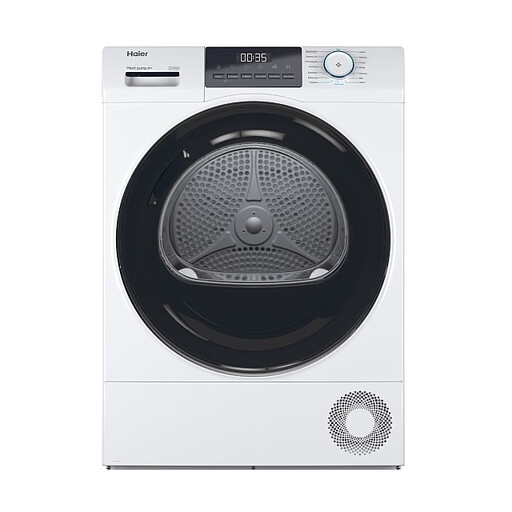
An 8-kg option for households looking to dry suitable towel loads in a heat pump tumble dryer rather than relying solely on a clothes airer.
 No image available
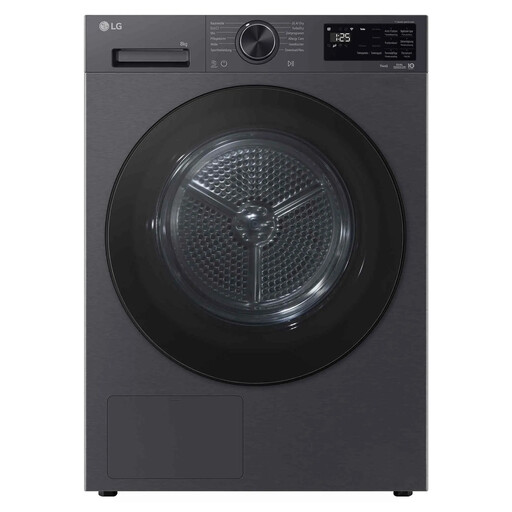
An 8-kg option for shoppers looking for an appliance for suitable towels and wanting to check whether their chosen location is suitable.
 No image available
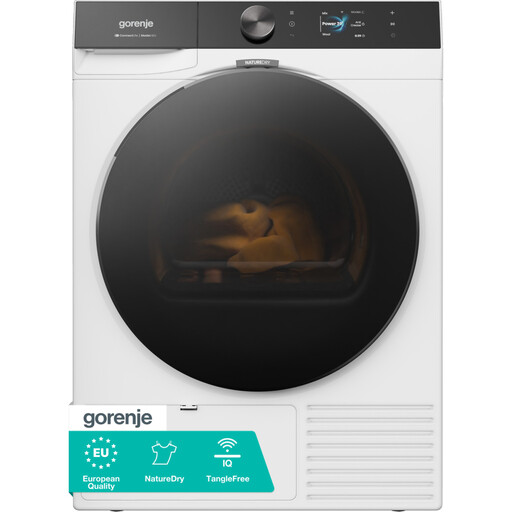
The listed 9-kg capacity may suit households that regularly have larger loads of towels suitable for tumble drying.
 No image available
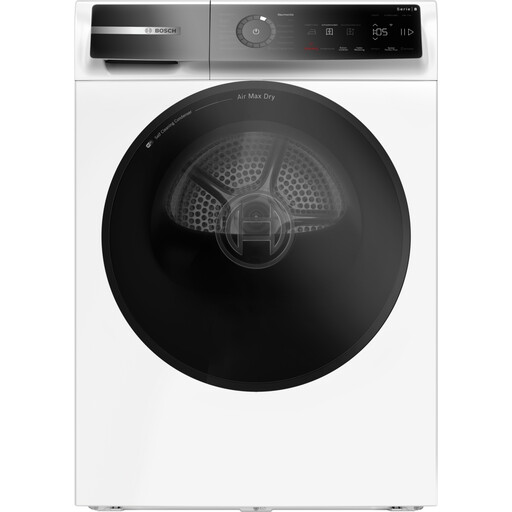
A 9-kg option for larger loads of towels suitable for tumble drying. Before buying, check that the capacity suits the way you usually do your laundry.
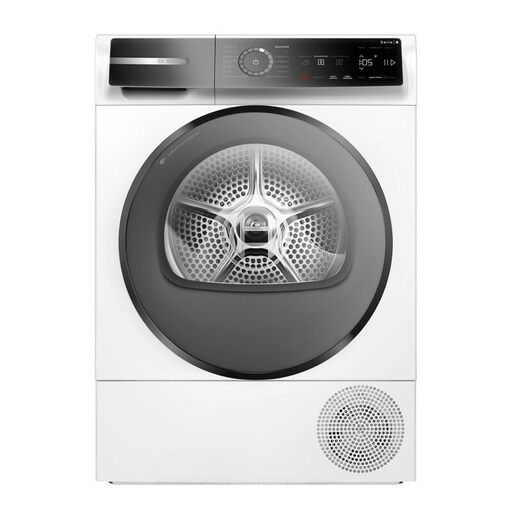 No image available
A 9-kg option for households looking to dry larger loads of towels suitable for tumble drying on a regular basis.
No. Always check the care label on the towel in question. The tumble-drying symbol tells you whether it can be tumble dried and under what conditions; a heat pump tumble dryer does not change these instructions.
The condensation efficiency on the current EU label shows what proportion of the water removed from the laundry is collected. Also check the noise level, appliance dimensions and ventilation available where you plan to install it.
Compare your usual loads of towels suitable for tumble drying with the stated maximum capacity and the loading guidance for the relevant programme. A larger drum is not automatically the best choice if it would often only be partly full.
Divide the figure in kWh per 100 Eco cycles by 100, then multiply it by the number of Eco cycles you expect to run each year and your electricity price per kWh. This is only a guide for other programmes and actual load sizes.
Yes. Bosch recommends cleaning the fluff filter after every drying cycle. Also follow the care instructions for your specific model.