
Lieferung heute & morgen

Qualitätsgarantie

Willkommens-Angebote freischalten: KOSTENLOSE Lieferung | Bis zu 80 % RABATT | Kostenlose 30-Tage-JoyPlus-Testphase
App herunterladen
A heat-resistant glass container with lid needs to handle several jobs in daily life: storing leftovers, transporting meals, freezing food and reheating directly in the oven or microwave. On product pages, terms like "airtight", "leak-proof" or "oven-safe" don't always mean the same thing. What matters is which component actually has that property and under what conditions it applies.
With many models, only the glass container is suitable for high temperatures. Plastic lids made from PP or Tritan, as well as silicone seals, often cannot go in the oven. That's why the product description should clearly state: oven use without lid. With several LocknLock models, heat resistance up to 400 °C is quoted – this figure refers to the glass container without the lid.
In the microwave too, different rules apply depending on the closure. Some lids must be removed completely, others may only sit loosely on top, or have a steam vent. A tightly sealed lid can be damaged by the pressure that builds up.
A glass container with silicone seal can hold liquids reliably if the lid, seal and locking mechanism work together. However, a simple push-on lid is very different from a model with a four-sided locking system. If you want to transport soups, sauces or dressings, you should look for an explicitly stated airtight glass container or a leak-proof closure.
The seal is a wear-and-tear part. You should check it regularly for cracks, deformation and residue. If it's damaged, a previously leak-proof glass container can lose that property.
A high capacity is practical for family portions, but it can take up more room in fridge compartments and kitchen cupboards. For individual meals, 380 to 750 ml is often more convenient, while 1.6 to 2.0 litres is better suited to casseroles, pre-prepared family dishes or larger leftover portions. Stackable, rectangular or square shapes usually make more structured use of the available space than round models.
A borosilicate glass container is often marketed for use in the oven, microwave, fridge and freezer because of its temperature resistance. However, the specific temperature limit still depends on the model. A container rated "up to 400 °C" must not automatically be placed on a hob, an open flame or a direct heat source.
Protection against thermal shock is also important: don't take a container straight from the freezer and put it into a hot oven, and don't place a hot container on a very cold surface or into cold water. Before each use, check the glass and rim for cracks or chips.
When choosing a glass food storage container, you should consider the materials separately:
"BPA-free" refers to the individual product claim and does not replace checking the correct usage temperature.
For a glass meal prep container set, several sizes are useful: small containers for side dishes, medium ones for single portions and large versions for family meals. Also pay attention to external dimensions, stackability and weight. Glass is sturdy but heavier than many plastic alternatives – an important point when transporting to work or commuting daily.
A dishwasher-safe glass container makes cleaning easier. However, check whether this also applies to the lid and seal. With some products, only the glass body is intended for the dishwasher; with others, the lid should be cleaned in the top rack.
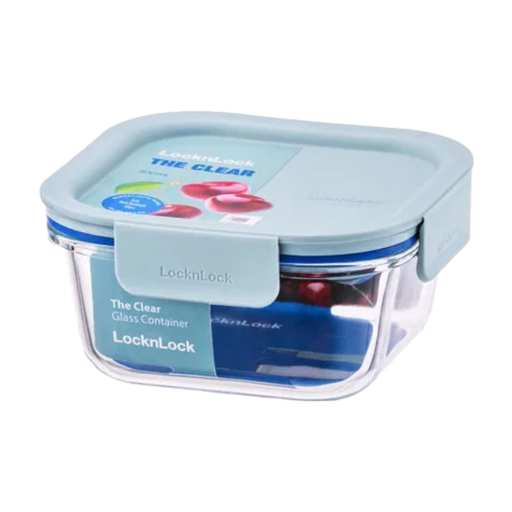
Why this product fits the profile: The square shape and 500 ml capacity make it suitable for single portions, side dishes and first meal prep attempts.
The product specifications explicitly state oven and microwave use without the lid, as well as suitability for the fridge, freezer and dishwasher.
500 ml capacity, square shape, airtight silicone seal and stackable design according to the product description.
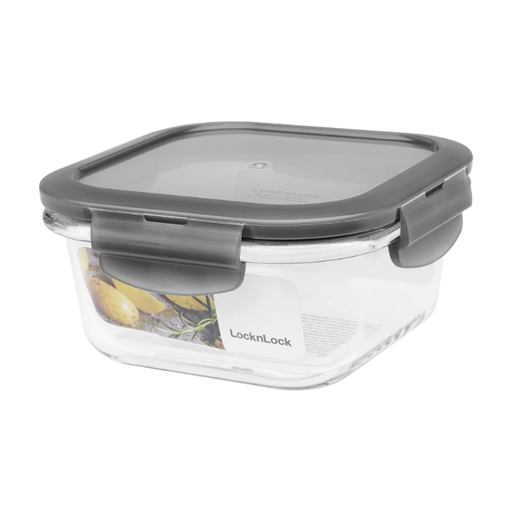
Why this product fits the profile: The borosilicate glass body, the stated temperature limit of up to 400 °C and the four-sided closure appeal to users who compare technical details carefully.
The specifications clearly separate the heat-resistant glass from the lid: for the oven and microwave, the lid should be removed or opened.
Borosilicate glass, four-sided closure, airtight and watertight design, plus suitability for the freezer and dishwasher according to the product data.
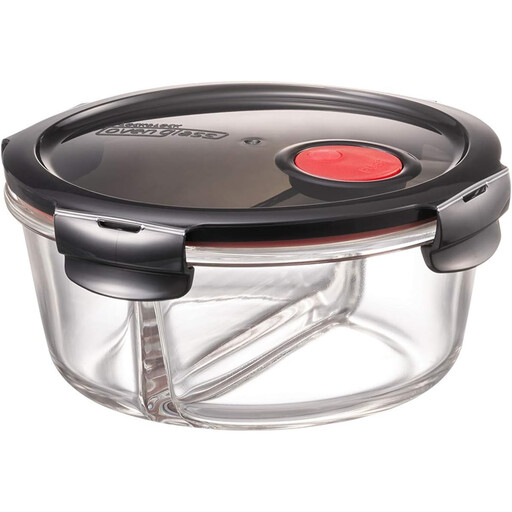
Why this product fits the profile: The round 900 ml container with an integrated divider is ideal for meals with two separate components, as well as for transporting to the office.
The product description highlights the steam vent for the microwave and the need to remove the lid for oven use.
900 ml capacity, integrated divider, steam vent and stated suitability for the freezer and dishwasher.
We've put together a complete, regularly updated list of products that fully meet these strict selection criteria and the safety regulations in force in the EU.
As a rule, only the glass container is intended for the oven. Plastic lids and silicone seals must be removed unless the product description explicitly states otherwise. You should also observe the stated maximum temperature and the exclusion of direct heat sources.
This should be avoided. The sudden temperature change can cause thermal stress and glass breakage. Allow the container to come to a controlled temperature first and follow the manufacturer's usage instructions.
It's not possible to give a fixed lifespan. It depends on drops, scratches, temperature changes, cleaning products and how well the seal is maintained. The glass body should be checked before each use; a worn silicone seal can be replaced on some models.