
Lieferung heute & morgen

Qualitätsgarantie

Willkommens-Angebote freischalten: KOSTENLOSE Lieferung | Bis zu 80 % RABATT | Kostenlose 30-Tage-JoyPlus-Testphase
App herunterladen
A heat-resistant glass food storage container should reliably perform several tasks: storing food in the fridge, transporting prepared meals, freezing leftovers and reheating food without transferring it to another dish. In practice, however, problems are often caused not by the glass itself, but by unclear temperature specifications, unsuitable lids or a poorly fitting shape.
For many products, only the glass container is designed for use in the oven. Plastic lids, seals and locking clips must be removed completely before heating. A food storage container for the oven and microwave is therefore only suitable if the instructions clearly describe the relevant use.
An airtight lid must not simply remain closed in the microwave either. Depending on the model, it may need to be removed, placed on loosely or vented through a steam opening.
Borosilicate glass is designed to withstand higher temperatures, but it can be damaged by sudden changes. A frozen container should not be placed directly into a very hot, preheated oven. Similarly, a hot glass container should not be put straight into cold water or placed on a very cold surface.
Before each use, check the container for cracks, chips and deep scratches. Damaged glass and damaged seals should no longer be used.
An airtight food storage container or leakproof glass container needs a properly positioned seal. Residue on the sealing edge, a fastening that has not clicked into place or a displaced silicone seal can affect the closure. Models with several locking points and a removable seal are practical for soups, dressings and sauces.
A borosilicate glass food storage container is made from a type of glass which, according to the product information, is designed for high temperatures. The LocknLock models featured here are specified as heat-resistant up to 400 °C for the glass container. This specification does not automatically apply to the lid.
Look out for three separate specifications:
A glass container with a lid may be suitable for use in the oven even though the lid is not heat-resistant. For all the glass recommendations below, the lid must be removed before use in the oven wherever this is required by the manufacturer’s instructions.
For snacks, side dishes or small portions, around 180 to 380 ml is sufficient. A container holding 630 to 900 ml is often suitable for individual lunches or leftovers. For family portions and larger dishes, consider models with capacities of 1.0 to 1.3 litres.
Rectangular and square shapes generally make efficient use of shelves and fridge compartments. Round containers may be suitable for liquids or certain fridge shelves. A stackable glass food storage container should have a sturdy lid rim and, ideally, matching dimensions within the same range.
A dishwasher-safe food storage container makes regular use easier. Even so, check whether this applies equally to the lid and seal, and whether the lid may only be cleaned in the top rack.
For transport, a continuous silicone seal and several locking sides are useful. Leave some space for the contents to expand before freezing. Check the relevant minimum temperature, such as −20 °C, in the product information.
The following models mainly differ in volume, shape and features. The stated values are based on the respective product information.
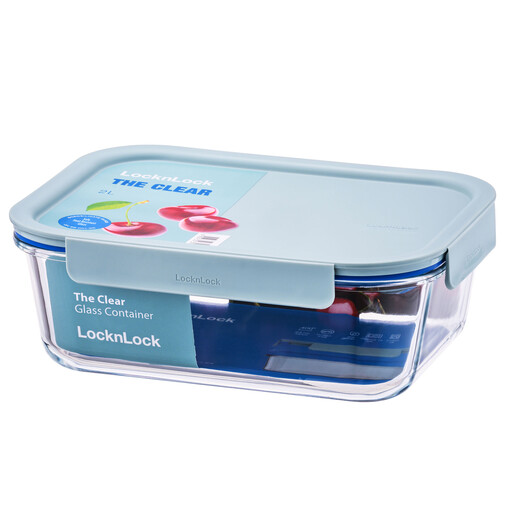
Why this product suits this profile: With a capacity of 380 ml, it is suitable for smaller portions, side dishes, snacks or individual servings of leftovers. According to the product information, the container is suitable for the oven, microwave, freezer and dishwasher; the plastic lid must be removed before heating.
The product description clearly distinguishes between using the glass container in the oven and using the lid, and highlights how to handle significant temperature changes.
380 ml capacity, silicone seal and stackable lid; airtight and leakproof according to the product information.
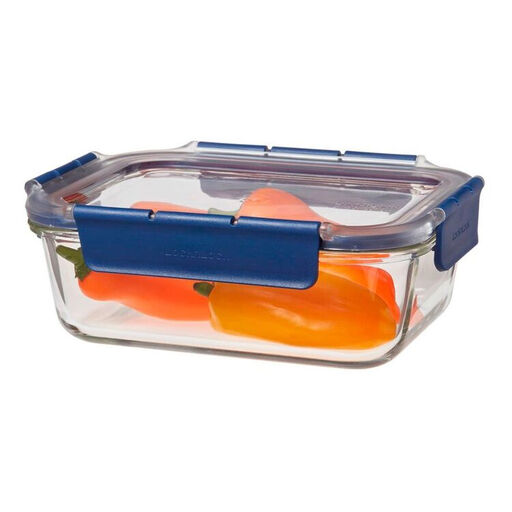
Why this product suits this profile: The 1-litre container combines borosilicate glass with a Tritan lid, silicone seal and four-sided locking system. It is ideal for working people who want to store, transport and reheat meals in portions.
The specifications state the limits separately: up to 400 °C for the glass without the lid, down to −20 °C in the freezer, and cleaning in the dishwasher’s top rack for the lid.
1.0 l capacity, four-sided locking system, stackable 4.8-mm lid rim and borosilicate glass according to the product data.
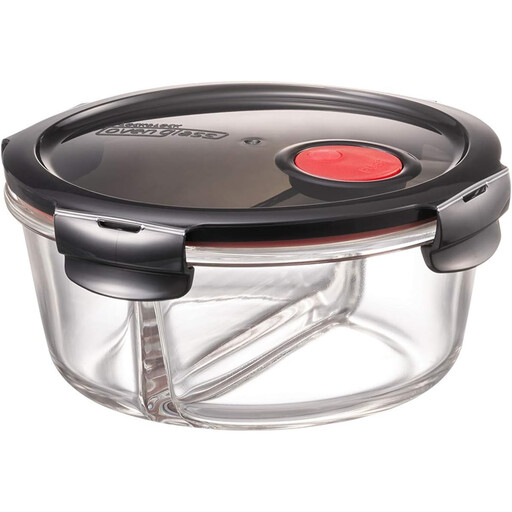
Why this product suits this profile: The integrated divider is designed for meal prep, office lunches or meals with separate components. According to the product description, a steam valve in the lid supports reheating in the microwave.
The instructions specify opening the steam vent when using the microwave and removing the lid completely before placing the container in the oven.
900 ml capacity, divider, steam vent and suitability for use in the oven without the lid, freezer and dishwasher according to the product information.
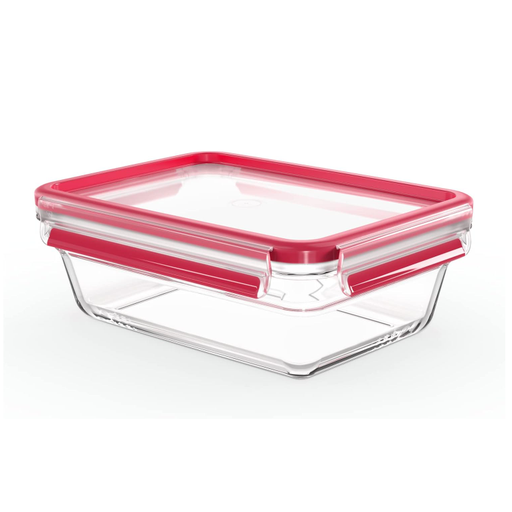
Why this product suits this profile: The larger capacity is suitable for family leftovers, bakes and several portions. The rectangular shape can be practical in the fridge and when storing prepared dishes.
The product information lists use in the oven, microwave and freezer separately, and highlights the airtight seal and dishwasher cleaning.
1.3 l capacity, stackable rectangular design and stated temperature ranges from −40 °C to 420 °C for the intended applications.
We have put together a complete, regularly updated list of products that fully meet these strict selection criteria and the safety regulations applicable in the EU.
Only do this if the manufacturer explicitly permits it. Even borosilicate glass can be damaged by a significant temperature change. It is safer to thaw the container first or allow it to reach room temperature, and to follow the maximum oven temperature stated in the product instructions.
Many models are designed for microwave use, but generally not with the lid sealed shut. Some lids must be removed, while others should simply be placed on loosely or opened via a steam valve. For meals containing a lot of fat, oil or sugar, you should also follow the manufacturer’s instructions.
There is no standard lifespan that applies in every case. It depends on drops, temperature fluctuations, cleaning products and how frequently it is used. The glass container should be replaced if it develops cracks or chips. A brittle, deformed or no longer airtight silicone seal is also a sign that it needs replacing.