
Lieferung heute & morgen

Qualitätsgarantie

Willkommens-Angebote freischalten: KOSTENLOSE Lieferung | Bis zu 80 % RABATT | Kostenlose 30-Tage-JoyPlus-Testphase
App herunterladen
A heat-resistant glass food storage container needs to do several jobs: store food, transport it, freeze it, reheat it in the microwave and, where necessary, cook it in the oven. In practice, unclear temperature ratings, poorly fitting lids or awkward sizes often lead to the wrong purchase.
This buying guide from the Joybuy Product Recommendation Officer gives you a clear, factual breakdown of the key features and shows which type suits different households and everyday situations.
With many products, the temperature rating refers only to the glass container. Plastic lids and silicone seals are usually not suitable for the oven. Microwave guidelines also vary depending on the model: with some containers you must remove the lid completely, while with others you can leave it loosely on with the steam vent open.
An airtight glass container needs a continuous seal and a lid that sits evenly on the rim. Clip-on fasteners on several sides can be more reliable for transporting soups or sauces than a lid that simply sits on top. Before you buy, check the closure type, seal material and care instructions.
A 2-litre container is great for family portions, but it takes up a lot of room in the fridge. For lunch breaks or side dishes, 380 to 750 ml is often more practical. Rectangular and square shapes are easier to arrange in most fridges and cupboards than round ones.
Borosilicate glass is used in several of the models on offer. It is designed for the temperature ranges stated by the manufacturer, but it can still break if knocked or subjected to a sudden temperature change. An oven-safe glass container should therefore never be taken straight from the freezer and placed into a preheated oven, unless the manufacturer explicitly allows it.
Equally important: do not put a hot container into cold water or onto a cold stone surface. This reduces the risk of thermal shock. Always check the specific maximum temperature in the product description and instruction manual.
For transport, a leak-proof glass container, an intact silicone seal and a securely closing lid are essential. Four-sided locking mechanisms or clip systems can hold the lid evenly in place. The seal should be removable or easy to clean thoroughly, as food residue can collect there.
Also check whether the lid is stated as BPA-free and whether it can only be cleaned in the top rack of the dishwasher.
A meal prep glass container should leave enough space so that the lid isn’t pressed down onto the food. For liquids, it’s sensible to leave a gap at the top.
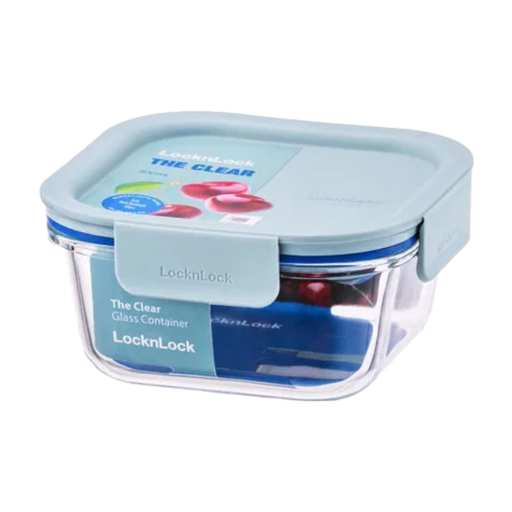
Why this product fits the profile: The capacity is ideal for single portions, side dishes and leftovers. The square shape makes good use of space in the fridge and cupboard.
The product information clearly states that the plastic lid must be removed before use in the oven or microwave. This prevents a common misuse.
500 ml capacity, silicone seal, suitable for fridge, freezer, microwave, oven and dishwasher according to the manufacturer’s instructions.
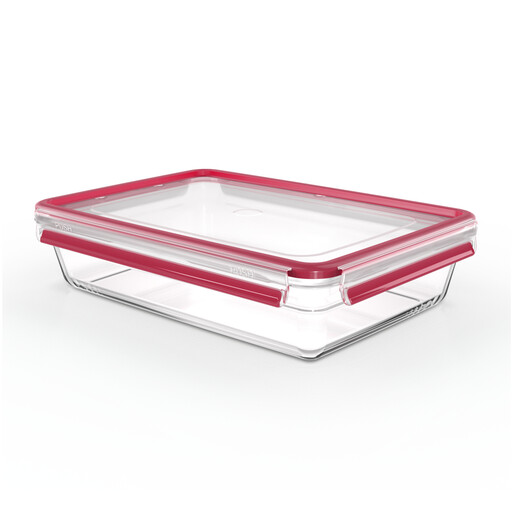
Why this product fits the profile: The large volume is designed for family portions, casseroles and pre-prepared meals. The reinforced rim is said to support stacking of same-size containers.
The clip system addresses the weak point of loose-fitting lids. For oven and microwave use, the lid is removed as per the manufacturer.
3 l capacity, oven-safe without lid up to 420 °C and freezer-safe down to -40 °C according to the product information; dishwasher-safe.
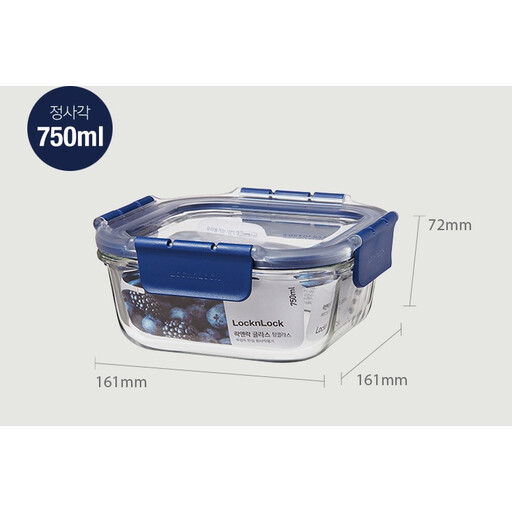
Why this product fits the profile: The square 750 ml version is ideal for meal prep, liquid dishes and users who also want to use the container in an air fryer.
Four-sided locking and a silicone seal address the risk of leaks. For oven, microwave and air fryer use, the lid is removed.
Borosilicate glass, oven-safe without lid up to 400 °C, freezer-safe down to -20 °C, dishwasher-safe and suitable for the air fryer according to the product information.
We’ve put together a full, regularly updated list of products that meet these strict selection criteria and comply with EU safety regulations.
A dishwasher-safe glass container makes daily cleaning much easier. However, you should still remove the seals regularly, rinse them and let them dry completely. Check the glass and rim for cracks, chips or deep scratches before each use. Damaged containers should no longer be used.
For the microwave: a microwave-safe glass container should only be used according to the manufacturer’s instructions. Steam vents must be open if this is specified. Always handle hot containers with oven gloves. The glass must not be placed on hobs, open flames or direct heat sources.
This should generally be avoided unless the instructions explicitly allow it. The sudden temperature change can cause thermal shock. Allow the container to come to room temperature first and always follow the guidelines for freezer temperature and oven use.
It’s not possible to give a reliable lifespan. It depends on usage, knocks, temperature changes and care. Check the glass and seal regularly. If you notice cracks, chips or a permanently deformed seal, it’s time to replace it.
Yes, provided the container is specifically described as airtight or leak-proof and the lid is correctly locked. Do not fill liquids right to the rim. Before transporting, it’s a good idea to do a quick leak test over the sink.