
Lieferung heute & morgen

Qualitätsgarantie

Willkommens-Angebote freischalten: KOSTENLOSE Lieferung | Bis zu 80 % RABATT | Kostenlose 30-Tage-JoyPlus-Testphase
App herunterladen
Heat-resistant glass food storage containers need to do more than just look good. They should keep leftovers in the fridge, transport meals, be reheated in the microwave and, ideally, survive the switch between the freezer and the oven. At the same time, the lid must not leak during transport.
Many poor purchases come down to three typical pitfalls:
Borosilicate glass has a relatively low thermal expansion and is therefore often used for oven-safe glass dishes and microwave-safe glass containers. However, the specific temperature limit depends on the product. For several LocknLock Boroseal models, the glass container is rated for use up to 400 °C without the lid.
This rating does not mean the container can be heated arbitrarily. The following are generally not suitable:
Before buying, you should also check whether the container can be placed on a cold worktop after removal. Manufacturer instructions often recommend a heat-resistant mat.
For liquid foods, glass containers with a lid and a continuous silicone seal are a sensible choice. Four-sided click closures distribute the clamping pressure and, when used correctly, can create an airtight and watertight seal. On some models, the seal can be removed for cleaning.
It is important to distinguish between:
A lid with a steam vent must be fully closed before transport. Before buying, it is also worth checking the availability of replacement silicone seals.
For individual side dishes or small leftovers, 380 to 500 ml is often enough. Around 630 to 750 ml is suitable for lunch portions, salads and smaller meal prep dishes. For family portions or several components of a meal, containers of roughly 900 ml to 1 litre are more practical.
Stackable glass containers save space when the lids and bases are designed for it. Square shapes often use cupboard and fridge space efficiently, while rectangular models fit well into work bags. Round versions with a divider can separate different foods in one meal prep container.
When it comes to cleaning: the glass container is often dishwasher-safe, but the lid is only suitable for the top rack or hand washing only. The seal and lid should be completely dry before reassembling. BPA-free lid materials such as polypropylene or Tritan are listed separately in the respective product details.
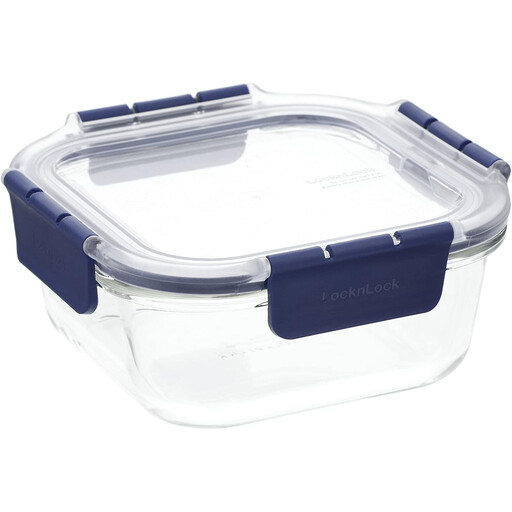
Why this product fits the profile: The capacity is suitable for smaller portions, dry foods and individual side dishes. The lid with a tab is straightforward to use for everyday purposes.
The product details mention an airtight seal as well as suitability for the freezer, microwave without lid and dishwasher. This makes important limitations visible rather than advertising with a blanket “suitable for everything”.
380 ml capacity, tab closure, BPA-free according to product details, and suitable for freezer and microwave without lid.
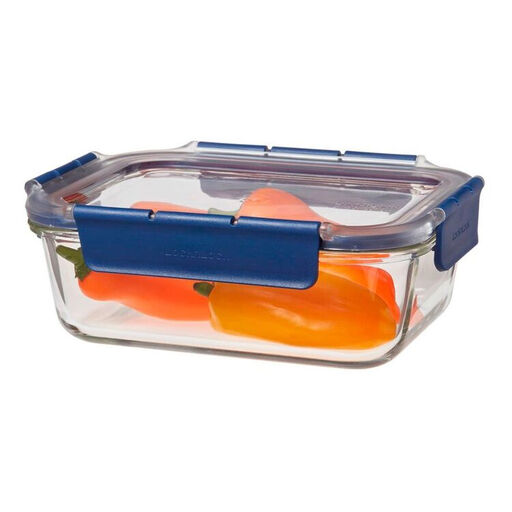
Why this product fits the profile: The 1-litre container is designed for larger portions, family leftovers and regular meal prep. The rectangular shape allows stacking in the fridge and freezer.
The details clearly separate between the glass container and the lid: oven and microwave are intended for use without the lid. The four-sided closure with removable silicone seal also addresses cleaning and leak protection.
1,000 ml, borosilicate glass, up to 400 °C without lid, freezer storage down to -20 °C and stackable lid with 4.8 mm rim according to the product description.
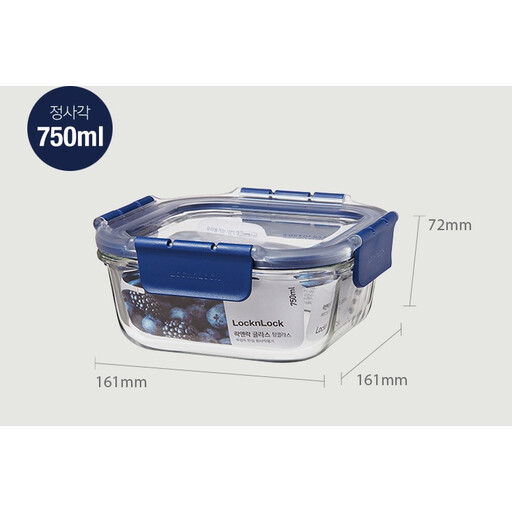
Why this product fits the profile: The square shape is suitable for regular use, deeper dishes and the combination of oven, microwave, air fryer and freezer – each according to the lid instructions.
The product description explicitly advises removing the lid when heating. This prevents misinterpretation of the “oven-safe” and “microwave-safe” claims.
750 ml, four-sided closure, silicone seal, stackable design, up to 400 °C without lid and freezer storage down to -20 °C according to product details.
We have put together a complete, regularly updated list of products that fully meet these strict selection criteria and the safety regulations in force in the EU.
That depends on the manufacturer’s instructions and the temperature difference. A frozen glass container should first be allowed to thaw or come to room temperature. Direct changes from very cold to very hot can cause stress and cracks, even with borosilicate glass. The lid must be removed before use in the oven.
Many models are suitable for the microwave, but usually without a fully closed lid. Some lids have a steam vent that must be opened. The specific instructions from the respective manufacturer are what matter. Plastic and silicone parts should not automatically be considered microwave-safe.
A fixed lifespan cannot be given across the board. It depends on temperature changes, drops, scratches, dishwasher cycles and the care of the seal. The glass should be checked for cracks or chips before each use. Damaged containers should no longer be used. If the seal’s effectiveness diminishes, a suitable replacement seal can be useful, provided one is available.