
Lieferung heute & morgen

Qualitätsgarantie

Willkommens-Angebote freischalten: KOSTENLOSE Lieferung | Bis zu 80 % RABATT | Kostenlose 30-Tage-JoyPlus-Testphase
App herunterladen
Storing leftovers, freezing meals or heating food directly in the container – heat-resistant glass food storage containers can handle several kitchen tasks at once. However, glass storage containers differ significantly in material, closure, temperature range and everyday practicality. A careful check of the product details will help you avoid a bad buy.
With many glass containers that come with a lid, only the glass base is suitable for the oven. Plastic lids, Tritan lids and silicone seals must be removed before heating. In the microwave, too, different rules apply depending on the model: some lids must be taken off, others may be placed loosely on top or have an open steam vent.
If you overlook this limitation, you could damage the lid or use the container incorrectly. The wording oven-safe up to 400 °C without lid is therefore more informative than a general reference to “heat-resistant glass”.
A lid with four locking clips, a silicone seal or a snap-lock mechanism can improve the seal. What really matters, though, is whether the manufacturer explicitly describes the container as airtight and leak-proof. Also check whether the seal is removable. A detachable silicone seal can be cleaned more thoroughly and inspected for wear.
Even borosilicate glass is no guarantee against sudden temperature changes. Putting a frozen glass freezer container straight into a hot oven can cause thermal shock and cracks. Likewise, a hot container should not come into immediate contact with cold water. Damaged, chipped or cracked glass containers should no longer be used.
A borosilicate glass storage container model is often marketed for use in the oven, microwave and freezer because of its temperature resistance. However, the specific suitability still depends on the manufacturer’s instructions. Some of the products listed state a maximum oven temperature of 400 °C without the lid, while the EMSA Clip & Close Glass Food Storage Container is described as suitable up to 420 °C without the lid.
These values do not automatically apply to the lid or to direct heat sources. Hobs, open flames and grill functions should only be used if expressly permitted. In the product details provided, use on the hob or over an open flame is excluded.
For soups, sauces and prepared meals, an airtight glass container with a suitable silicone seal makes sense. Four-sided locking mechanisms or clip closures can press the lid evenly. When choosing, you should consider the following points:
A microwave-safe glass container is therefore not automatically usable with the lid closed. During cooking, pressure can build up inside the container.
For side dishes or single portions, around 380 to 500 ml is suitable. 630 to 750 ml often works for larger meal-prep portions, while 900 ml to 1 litre is ideal for complete meals or several components. Round containers can be practical for certain foods; square and rectangular shapes often make better use of fridge and cupboard space.
Stackable glass containers save space when the lids and base dimensions are matched. A raised lid rim can provide extra grip when stacking. Still, pay attention to the external dimensions, especially in narrow fridge compartments.
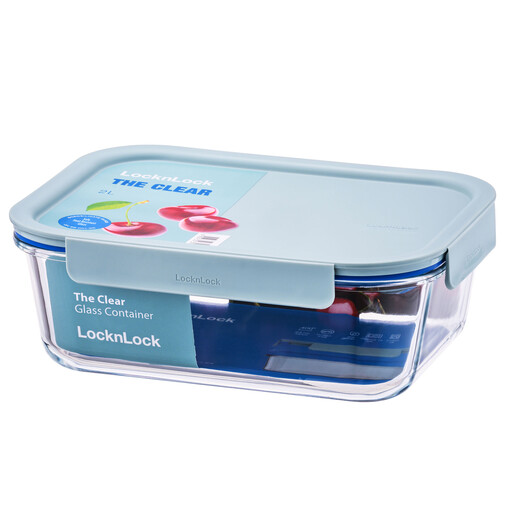
Why this product fits the profile: The capacity is ideal for small portions, side dishes and leftovers. According to the product details, the container is suitable for the oven, microwave, fridge, freezer and dishwasher.
The product details explicitly state: remove the lid before using in the oven or microwave. This makes the usage instructions much clearer.
380 ml capacity, airtight silicone seal and stackable design.
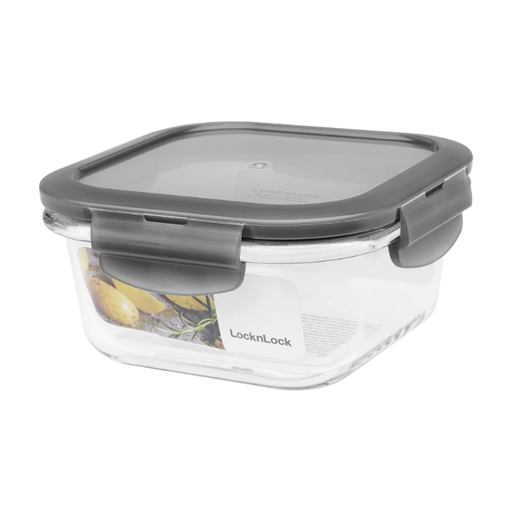
Why this product fits the profile: Borosilicate glass, a rectangular shape and a stated oven suitability of up to 400 °C without the lid make this a good match for users who want a container for both storage and heating.
The details clearly distinguish between the glass container and the lid: for the oven and microwave, the lid is removed; the lid is described as hand-wash only.
Borosilicate glass, 500 ml, leak-proof closure and stackable square format.
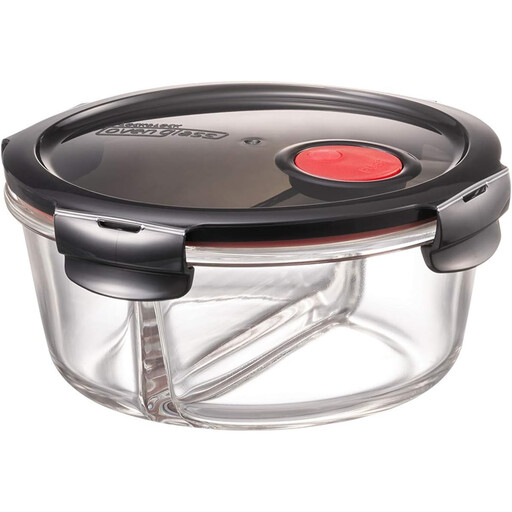
Why this product fits the profile: The round container offers 900 ml volume, an integrated divider and a steam vent in the lid. This is practical for keeping components separate and for larger meals.
The usage instructions mention the open steam vent for the microwave and the need to remove the lid completely for the oven.
900 ml capacity, integrated divider and steam vent for heating.
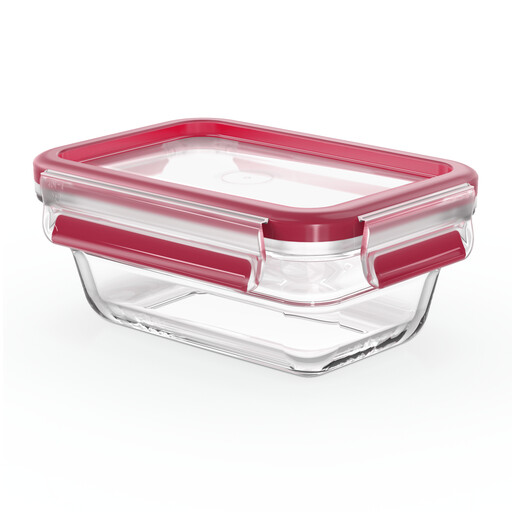
Why this product fits the profile: This model is designed for repeated meal prep, freezing, heating and cleaning. The details state a freezer suitability down to -40 °C and an oven suitability up to 420 °C without the lid.
The reinforced rim and stacking edge are described as being designed for more stable stacking of containers of the same size.
0.45 l capacity, stacking rim and, according to the product description, fully dishwasher-safe.
We’ve put together a complete, regularly updated list of products that fully meet these strict selection criteria and the safety regulations in force in the EU.
This should be avoided. Allow the container to thaw or come to room temperature first, unless the manufacturer’s instructions explicitly state otherwise. The sudden change from extreme cold to high heat can cause thermal stress and cracks.
That depends on the specific lid. With the models mentioned, the lid sometimes needs to be completely removed. For a container with a steam vent, this must be opened before heating. The manufacturer’s instructions are key; a closed lid should not be heated without the appropriate approval.
The lifespan depends on impacts, temperature changes, dishwasher use and the condition of the seal. Glass containers should be checked for cracks and chips before each use. Worn silicone seals can be replaced depending on the model. If the glass is damaged, the container should no longer be used.