
当日/次日达

品质保障

开启新人专享福利: 全场免邮 | 低至 2 折 | 免费试用 30 天 JoyPlus 会员
下载 Joybuy
A heat-resistant glass food storage container often needs to perform several tasks: storing leftovers in the fridge, freezing portions, reheating food in the microwave and transporting meals to work. However, not every model meets all these requirements equally well. The key considerations are therefore not just capacity, but also the combination of glass type, lid, seal and permitted temperature ranges.
A plastic lid with a silicone seal often must not be used in the oven or microwave. For several of the products mentioned here, the lid must be removed completely before heating. A microwave-safe glass container is therefore not automatically suitable for use with the lid closed.
An airtight glass container can close reliably when stored upright. When transporting liquid foods, the design of the closure and the correct positioning of the seal are also important. A removable silicone seal is easier to clean thoroughly, but must be refitted correctly after washing.
Borosilicate glass is not indestructible either. Moving it straight from the freezer into a hot oven, or placing a hot container on a cold surface, can cause thermal shock. Before use, the glass and its contents should be brought to a suitable temperature. Cracks, chips or sharp edges are clear reasons not to use the container.
Borosilicate glass is used in many heat-resistant food storage containers. It is designed for the temperature ranges specified by the manufacturer. According to the product descriptions, specifications such as “up to 400 °C” for the LocknLock Boroseal models apply to the glass body without the lid.
Check the following before buying:
An ovenproof glass container must not be used on a hob, over an open flame or on a direct heat source unless this is expressly permitted.
For leftovers, soups and meal prep, a glass container with a lid and a well-fitting silicone seal is practical. Four-sided closures or clip systems can press the lid evenly against the rim. However, this does not replace checking for damage.
Look out for:
Product claims such as “100% leakproof” should be understood as manufacturer specifications and supported by correct use.
630 ml is often suitable for individual meals or smaller portions. A 1-litre container offers more room for prepared dishes, while 2 litres is suitable for family portions or larger quantities. The external dimensions are just as important as the volume when it comes to fridges and kitchen cupboards.
A stackable food storage container makes more efficient use of space. Rectangular shapes can be arranged neatly in many fridge compartments. Square models can be useful for side dishes, desserts or individual meal-prep components. An integrated divider, as found in some round models, prevents different foods from mixing.
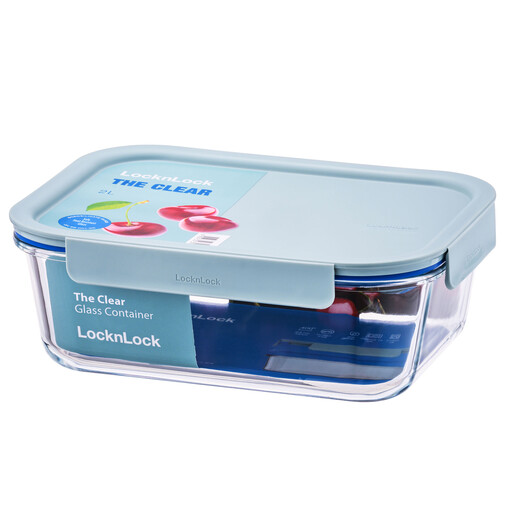
Why this product suits this profile: The compact capacity is ideal for small portions, side dishes and leftovers. According to the product details, the container is suitable for the fridge, freezer, microwave and dishwasher.
The clip closure with silicone seal is designed for airtight storage. The lid must be removed before heating.
380 ml capacity, rectangular shape, BPA-free construction according to the product details, and dishwasher-safe cleaning.
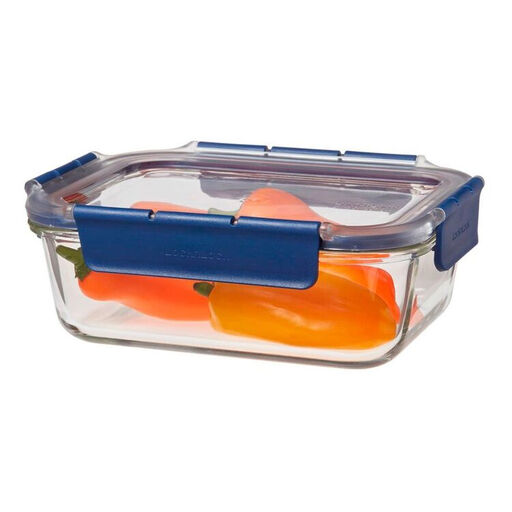
Why this product suits this profile: The 1-litre container combines borosilicate glass with a four-sided closure system. It is suitable for larger individual portions, office lunches and food storage.
The temperature limits are clearly specified: up to 400 °C for the glass body without the lid, and down to −20 °C for the freezer. The lid must not be used in the oven or microwave.
Borosilicate glass, stackable design, transparent Tritan cover and removable silicone seal according to the product description.
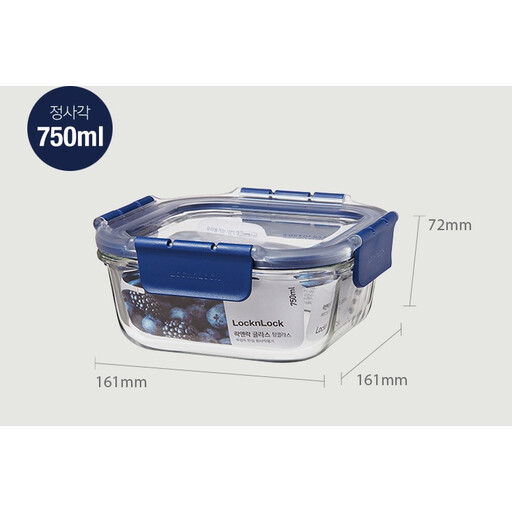
Why this product suits this profile: The square shape, deep interior and stated suitability for use in an air fryer without the lid make it a good choice for frequent reheating and space-saving storage.
The instructions clearly define the limits of use: remove the lid before heating, avoid sudden temperature changes and check the glass for damage before every use.
750 ml capacity, four-sided locking system, freezer suitability down to −20 °C and stackable design according to the product details.
We have put together a complete, regularly updated list of products that fully meet these strict selection criteria and the safety regulations applicable in the EU.
This is generally not recommended. The rapid temperature change can create stress in the glass. Check the manufacturer’s instructions and allow both the container and its contents to reach a suitable temperature first.
This depends on the lid material and the product’s approval for use. According to the product details, the lids of the LocknLock models mentioned here must be removed before use in the microwave, oven or air fryer. An exception with a steam vent may only be used in accordance with the instructions.
It is not possible to give a reliable fixed lifespan. With careful handling, the glass body can be used for a long time, while silicone seals may wear out through frequent washing, deformation or cracking. Regular visual inspections and replacing damaged seals will extend the safe service life.