A folding airer with heated bars is worth considering if you regularly need to dry workwear indoors and have the space, a suitable socket and care-label approval. If you can avoid the extra electricity use and have more time for drying, an unheated airer is an alternative; the German Environment Agency describes drying on an airer or washing line as particularly energy-efficient. Either way, you’ll need to air the room regularly to clear the moisture.
Who is a heated airer suitable for?
Anyone who needs their workwear again soon
If there’s not much time between shifts, heated bars may be an option. Check that the particular design is suitable for your fabrics, available space and socket. A manufacturer’s specifications don’t guarantee a particular drying time.
Anyone with limited shared drying space
In a shared flat, you’ll need to consider both the space the airer takes up when open and where you can store it afterwards. If you have a large load of washing, it’s also important to check how much usable drying space the specific model offers.
Anyone weighing up room humidity and electricity use
If you can only dry washing indoors, ventilation and the energy use of a heated appliance should factor into your choice. A heat source on the airer won’t remove moisture from the room by itself.
What should you look for when buying?
First, check that the care label allows heat and the intended drying method. Then measure the space available when the airer is open and weigh the electricity use against the benefits of an active heat source.
| What matters |
What to check before buying |
Who is it important for? |
| Drying workwear in time |
Drying method, rated power and care label; don’t infer a specific drying time from the wattage. |
If I need workwear between shifts that are close together, I check the design and care instructions rather than relying on a promise about drying time. Around 26% of consumers put this time requirement first. |
| Floor space and storage |
Dimensions when open and folded, as well as the height available for garments. |
If I share a hallway or room, the airer mustn’t permanently take up space we’ve agreed to share. Around 21% of consumers pay particular attention to limited space in a shared flat. |
| Humidity in the room |
Whether you can air the room regularly and hang washing with enough space between items. |
If I dry washing indoors, I need a way to clear the extra moisture. This is a priority for around 21% of consumers who are most concerned about room humidity. |
| Electricity use |
Rated power and actual running time; don’t compare different designs on wattage alone. |
If I want to keep extra electricity use to a minimum, an unheated airer is an option, provided there’s enough time for the washing to dry. Around 16% of consumers prioritise electricity use. |
| Fabric care |
Care symbols for natural drying and the instructions for the specific appliance. |
If some workwear needs to dry flat or without extra heat, I need a suitable space for it. Around 16% of consumers put caring for their clothes first. |
Avoid common buying mistakes
-
Heated doesn’t mean you can skip airing the room
Wet washing adds moisture to your home. A heated airer won’t carry the evaporated water outside by itself.
Only set up the appliance somewhere you can air the room regularly during and after drying.
-
Don’t assume wattage tells you how long drying takes
Manufacturers specify different rated power outputs for different designs. These figures don’t guarantee a particular drying time or allow you to compare energy use for each drying cycle.
Take actual running time into account, and don’t accept promises about drying time or gentle fabric care without checking them.
-
Don’t compare folded dimensions alone
An airer may take up little space when folded but still block a shared walkway or spot while in use.
Before choosing, measure both the space needed to set up the specific model and the space available to store it.
-
Don’t assume washable means suitable for warm bars
Being washable doesn’t tell you whether a garment can lie on or hang over warm bars. The care label may also specify a particular position for drying.
Check the label on each item and the appliance instructions. If you’re unsure whether a fabric can withstand heat, use the unheated drying method specified on the label.
Key brands at a glance
Adler
The folding AD 7821 airer is one option for indoor use where storage space matters too.
- Adler lists 18 heated elements and 220 W for this model, with dimensions of 148 × 52,5 × 90 cm when open and 113 × 52,5 × 8 cm when folded.
- Claims about shorter drying times or suitability for delicate fabrics are the manufacturer’s statements, not independent test results. The care label remains the key guide.
InnovaGoods
The range includes heated bars on the Warmmat and a warm-air blower with a cover on the Dupledry.
- InnovaGoods lists 230 W, 20 bars, a temperature setting from 35 to 60 °C and a timer for the Warmmat.
- The manufacturer lists 1.200 W for the Dupledry. The different designs and rated power outputs don’t mean you can compare drying times or how gentle they are on fabrics; related product claims are made by the manufacturer.
Leifheit
Unheated airers are an alternative when drying space matters more than active heat.
- Leifheit lists 21 m of drying length and a load capacity of 42 kg for the Pegasus RockSolid.
- These manufacturer specifications for a particular model don’t guarantee a specific drying time or mean it will suit every small room.
Brabantia
The unheated HangOn airer is an option for hanging work shirts and drying items flat.
- Brabantia lists 15 m of drying length, four hanger hooks and foldable storage for the HangOn.
- This model isn’t heated. Check how much floor space you’ll need and leave room between garments.
Vileda
The range includes extendable airers and indoor tower airers to compare if active heat isn’t a priority.
- The different designs offer a range of ways to balance drying space against the space available.
- Features vary by model; the range as a whole doesn’t support any general claims about drying performance.
Related products from Joybuy
The products below include heated folding airers and portable warm-air dryers. Compare the design, space required, rated power, care instructions and whether you can air the room.
 No image available
Heated folding airer, 45–55 °C, 144 × 53 × 96 cm
An option if you want to dry workwear on a heated folding airer.
The title gives a temperature of 45–55 °C; the product details list 230 W, dimensions of 144 × 53 × 96 cm and a load capacity of up to 10 kg. Air the room when drying indoors and follow the care label.
View at Joybuy
 No image available
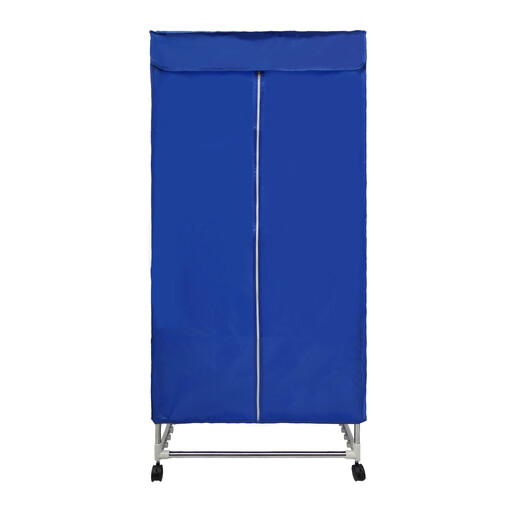
Portable electric clothes dryer with warm air and cover, blue
This design may suit you if you’re looking for a portable dryer with warm-air circulation and a cover.
The product details list 1.200–1.500 W, a timer and a folding frame with an Oxford fabric cover. Air the room when drying indoors and follow the garment care instructions.
View at Joybuy
 No image available
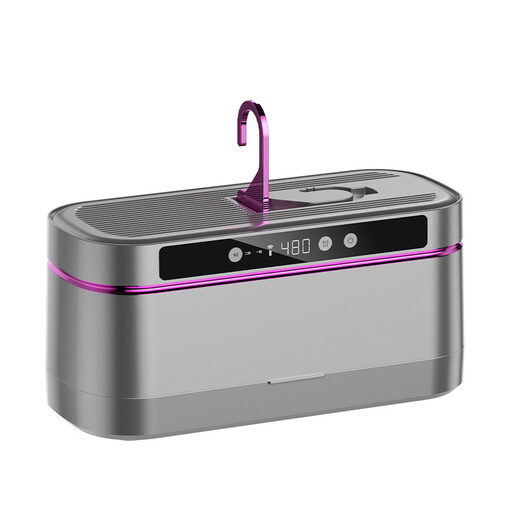
Portable clothes dryer, 400/600 W, timer
A compact dryer for small homes if timed operation is important to you.
The product details list two power settings, 400 W and 600 W, and a timer with 1-, 2- or 4-hour settings. These figures don’t tell you how long a particular load will take to dry. Air the room and follow the care label.
View at Joybuy
 No image available
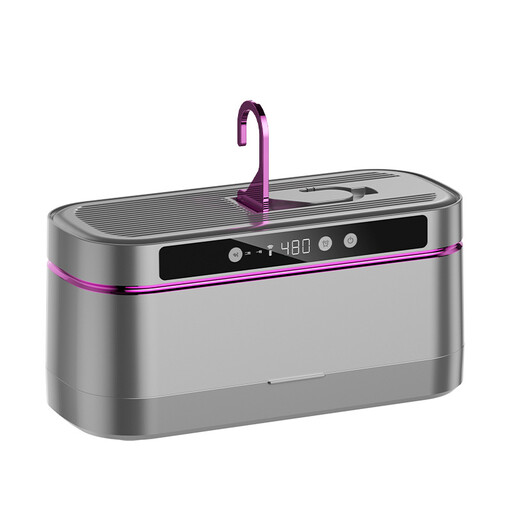
Compact portable clothes dryer with timer, 220–240 V
An option for smaller loads if you’re looking for a compact dryer with warm-air circulation.
The product details specify 220–240 V compatibility and several timer programmes. The air outlet and nozzle get hot during use: don’t cover them or touch them directly, and don’t leave the appliance unattended. Air the room and follow the care label.
View at Joybuy
 No image available
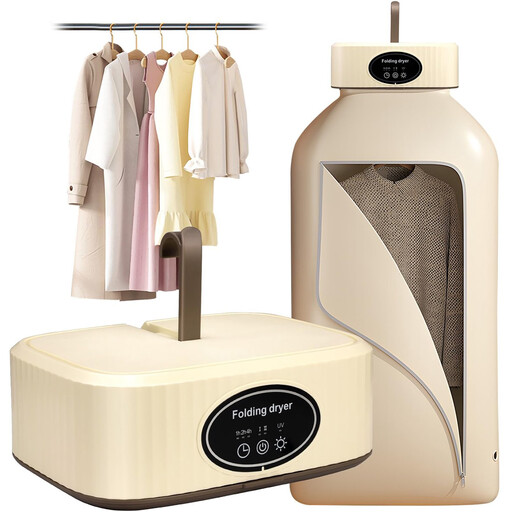
Folding portable clothes dryer for small homes
This folding design may appeal if you’re looking for a portable dryer for a small home.
The product details list warm-air circulation and use for drying clothes. Air the room when drying indoors and check the care label for each item of workwear.
View at Joybuy
Frequently asked questions
Do I need to air the room when drying clothes in a shared bedroom, even with a heated airer?
Yes. The German Environment Agency identifies wet washing as a source of moisture in the home and recommends airing the room regularly in these circumstances. A heating element won’t carry the moisture outside by itself.
Can I put any washable workwear on warm bars?
No, being washable doesn’t necessarily mean it’s suitable. Read the care label for each item and the appliance instructions; for example, the label may specify line drying or drying flat.
What does the CE marking mean on a mains-powered airer?
CE marking is required for electrical equipment covered by the EU Low Voltage Directive, generally 50 to 1.000 V AC. The European Commission and Your Europe explain that the mark indicates the manufacturer’s declaration that the product meets the relevant requirements; it isn’t an independent quality mark. The mark alone doesn’t prove that a particular product listing meets all the requirements.


