What should you look for when buying?
First, check how you can spread out your typical weekly wash. Then decide whether heat is right for your leggings’ care instructions and your drying setup.
| Buying consideration |
What to check |
Who is it important to? |
| Usable space |
Check the drying length, clearances and wing height against the clothes you want to dry. |
If I’m hanging leggings, T-shirts and larger items together, I need enough usable rails and space between them. Around 28% of consumers prioritise space for a mixed weekly wash. |
| Leggings care |
Read the care label and only plan for direct contact with heat if the label allows it. |
With stretch leggings, I want to follow the care label rather than assume direct contact with heat is suitable. Around 22% of consumers put caring for their leggings first. |
| Drying time |
Check whether the heat reaches the rails in use and whether you can hang the washing with space between items. |
If my washing regularly needs to dry indoors in good time, drying time matters, but I don’t expect a guaranteed timeframe. Around 22% of consumers prioritise this consideration. |
| Floor space and room humidity |
Consider the dimensions when open and folded, as well as how you’ll ventilate the room. |
In a small flat, the airer needs to fit while clothes are drying and be easy to put away afterwards. The room also needs a way to release moisture. Around 17% of consumers prioritise space and where the airer will stand. |
| Electricity use |
Factor in the rated power, actual running time and your own price per kilowatt-hour. |
If my washing dries without extra heat, I’d rather avoid using electricity for the airer and accept a longer drying time if needed. Around 11% of consumers put electricity costs first. |
Joybuy products for mixed washing
The Joybuy products below include freestanding and folding options for mixed washing, including a clothes airer with a heating function.
 No image available
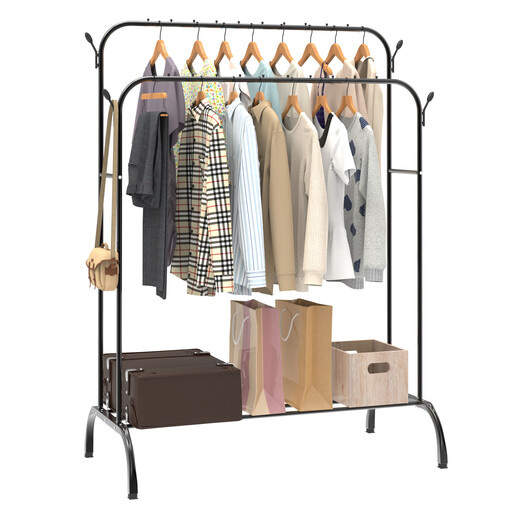
Freestanding clothes rail with double hanging rail and shelf
The double rail gives you a way to spread different items out on a freestanding frame, with a shelf underneath.
View at Joybuy
 No image available
Folding clothes airer with heating function, 144 × 53 × 96 cm
A choice for mixed washing if you’re looking for heated rails. For leggings, only plan for direct contact with heat if the care label allows it.
Stated temperature range: 45–55 °C. Check the specifications and documentation for the exact version before buying.
View at Joybuy
 No image available
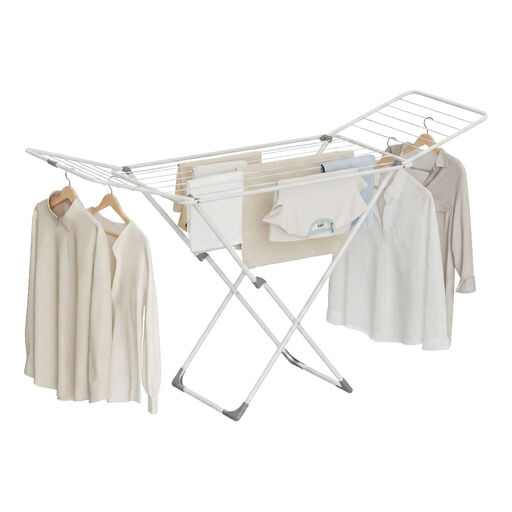
SONGMICS clothes airer with two folding wings
The folding wing design gives you a way to spread several items out on one airer.
View at Joybuy
 No image available
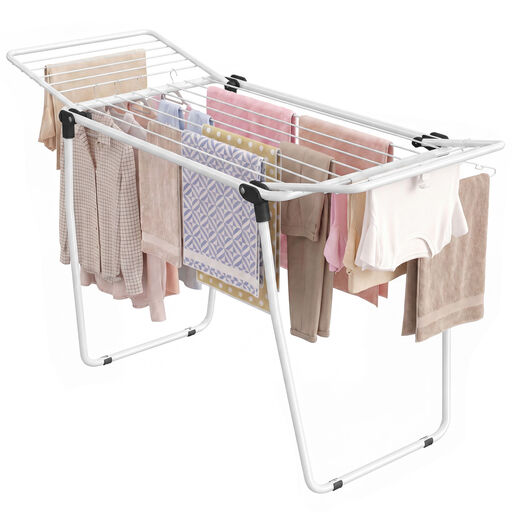
SONGMICS folding wing clothes airer, matt white and dove grey
The wing design is suited to spreading out mixed washing, and the dimensions help you check whether it will fit your space.
Dimensions when open: 158 × 53 × 93 cm.
View at Joybuy
 No image available
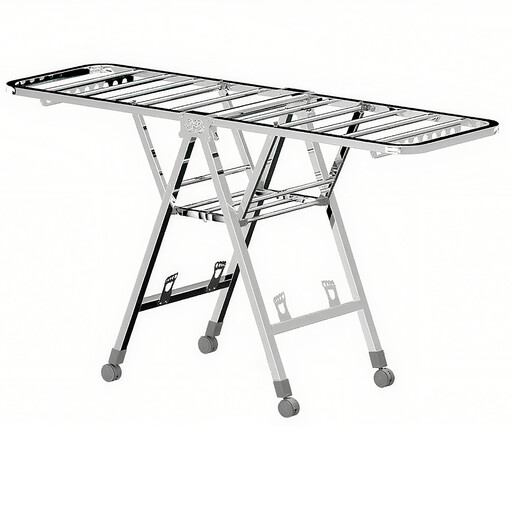
SNSP folding wing clothes airer made from stainless steel
The folding wing design is intended for hanging different kinds of washing. Suggested uses include the floor, balcony and quilts.
View at Joybuy
Frequently asked questions
Can I put my leggings directly on heated rails?
There’s no single answer for every pair of leggings. Check the care label on the specific garment. Nike recommends air-drying its sportswear on an airer and warns against excessive heat for elastic and synthetic fabrics. This doesn’t mean that other garments or heated airers are suitable for direct contact.
Does a heated clothes airer mean I don’t need to ventilate the room?
No. Moisture from washing dried indoors still needs to escape from the room. The German Consumer Advice Centre recommends airing the room regularly by opening the windows wide or creating a cross-draught. If needed, check the humidity with a hygrometer.
How do I work out the running cost of a heated clothes airer?
Multiply the rated power in kilowatts by the actual running time and your price per kilowatt-hour. If it draws its full rated power continuously, 220 W works out at 0.22 kWh per hour. Adler’s figure isn’t a measured energy use per load.
What are my rights if an appliance is faulty in Germany?
Your statutory consumer rights are against the seller and are separate from a voluntary manufacturer’s guarantee. If a product is faulty, the first step may be a repair or replacement. The German Consumer Advice Centre explains the difference between statutory rights and a guarantee.
What safety marking should I look for on a mains-powered heated airer?
For new electrical equipment within the applicable range of 50 to 1,000 V AC, the relevant EU requirements, including the required CE marking, must be observed. Directive 2014/35/EU and the buying advice from Germany’s Federal Network Agency provide the relevant framework. Check the specifications and documentation for the exact version. A CE mark alone is not an independent guarantee of safety.


