Homes with very little floor space
If you want to dry a few tea towels without leaving a large winged airer in the way, consider its footprint and whether it can be wall-mounted.


If you have a few damp tea towels to dry in a small flat, a slim heated freestanding or wall-mounted model may be a good fit, provided its dimensions suit the space available. A folding winged airer needs considerably more floor space when in use. If you have a suitable place to dry your towels and don’t need the extra heat, an unheated wall-mounted airer is the more energy-efficient alternative: the German Environment Agency names airers and washing lines as the most energy-efficient way to dry laundry. Heating is no substitute for ventilation or washing tea towels regularly.
If you want to dry a few tea towels without leaving a large winged airer in the way, consider its footprint and whether it can be wall-mounted.
If you regularly need somewhere dry to hang your tea towels, separate hanging spaces can help. It’s still important to wash them regularly: the Verbraucherzentrale recommends washing tea towels regularly at a minimum of 60 °C.
If you’re not in a hurry, an unheated place to dry your laundry may be enough. The German Environment Agency names airers and washing lines as the most energy-efficient way to dry laundry.
A good fit if: You only hang a few towels and floor space is limited; DOMO says the DO7117DR can be used freestanding or wall-mounted.
Things to consider: DOMO gives the dimensions as 52,5 × 36,5 × 90 cm and the power rating as 150 W. These figures don’t specify how long tea towels will take to dry.
A good fit if: You need room for other small items of laundry as well as tea towels, and can leave the airer unfolded while it’s in use.
Things to consider: Adler gives the dimensions of the AD 7821 as 148 × 52,5 × 90 cm when unfolded and 113 × 52,5 × 8 cm when folded. Its stated power rating of 220 W doesn’t indicate a specific drying time.
A good fit if: You have a suitable space on the wall and don’t need extra heat.
Things to consider: Leifheit says the Telegant 30 Protect has five bars and 3 m of drying space; it needs to be mounted on a suitable wall. The German Environment Agency names airers and washing lines as the most energy-efficient way to dry laundry.
| Buying consideration | What to look for | Who is it important to? |
|---|---|---|
| Floor space and storage | Compare the footprint when in use with the folded dimensions for storage. Check that walkways stay clear and, for wall-mounted models, make sure there’s enough space for the fixings. | If I can’t fit a winged airer in the way in my small flat, the footprint and wall mounting matter; around 26 % of consumers put space requirements first. |
| Space for towels that are often damp | Check the number and spacing of the bars and the usable length against your towels; don’t assume the number of bars tells you how long drying will take. | If several of my tea towels are regularly damp, I need enough separate places to hang them; around 21 % of consumers prioritise space for towels that are often damp. |
| Humidity while drying | Check whether you can ventilate the drying area well enough. The German Environment Agency recommends airing the room more often when drying laundry indoors. | If I dry towels indoors, I want to keep an eye on the room’s humidity and be able to ventilate; around 21 % of consumers prioritise room humidity. |
| Tea towel hygiene | Don’t confuse drying with cleaning. The Verbraucherzentrale recommends washing tea towels regularly at a minimum of 60 °C. | If a tea towel has been used, I don’t want to mistake heat for cleaning; around 16 % of consumers put towel hygiene first. |
| Heating function and electricity use | Consider the heating power and intended length of use. The German Environment Agency says airers and washing lines are the most energy-efficient way to dry laundry. | If there’s no rush and an unheated place to dry laundry is enough, I want to avoid using extra heat; around 16 % of consumers prioritise electricity use. |
Damp laundry still adds moisture to the room. The German Environment Agency recommends ventilating more when drying laundry indoors.
Plan for a suitable place to dry your laundry and a way to remove moisture, regardless of the heating function.
Adler gives the dimensions of the AD 7821 as 148 × 52,5 × 90 cm when unfolded and 113 × 52,5 × 8 cm when folded. A wall-mounted model needs a suitable surface for fixing.
Measure the space you’ll need while drying and the storage space separately.
A product claim about antibacterial effects doesn’t prove that used tea towels are hygienically clean. The Verbraucherzentrale recommends washing tea towels regularly at a minimum of 60 °C.
Treat drying and cleaning as two separate steps, and follow the care label.
DOMO gives the DO7117DR a rating of 150 W and Adler gives the AD 7821 a rating of 220 W. The rated power alone doesn’t tell you how long your tea towels will take to dry.
Compare the designs and consider whether you actually need the heating function for your needs.
The DO7117DR is a slim heated model that, according to the manufacturer, can be used freestanding or mounted on the wall.
The AD 7821 is a heated, foldable winged airer.
The unheated Telegant 30 Protect is a wall-mounted option if you don’t need an extra heating function.
The products below include electric towel warmers and heated airers. For each model, check whether it’s intended for drying slightly damp tea towels, and whether the installation, space requirements and operating conditions suit your home.
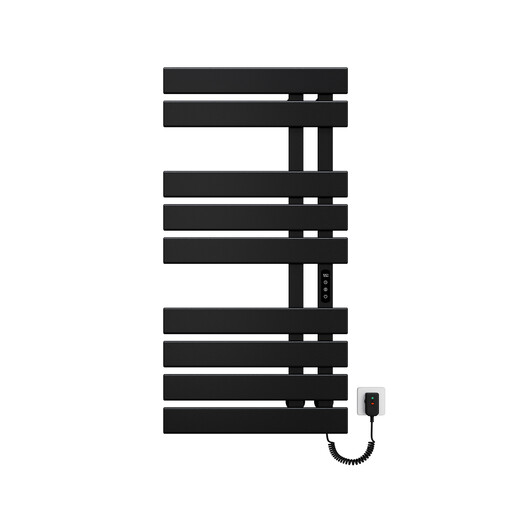 No image available
The wall-mounted design may be suitable if you have a suitable wall; check the space and installation requirements first.
Details: 100 × 50 cm, WiFi app control, timer and thermostat, according to the product name.
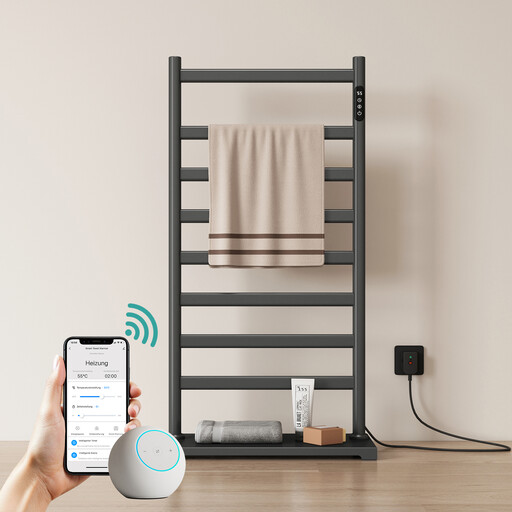 No image available
The freestanding design is an option if you don’t want to drill and have enough floor space.
The product name lists WiFi app and voice control, a timer, thermostat and 285 W.
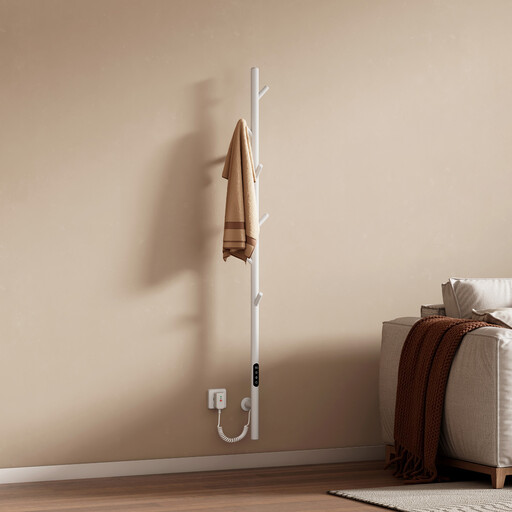 No image available
A rail with several hooks may be a good fit if you want to hang individual towels separately.
The product name lists a height of 150 cm, one rail and six hooks.
 No image available
The winged airer may be a good fit if you need extra hanging space and can leave enough room for it while it’s in use.
The product name lists 45–55 °C and dimensions of 144 × 53 × 96 cm.
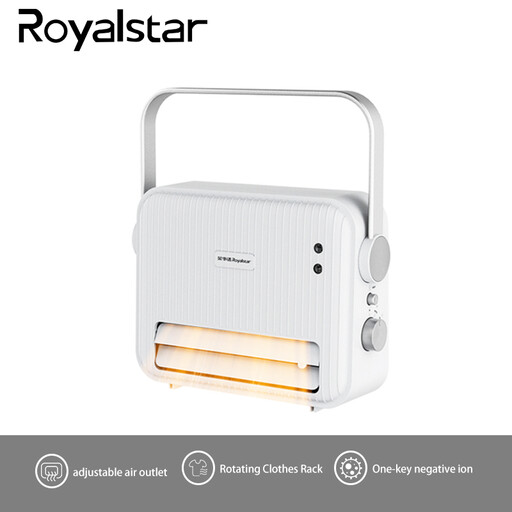 No image available
This appliance is only an option if its operating requirements are suitable for the towel you intend to use and you can leave enough clearance around it.
The instructions say to use only dry or slightly damp towels, not wet or dripping ones. Towels must not cover the air inlet or outlet. Keep a clearance of 1 m at the front and 30 cm at the sides from flammable materials.
Yes. The German Environment Agency recommends avoiding drying laundry indoors where possible. If you need to, ventilate the room more often when there’s damp laundry in it. A heating function doesn’t prove that the appliance removes moisture from the air.
No, heat from an airer is no substitute for washing. The Verbraucherzentrale recommends washing tea towels regularly at a minimum of 60 °C; also follow the care label on your textiles.
Compare the appliance’s dimensions, including when folded, with the space available. For a wall-mounted model, check the installation surface and instructions. For an electric model, also check the socket, cable routing and the operating conditions specified for that particular appliance.
The wattage alone doesn’t tell you how long your tea towels will take to dry. DOMO gives the DO7117DR a rating of 150 W and Adler gives the AD 7821 a rating of 220 W; these are the manufacturers’ power ratings, not comparable test results for drying tea towels.
Electrical appliances covered by relevant harmonised EU product regulations must carry the CE marking. The European Union explains that this is a declaration by the manufacturer, not an independent quality mark. For the specific product, also check the manufacturer’s information and look for German instructions with the necessary safety warnings.