Households with a mixed week’s wash
If you hang towels alongside smaller items, check that the rail layout and spacing, as well as the load capacity, are suitable for your wet washing.


When drying towels alongside a week’s washing, start by checking the usable rail space and the maximum load the airer can support when wet; the heating function comes second. A heated airer uses electricity and does not remove moisture from the room. If you have enough time for your washing to dry, a suitable unheated airer may be a better choice. We cannot make a fully verified buying recommendation for the individual heated models considered here; check the compliance documentation for the exact version before buying.
If you hang towels alongside smaller items, check that the rail layout and spacing, as well as the load capacity, are suitable for your wet washing.
Compare multi-tier winged airers and check how much room they take up when fully open, and where you can store them.
When drying clothes indoors, make sure you have a suitable way to ventilate the room. Whether the extra heat is worth the electricity it uses will also depend on how long your washing can take to dry.
A good fit if: You can spread towels out alongside smaller items and have enough room for the wings when open. InnovaGoods lists 20 rails, 230 W and a timer of up to 12 hours for the Warmmat. These are manufacturer specifications, not a guaranteed drying time.
The trade-off: The airer takes up floor space and uses electricity for heating. A timer cannot predict how long your washing will take to dry.
A good fit if: A smaller footprint matters more to you than a wide, continuous hanging area. Todeco specifies three tiers and a maximum load of 5 kg per tier for its 300 W model.
The trade-off: The stated load capacity applies to each tier. Check that wider towels will fit on the individual tiers without hanging the washing too close together.
A good fit if: You have enough time and a suitable, well-ventilated place to set it up, or you want to avoid using electricity to heat the airer. Germany’s Federal Environment Agency lists airers and washing lines as energy-efficient ways to dry clothes.
The trade-off: The airer does not provide extra heat. Unheated washing still releases moisture into the room, so the Federal Environment Agency recommends regular ventilation when drying clothes indoors.
| Buying priority | What to check | Who may find it particularly important |
|---|---|---|
| Space for mixed washing | Compare the rail layout and space between items, and check the maximum load for wet washing. | If I’m hanging wide towels alongside smaller items, I need enough suitable rails and sufficient load capacity. Around 33% of consumers put space for mixed washing first. |
| Room humidity | Check whether you can ventilate the intended location regularly and whether the instructions say the appliance can be used there. | When drying clothes indoors, I don’t want moisture simply building up in the room. Around 27% of consumers prioritise room humidity. |
| Electricity use and running time | Consider the rated power, timer or automatic shut-off, and expected running time separately. | If I want to dry my washing without running the airer longer than necessary, I need to weigh up its electricity use against the time available for drying. Around 20% of consumers put electricity use first. |
| Floor space and storage | Check the dimensions when open and folded, and allow room to access the airer and hang washing. | In a small home, I need an airer that fits where I want to use it and can be put away afterwards. Around 20% of consumers prioritise floor space and storage. |
The number of rails alone doesn’t tell you whether towels can be hung with enough space between them or whether the wet load will stay within the maximum capacity.
Compare the rail layout with the width of your towels and check the load limit for the specific design.
A heated airer still won’t carry moisture from your washing outside. The Federal Environment Agency recommends ventilating the room regularly when drying damp washing indoors.
Choose a suitable place to set up your airer and make sure there is air circulation while your washing dries. Also follow the instructions for your specific appliance.
The rated power alone tells you neither how long the airer needs to run nor how much electricity it will use to dry your washing.
Consider the power rating and expected running time separately. If you have enough time, compare it with an unheated airer too.
HOMCOM makes several different electric airers. Model 850-048 is a two-tier airer, not a winged model.
Before comparing models, check their full model numbers and technical specifications.
A heated, foldable drying tower for indoor use.
Warmmat is a heated winged airer with a generous rail area and adjustable running time.
With this brand’s electric airers, the specific design matters.
Unheated winged airers for households where hanging space matters more than extra heat.
Unheated drying towers for households that want to spread their washing across several tiers.
This selection features unheated airers for different ways of hanging mixed washing. They may suit you if you want to dry clothes without a heating function; the designs offer different options for floor space, hanging and storage.
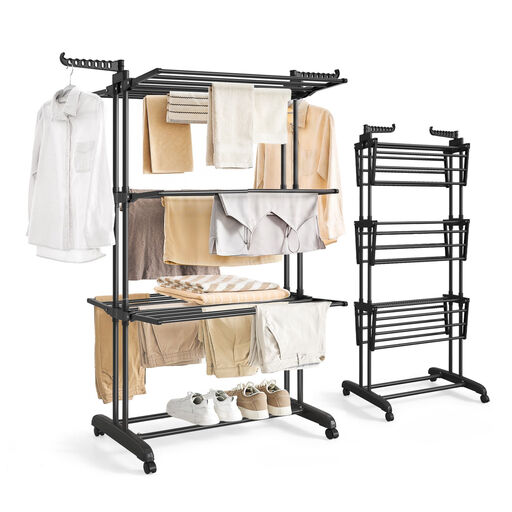 Image unavailable
The multiple tiers and wings offer different ways to hang mixed washing.
The product specifications list four tiers, two wings, two lockable castors and a static load capacity of 35 kg. When open, the airer measures 64,2 × 126,6 × 169,2 cm.
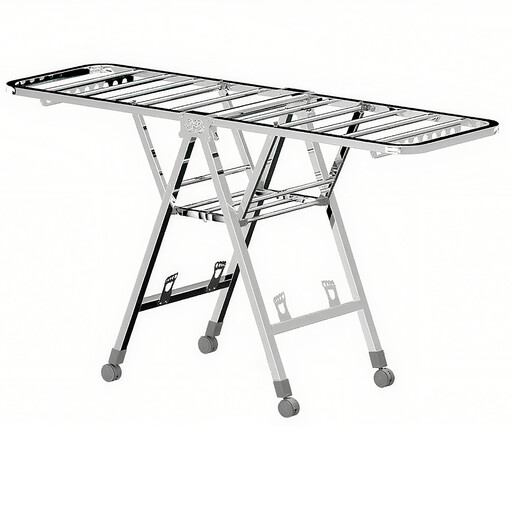 Image unavailable
The winged design is an option if you want to hang towels alongside larger items.
The product title specifies stainless steel, a folding design and use on the floor or balcony, as well as for duvets.
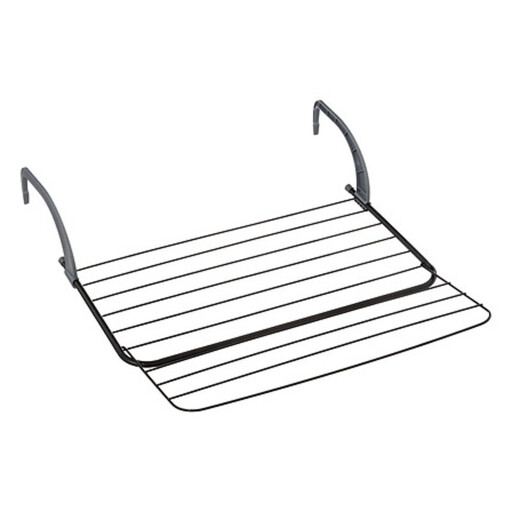 Image unavailable
This compact hanging solution may suit you if you have a suitable, sturdy surface for mounting it.
The product title gives dimensions of 60 × 55 × 13 cm. The mounting arms are adjustable according to the product description; before use, the airer must be securely fixed to a suitable surface.
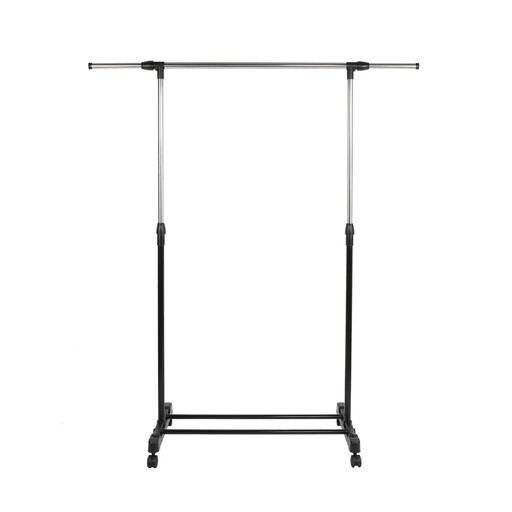 Image unavailable
The single rail is useful if you want the flexibility to adjust the height and width of your hanging space.
The product description gives an adjustable width of 80 to 145 cm, a height of 90 to 158 cm and four castors. The single rail offers a different way to hang washing from a winged airer.
No. Compare the rail layout with the width of your towels, and check the load capacity against the weight of your wet washing. For its Todeco model, the manufacturer specifies a maximum of 5 kg per tier; for the Warmmat, InnovaGoods specifies 15 kg for the entire airer. These figures relate to different models.
Follow the instructions for your specific appliance and keep plug connections dry. For its 300 W model, Todeco requires a flat, dry surface and a clearance of at least 1,5 m from sources of water or heat. The Federal Environment Agency recommends ventilating the room regularly when drying damp washing indoors; the VDE advises keeping electrical appliances away from showers and baths.
Multiply the rated power in kilowatts by the number of operating hours to calculate the energy use in kilowatt-hours. At 230 W for six hours, the calculated figure is 1,38 kWh; actual power consumption and the time needed to dry your washing may vary. An unheated airer doesn’t use electricity to heat the frame.
The seller is responsible for your statutory consumer rights, which are separate from a voluntary guarantee. The Verbraucherzentrale generally specifies a two-year statutory warranty period. For sales contracts from 31 July 2026, it also describes a one-off 12-month extension if you choose a repair instead of a replacement when a fault occurs.
The 1. ProdSV applies to new electrical equipment with a rated voltage between 50 and 1.000 volts AC. Once conformity assessment has been successfully completed, the manufacturer issues an EU Declaration of Conformity for equipment covered by the regulation and affixes the CE marking. This is a product requirement, not a general endorsement of a particular listing; check the documentation for the exact model.