Households with a mixed weekly wash
If you need to dry towels, trousers and small items as well as pyjamas, usable drying space and the design matter more than the number of heated bars.


A heated clothes airer can be a good choice if you need individual pairs of pyjamas again sooner in cool or damp weather. For a large, mixed weekly wash, having enough usable drying space is key. Choose a winged or tiered design to suit your available space and laundry, and bear in mind that a heated airer uses electricity and releases moisture into the room as clothes dry.
If you need to dry towels, trousers and small items as well as pyjamas, usable drying space and the design matter more than the number of heated bars.
If you need freshly washed nightwear again soon, especially in cold weather, heat can be helpful. However, you can’t assume a set drying time for your own laundry.
If your choice is limited by floor space and humidity, consider the tiered design, ventilation options and potential electricity consumption together.
First decide whether you need heat for a few items or mainly space for a whole load. Then compare the design, electricity use and where you’ll put it.
A good choice if: you want to hang pyjamas and other items side by side and plan to use the heating function regularly.
Things to consider: you’ll need enough floor space when it’s fully opened out. Heat doesn’t replace leaving space between clothes or airing the room.
A good choice if: floor space is limited and you can spread pyjamas and smaller items across several levels.
Things to consider: check that longer garments can hang freely between the tiers and that there’s enough usable height.
A good choice if: you can dry your weekly wash without a deadline, or maximum drying space matters more to you than extra heat.
Things to consider: the airer itself doesn’t use electricity, but drying can take longer if the room conditions aren’t ideal.
| What matters to you | What to check before buying | Who is it most relevant to? |
|---|---|---|
| Space for a whole load | Drying length and spacing between bars; clearance for longer items. | If I want to dry pyjamas, towels, trousers and smaller items together, I need enough space to hang them with room between. Around 28% of consumers prioritise capacity for a mixed weekly wash. |
| Wearing pyjamas again sooner | Which bars are heated; whether a timer and cover are included. | If I need freshly washed nightwear again quickly, I want to know whether the heating function is suitable for my fabrics. Around 22% of consumers prioritise changing pyjamas again soon. |
| Floor space and storage | Dimensions when set up; folding mechanism and clearance between tiers. | If I have little room to set up or store an airer, its design needs to suit my home. Around 17% of consumers consider floor space their main priority. |
| Electricity use | Rated power and actual running time; whether the heating can be switched off. | If I’m weighing the extra heat against electricity use, I want to estimate the cost for the way I’ll use it. Around 17% of consumers prioritise running costs. |
| Room humidity and fabric care | Ventilation options; care labels and the instructions for the specific appliance. | If I dry clothes indoors or have delicate fabrics, I need a suitable place and clear care guidance. Around 16% of consumers focus on room humidity or whether the airer is suitable for their fabrics. |
To estimate the energy used by a heated model, multiply its power in kilowatts by the actual running time in hours. A lower wattage alone doesn’t tell you how much energy it takes to dry a full load; you’ll need to compare similar laundry loads and levels of dryness. The Federal Environment Agency recommends airing the room well when drying laundry indoors.
Residual moisture, how much you put on the airer and the fabric mix all affect drying conditions. Manufacturer claims aren’t a substitute for testing with your own laundry.
Only compare drying times for similar load sizes and levels of dryness. Allow extra space for towels and items hung overlapping one another.
Energy use depends on the power rating and the actual running time. An unheated clothes airer doesn’t use electricity itself.
Factor in both running time and power when making your estimate, rather than comparing the rated power alone.
Even when clothes are dried indoors on a heated airer, moisture is released into your home. The Federal Environment Agency recommends airing the room well when drying laundry indoors.
Consider where you’ll dry your clothes and how well you can ventilate the room before choosing a heated or unheated design.
Heated winged and tower airers with covers to suit different spaces.
Heated airers in different designs, including the two-tier 850-048 and the smaller 850-032 towel rail.
Unheated clothes airers for mixed loads, including the Pegasus Family Plus.
Unheated clothes airers, including the extendable Infinity Flex for larger mixed loads.
Unheated tower airers offer a space-saving way to hang several items across multiple tiers.
The Joybuy products below are clothes airers for mixed laundry, including one heated model.
 No image available
For mixed loads when you want a heating function and fold-out side wings.
Temperature range: 45–55 °C; power: 230 W; dimensions: 144 × 53 × 96 cm; load capacity according to the description: up to 10 kg.
Before buying a mains-powered model, check for any CE marking required and make sure the operating and safety information is clear and suitable for the German market.
 No image available
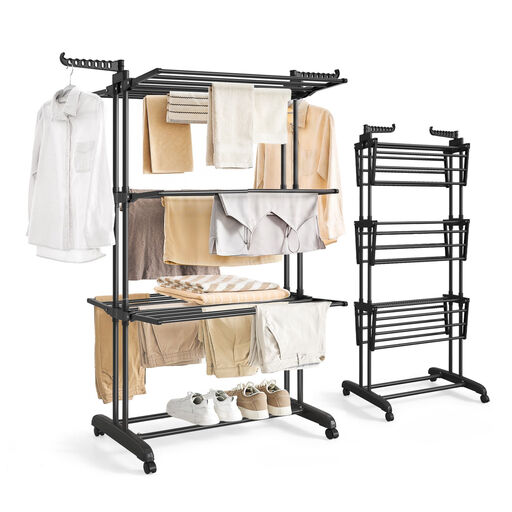
For drying several items across multiple tiers and additional hanging points.
Four tiers and two wings with 14 additional hanging points; stated static load capacity: 35 kg. Folds away and has wheels, two of which have brakes.
 No image available
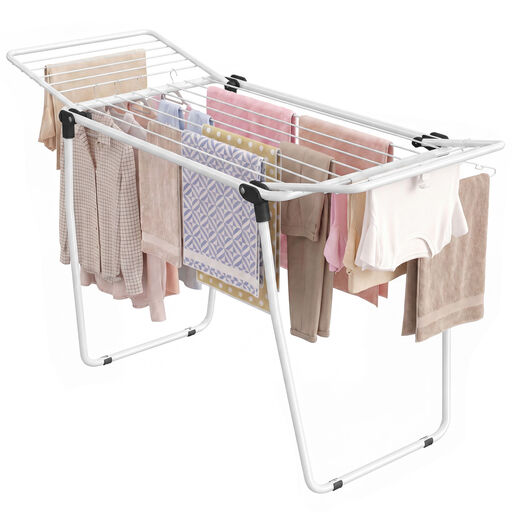
For mixed laundry on a folding winged airer with space for smaller items.
Drying length: 18 m; load capacity: up to 18 kg; includes sock clips. Dimensions when fully opened: 158 × 53 × 93 cm.
 No image available
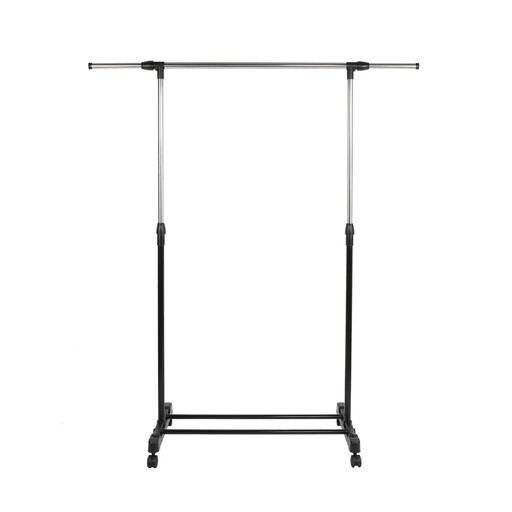
For individual garments when you need an adjustable hanging rail and the flexibility to move it around the room.
Width adjusts from 80 to 145 cm; height adjusts from 90 to 158 cm. Features a stainless steel top rail, four swivel castors and a folding design.
 No image available
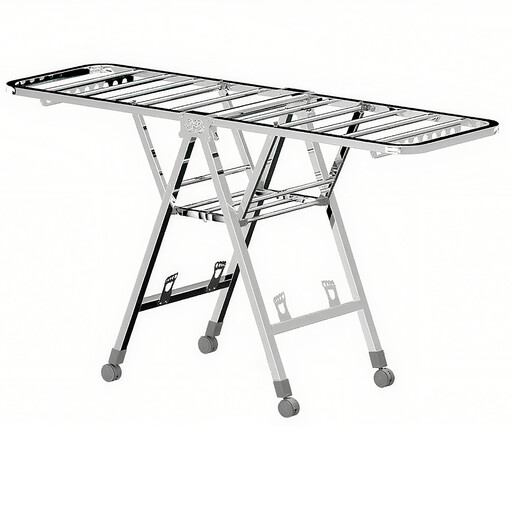
For drying several items when you want fold-out wings and a design that folds away for storage.
Freestanding, foldable design with stainless steel wings.
Check the care label on each garment and the instructions for the specific airer, particularly the guidance on temperature, direct contact and suitable fabrics. The “Do not tumble dry” symbol refers to a tumble dryer; on its own, it doesn’t tell you whether a garment can be placed directly on heated bars.
Choose a suitable place to set up the airer and allow enough room to hang your clothes. The Federal Environment Agency recommends airing the room well when drying laundry indoors; the heating element doesn’t remove the moisture released into the room.
Multiply the power in kilowatts by the actual hours of use to get a rough estimate of energy use in kilowatt-hours. To compare energy use per load, you’ll also need a similar amount of laundry and a similar level of dryness; the wattage alone isn’t enough.
Online orders generally come with a 14-day right to cancel from the date of delivery, as explained by the Verbraucherzentrale (consumer advice centre). If a product is faulty, your statutory rights against the seller are separate from any voluntary guarantee.
No, the CE mark isn’t an independent certification mark. The European Union explains that it’s only required for products covered by relevant EU rules. For the specific mains-powered model, check which markings and clear safety information are required.