What should you look for when choosing one?
First, check that the intended spot in the bathroom and the electrical connection are suitable. Then consider how much drying space you need at once, where you’ll store the airer and how long you plan to run it.
| What matters |
What to check before buying |
Most relevant for |
| Moisture and location |
Ventilation, the appliance instructions and the position of the electrical connection |
If the bathroom gets damp, I want to use the airer in a suitable spot and ventilate the moisture out. Around 36% of consumers put moisture and location first. |
| Drying space for several towels |
Usable rails and room to hang towels separately |
If several people need to hang their towels at the same time, I need enough separate spaces without permanently blocking the shared area. Around 29% of consumers prioritise shared drying space. |
| Floor and storage space |
Dimensions when open and folded |
If the airer needs to be moved out of the way after drying, I want to know whether it will fit when open and can then be stored away. Around 21% of consumers focus primarily on space and storage. |
| Electricity use |
Rated power in W and a realistic estimate of how long you’ll run it |
If I’ll use it frequently, I want to estimate electricity use based on power and running time, rather than assuming the wattage alone tells me how much energy it uses per towel. Around 14% of consumers put electricity use first when considering frequent use. |
Joybuy products for towels in a house share
This selection includes a folding heated clothes airer, as well as towel warmers and bathroom radiators with a towel function. Compare each design with the drying space you need, the room you have available and the location of the intended electrical connection.
 No image available
Folding heated clothes airer, 144 × 53 × 96 cm
The central section and two fold-out wings offer several places to hang clothes, and the airer folds away for storage.
Specifications include 230 W, a temperature range of 45–55 °C and a maximum load of 10 kg.
Joybuy
 No image available
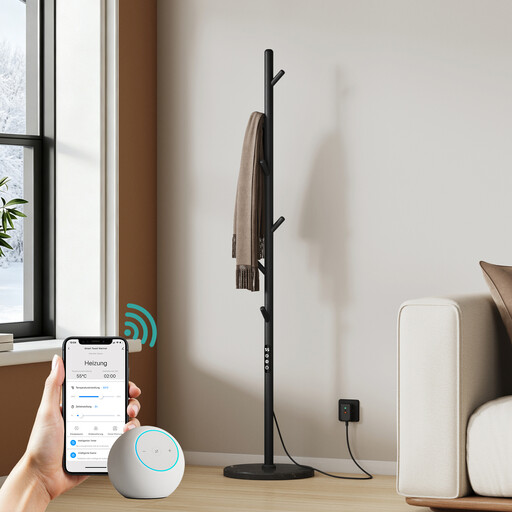
EMKE WiFi towel radiator, no drilling required, 100 W
For a no-drill option, this plug-in appliance is described as a towel warmer; it isn’t a traditional clothes airer.
Specifications include 100 W, IP45, a 1–24-hour timer and a 160 cm cable. IP45 doesn’t mean the appliance is suitable for every bathroom location.
Joybuy
 No image available
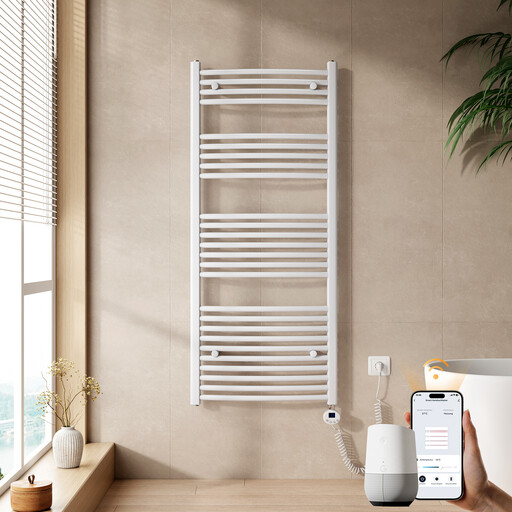
EMKE WiFi bathroom radiator with towel function, 1400 × 600 mm, 600 W
According to the product description, this wall-mounted model combines a towel function with an additional source of heat for the bathroom; it isn’t a traditional clothes airer.
Specifications include 1400 × 600 mm, 600 W, IP44 and a 1.4 m cable. The wall clearance and connection location need to be suitable; IP44 doesn’t mean the appliance is suitable for every location.
Joybuy
 No image available
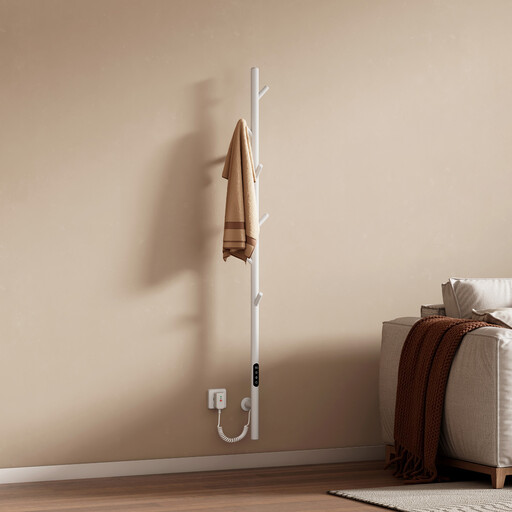
Electric towel warmer with one rail, six hooks and a height of 150 cm
The six hooks offer several places to hang towels. This appliance is described as a towel warmer with one rail, rather than a traditional clothes airer.
Specifications include 100 W, a height of 150 cm and IPX5. IPX5 doesn’t mean the appliance is suitable for every bathroom location.
Joybuy
 No image available
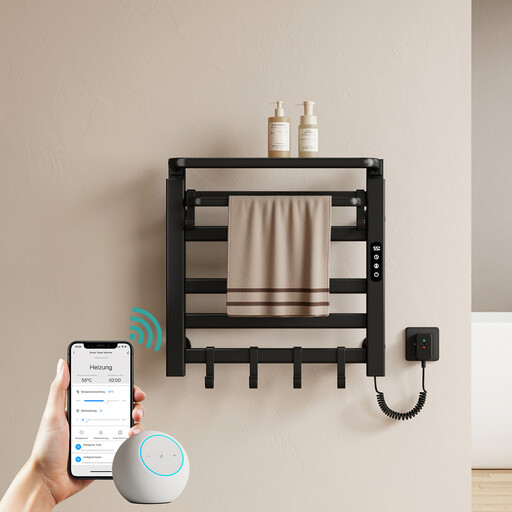
EMKE towel radiator, 50 × 50 cm, 140 W, six hooks
The compact design and fold-down top shelf provide space to hang and store items; this model isn’t a traditional clothes airer.
Specifications include 50 × 50 cm, 140 W and IPX5. The six hooks aren’t heated; the description also mentions a residual-current device. IPX5 doesn’t mean the appliance is suitable for every bathroom location.
Joybuy
Frequently asked questions
Will a heated clothes airer prevent damp or mould?
No. Drying releases moisture into the air. The German Environment Agency recommends airing the bathroom to clear peaks in humidity, and closing the door so the moisture doesn’t spread to the rest of the home.
Can I plug the appliance into any bathroom socket?
No, not as a general rule. The relevant factors are the electrical zones, the installation at the specific location and the instructions for your chosen appliance. ELEKTRO+ explains that sockets aren’t permitted in the areas described near showers and baths, and that RCD protection is required outside the restricted zones. If you’re unsure about the installation, ask a qualified electrician to assess the location; an IP rating alone doesn’t mean a location is suitable.
How can I estimate electricity use before buying?
Multiply the rated power in kilowatts by the planned running time in hours to estimate energy use in kWh. A timer can limit how long the appliance runs, but it doesn’t confirm a particular drying time or the actual energy used per towel.
What should I know about faults and disposing of the appliance in Germany?
If the appliance is faulty, statutory consumer rights against the seller are separate from a voluntary guarantee. When it reaches the end of its useful life, take the electrical airer to a separate collection point for waste electrical equipment. According to the German Environment Agency, local authority collection points generally accept waste electrical equipment free of charge.
Is a CE mark the same as an independent safety test?
No. The German Federal Institute for Occupational Safety and Health explains that CE marking isn’t the same as a safety certification mark. For the voluntary GS mark, a GS testing body checks that safety requirements are met; the mark doesn’t prove drying performance or product lifespan either.


